Accelerating Game Dev with AI-Driven Process Optimization

- The Escalating Complexity of Modern Engineering
- AI as an Engineering Accelerator
- Key AI Applications in Semiconductor Fabs and Game Dev Parallels
- 1. Predictive Modeling and Simulation
- 2. Materials Science and Interaction Analysis
- 3. Defect Detection and Root Cause Analysis
- 4. Automated Experimentation and Parameter Optimization
- The Role of Digital Twins and Synthetic Data
- Leveraging NVIDIA Technologies for Game Dev Acceleration
- Architectural Implications for Game Development
- Conclusion
Key Takeaways
- •The Escalating Complexity of Modern Engineering
- •AI as an Engineering Accelerator
- •Key AI Applications in Semiconductor Fabs and Game Dev Parallels
As a technical director, I've witnessed firsthand how the complexity of modern game development pipelines has exploded. We're dealing with vast codebases, intricate asset dependencies, complex rendering techniques, and an ever-increasing demand for performance and quality. This paradigm isn't unique to our industry; advanced manufacturing, particularly in semiconductor fabrication, faces similar, if not more extreme, challenges. The margin for error is shrinking, the processes are becoming more intricate, and the sheer volume of data is staggering.
What's fascinating is how leading-edge industries are leveraging artificial intelligence to navigate this complexity. The recent advancements in AI's application to semiconductor fabs, as highlighted by NVIDIA, offer profound lessons that we, as game developers, can adapt to accelerate our own engineering workflows and optimize our development cycles. This guide will delve into these AI-driven methodologies and illustrate how they can be transposed to the game development landscape.
The Escalating Complexity of Modern Engineering
Whether you're etching nanometer-scale transistors or orchestrating millions of polygons and complex shaders in a game engine, the underlying challenges are surprisingly analogous. Engineers in both domains grapple with:
- Intricate Process Chains: A single change in a semiconductor manufacturing step can have cascading effects, just as a seemingly minor engine update can ripple through an entire game's build.
- Massive Data Volumes: Sensor data from fabs, telemetry from game builds, performance logs, user behavior—all generate petabytes of information that traditional analysis struggles to parse effectively.
- Shrinking Margins for Error: Defects in a chip can be catastrophic for product yield and cost, mirroring how elusive bugs or performance regressions can derail a game's launch or user experience.
- Accelerated Development Cycles: The market demands faster iteration, quicker bug fixes, and continuous content delivery.
Traditionally, understanding "how a process change will behave, how a material will interact with a new step, how a defect maps back to a root cause" involves painstaking manual experimentation, iterative testing, and deep domain expertise. This is where AI steps in as a force multiplier.
AI as an Engineering Accelerator
In semiconductor fabs, AI is not replacing engineers; it's empowering them to move faster and with greater precision. By ingesting vast datasets—from sensor readings and process parameters to material compositions and defect images—AI models can learn patterns and relationships that are invisible or too complex for human analysis alone.
The core idea is to shift from reactive problem-solving to proactive, predictive optimization. Instead of waiting for defects to appear or performance to degrade, AI models can forecast issues, identify optimal parameters, and even suggest root causes before they manifest as critical problems.
Key AI Applications in Semiconductor Fabs and Game Dev Parallels
Let's break down specific applications of AI in advanced manufacturing and draw direct parallels to game development.
1. Predictive Modeling and Simulation
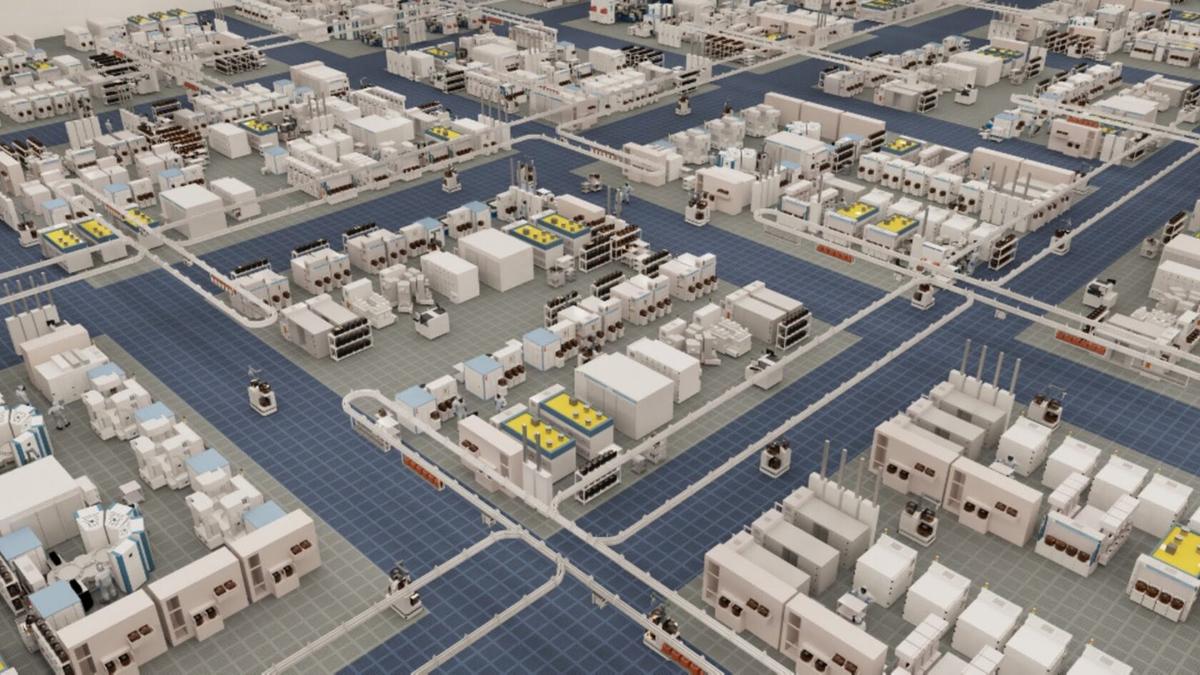
In Fabs: AI models predict how a proposed process change (e.g., adjusting temperature, pressure, or chemical composition) will affect the final product's characteristics and yield. This involves running thousands of virtual experiments using digital twins and sophisticated simulations. This significantly reduces the need for costly and time-consuming physical prototypes.
In Game Development: Imagine an AI system that predicts the impact of an engine change on memory footprint, CPU utilization, or GPU performance across various hardware configurations.
- Example: Before committing a large refactor to the main branch, an AI could simulate its impact on critical performance metrics based on historical data from similar changes, flagging potential regressions preemptively.
- Application: Optimizing rendering pipelines by predicting the performance impact of different shader permutations or lighting models without extensive manual profiling.
2. Materials Science and Interaction Analysis
In Fabs: Understanding how different materials interact at an atomic level during complex deposition or etching processes is crucial. AI can analyze vast material databases and simulation results to predict new material properties or optimize existing ones for specific process steps.
In Game Development: The interaction of assets, physics systems, and rendering properties is equally complex.
- Example: An AI could analyze a new physically-based rendering (PBR) material's properties (albedo, roughness, metallic) and predict how it will behave under various lighting conditions and interactions within the game world, potentially highlighting issues like self-shadowing artifacts or incorrect reflections before artists even see it in engine.
- Application: Predicting stability and performance issues arising from complex physics interactions between different game objects or character rigs, reducing the need for extensive manual QA testing for edge cases.
3. Defect Detection and Root Cause Analysis
In Fabs: Manufacturing defects can be subtle and difficult to trace. AI-powered vision systems can rapidly scan wafers for microscopic flaws, and then advanced machine learning algorithms can correlate these defects back to specific process steps or equipment parameters that caused them. This accelerates root cause analysis from weeks to hours.
In Game Development: Bugs and performance bottlenecks are our "defects."
- Example: An AI could analyze crash logs, telemetry data, and version control commits to automatically identify the most likely code change or asset introduction that caused a new crash or significant performance drop. Instead of developers manually sifting through hundreds of commits, the AI points to the probable culprit.
- Application: Identifying visual glitches or animation popping by comparing rendered frames against a "golden standard" and then tracing the anomaly back to the responsible art asset, animation state, or rendering pass.
4. Automated Experimentation and Parameter Optimization
In Fabs: Finding the "sweet spot" for hundreds of process parameters (temperature, pressure, gas flow rates, exposure times) is a combinatorial nightmare. AI-driven optimization algorithms can run thousands of virtual experiments, iteratively refining parameters to achieve target yields, performance, or cost efficiency.
In Game Development: We have countless parameters to tune for game balance, level design, and content generation.
- Example: For a procedural content generation system, an AI could explore a vast parameter space for terrain generation, enemy placement, or loot distribution to find configurations that maximize player engagement, difficulty curves, or resource balance, based on defined metrics.
- Application: Optimizing game-specific AI behaviors by running simulations with varied agent parameters (e.g., aggression levels, pathfinding weights) and evaluating their impact on gameplay metrics, allowing for more nuanced and dynamic AI opponents or companions.
The Role of Digital Twins and Synthetic Data
A recurring theme in these AI applications is the concept of a digital twin. This is a virtual replica of a physical system or process that can be used to run simulations, test scenarios, and generate synthetic data.
In Fabs: Digital twins of manufacturing lines allow engineers to test process changes and collect data without disrupting actual production. This synthetic data, combined with real-world data, is invaluable for training robust AI models.
In Game Development: We inherently work with digital twins—our game worlds and engines. Leveraging these as true digital twins for AI means:
- Virtual Test Environments: Running automated tests and simulations of gameplay, performance, and stability in isolated, controlled environments.
- Synthetic Data Generation: Using the game engine to generate vast amounts of labeled data for training AI. For instance, creating diverse environments to train object recognition for in-game AI, or simulating player interactions to train behavior models.
This approach creates a powerful feedback loop, where AI models learn from both real-world game data (telemetry, player actions) and synthetically generated data from the game's digital twin, leading to more intelligent and efficient development processes.
Leveraging NVIDIA Technologies for Game Dev Acceleration
The original article highlights NVIDIA's role in enabling these advancements in semiconductor fabs, primarily through their GPU computing platforms, CUDA, and specialized AI frameworks. These same technologies are directly applicable to game development:
- High-Performance Computing: NVIDIA GPUs provide the parallel processing power required for running large-scale simulations, training complex AI models, and accelerating data analysis.
- AI Software Stack: Frameworks like PyTorch and TensorFlow, optimized by NVIDIA, are the backbone for developing and deploying AI solutions, from predictive analytics to computer vision.
- NVIDIA Omniverse: While not explicitly mentioned in the fab article, Omniverse is NVIDIA's platform for building and operating 3D industrial metaverse applications, including digital twins. This platform offers immense potential for game developers to create sophisticated digital twins of their game worlds for AI-driven simulation and content generation.
Architectural Implications for Game Development
Integrating AI-driven process optimization requires a strategic shift in our development architecture:
1. Data Infrastructure: Establishing robust pipelines for collecting, storing, and processing diverse data types (telemetry, performance logs, asset metadata, build metrics). This includes real-time streaming capabilities and scalable storage.
2. AI Integration into CI/CD: Embedding AI models directly into continuous integration and continuous deployment pipelines. This means AI can automatically analyze incoming code, trigger simulations, predict potential issues, and even gate merges based on predicted quality or performance regressions.
3. Digital Twin Frameworks: Developing or adopting frameworks within our game engines that allow for headless, automated execution of game scenarios, performance profiling, and data extraction for AI training.
4. Defined Metrics and Objectives: Clearly defining what "optimal" means for various aspects of game development (e.g., frame rate targets, memory budgets, player engagement metrics) to provide clear targets for AI optimization algorithms.
The transition from a traditional, often reactive, workflow to an AI-accelerated one can be visualized as follows:
The underlying AI architecture for such a system would typically involve:
Conclusion
The lessons from semiconductor fabs underscore a critical truth: in an era of escalating complexity, AI is no longer a futuristic concept but a vital tool for accelerating engineering workflows and maintaining a competitive edge. By adopting AI-driven predictive modeling, automated root cause analysis, and intelligent parameter optimization, game developers can similarly empower their teams.
This isn't about replacing human creativity or expertise, but augmenting it. It's about freeing up engineers from tedious, repetitive tasks, providing them with deeper insights faster, and allowing them to focus on the truly innovative and challenging aspects of game creation. The future of game development, much like advanced manufacturing, will be defined by how effectively we integrate intelligent automation into every facet of our technical pipelines. Embracing these advanced AI methodologies will be key to building the next generation of groundbreaking games with unprecedented efficiency and quality.
At White Cube Studios, we translate technical architecture into shipping systems across our specialized development pillars: