Architecting Intelligent Workflows: AI's Impact on Game Development

- The Rise of AI Agents: Reshaping Simulation and Design
- Empowering Local Workflows: NVIDIA RTX Spark and Desktop AI
- Engine-Level Integration: Unity CLI 1.0 and AI Automation
- AI in Creative Iteration and Playtesting
- Hybrid AI: Blending Cloud and Local Power
- The Developer's Edge: Mastering AI in the New Era
Key Takeaways
- •The Rise of AI Agents: Reshaping Simulation and Design
- •Empowering Local Workflows: NVIDIA RTX Spark and Desktop AI
- •Engine-Level Integration: Unity CLI 1.0 and AI Automation
The game development landscape is in constant flux, but few forces are reshaping our workflows as fundamentally as Artificial Intelligence. AI is moving beyond theoretical discussions and into concrete, actionable tools, revolutionizing how we create, iterate, and deploy games. It's no longer just about AI characters in-game; it's about AI as an indispensable co-pilot for the entire development pipeline, streamlining complex processes and unlocking new creative potential.
This isn't about replacing human creativity, but augmenting it. Engine providers like Unity and hardware innovators like NVIDIA are integrating AI directly into our toolsets, making these powerful capabilities accessible. This integration empowers us to tackle complex tasks with greater efficiency, automate mundane processes, and explore entirely new creative possibilities, fundamentally changing our approach to development and innovation.
The Rise of AI Agents: Reshaping Simulation and Design
One of the most exciting advancements is the emergence of AI agents in simulation and design. These intelligent entities, more than advanced scripts, understand complex instructions, plan actions, and execute sophisticated tasks within simulated environments. NVIDIA Omniverse leads this shift, providing an open platform for developers to leverage frontier AI models to direct agents, enabling nuanced virtual world interactions.
Imagine an AI agent assembling assets, connecting physics, and ensuring rendering integrity for a complex scene. This could involve procedural environment generation, placing objects by design rules, or simulating character interactions to validate level flow. Instead of manual adjustments, developers direct agents to autonomously explore scenarios, investigate failures, and rapidly iterate. This accelerates conceptualization and prototyping, enabling design validation and exploration previously unattainable, freeing human designers for higher-level creative work.
This diagram illustrates a simplified workflow. A developer defines the problem, and an AI agent (e.g., within NVIDIA Omniverse) handles asset assembly, physics integration, and scene validation. Simulation results feed back into design insights, creating a rapid iteration loop that shortens development cycles and improves design quality.
Empowering Local Workflows: NVIDIA RTX Spark and Desktop AI
The power of AI isn't confined to the cloud. Local hardware is bringing powerful AI tools directly to our development machines, democratizing access. NVIDIA's RTX Spark compact desktops are a prime example, offering dedicated Windows PCs optimized for demanding local AI operations.
These systems come equipped with substantial unified memory (up to 128GB) and NVIDIA's comprehensive AI software stack, including CUDA and TensorRT. This local processing power is a game-changer, enabling real-time local AI agents, efficient image/video generation, and model fine-tuning without constant cloud reliance. Benefits include faster iteration, enhanced data privacy, and reduced operational costs.
Consider these practical applications for RTX Spark in a game development context:
- Instant Asset Generation: Quickly generate variations of textures, materials, or concept art using local generative AI models, allowing artists to explore more options faster.
- NPC Behavior Prototyping: Run and test AI character behaviors in real-time on the desktop, adjusting parameters and observing outcomes immediately.
- Automated QA Scans: Perform rapid local scans of game assets for common issues like missing textures, incorrect colliders, or LOD inconsistencies using AI vision models.
This empowers an agile and responsive development loop, keeping creative control and powerful AI capabilities directly on the developer's desktop, fostering rapid experimentation.
Engine-Level Integration: Unity CLI 1.0 and AI Automation
Game engine developers are making significant strides integrating AI directly into their core tooling. Unity's Unity CLI 1.0, now out of beta, is a robust automation tool. Beyond scripting builds, it provides programmatic hooks into advanced AI models for automating complex development processes.
With Unity CLI 1.0, developers can connect AI models like Claude Code or Codex directly to Unity projects. This enables unprecedented automation for tasks like builds and tests from the terminal. Imagine an AI agent, invoked via CLI, generating boilerplate code, suggesting optimizations, running comprehensive test suites, and initiating builds based on validations. This transforms the development pipeline into an intelligent, self-optimizing system.
For instance, a developer could set up a CI/CD pipeline where the Unity CLI, integrated with an AI coding agent, automatically performs:
- Pulls latest code from version control, ensuring synchronization.
- Analyzes new code for bugs, performance bottlenecks, or style guide violations using the AI model's deep understanding.
- Generates relevant unit or integration tests based on new features or modified systems.
- Executes all tests, identifying errors and non-deterministic bugs, providing detailed reports.
- If tests pass and the AI finds no critical issues, it triggers a headless build via CLI, packaging the game for various platforms.
This level of automation streamlines development, reduces manual errors, and accelerates the iteration-to-deployment cycle, freeing up developer time for creative tasks.
AI in Creative Iteration and Playtesting
Beyond raw automation, AI is invaluable in creative and iterative game development. Local AI systems like NVIDIA RTX Spark handle image and video generation, opening doors for rapid prototyping of visual assets, textures, or animated sequences. This speeds conceptualization, allowing artists and designers to experiment and visualize ideas faster, before committing significant resources.
Beyond visual prototyping, AI significantly augments playtesting. AI agents can systematically run through game scenarios, identifying bugs and subtle edge cases human testers might miss. They simulate diverse player behaviors—from aggressive to cautious—gathering extensive data on level design, balance, and flow.
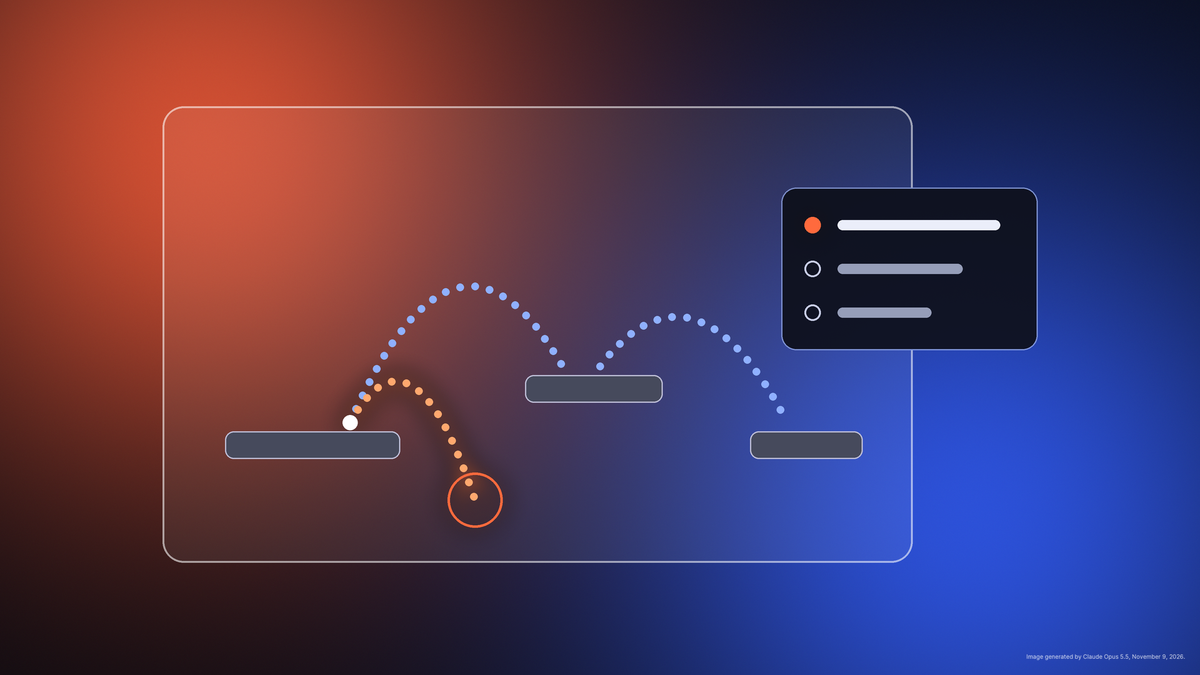
For instance, an AI agent could repeatedly attempt platforming challenges to identify unreachable areas or discover sequence breaks. They can also stress-test complex game systems, like an in-game economy, by simulating thousands of transactions, revealing exploits or imbalances before launch. This provides a new, data-driven feedback layer, enhancing player experiences by proactively addressing issues. For proactive developers, the focus remains on leveraging AI as a powerful creative and analytical partner.
Hybrid AI: Blending Cloud and Local Power
The future of AI integration in game development is hybrid, combining scalable cloud power with local machine responsiveness. The expanded NVIDIA and Microsoft collaboration exemplifies this, extending accelerated computing from Azure to Windows PCs and highlighting the industry's direction towards a seamlessly integrated AI ecosystem.
This collaboration helps organizations build, customize, and deploy intelligent applications across diverse environments. From Azure's next-gen infrastructure (e.g., NVIDIA Vera Rubin NVL72) to industrial systems and Windows PCs, developers gain unparalleled flexibility. Studios can leverage massive cloud compute for large-scale training of complex AI models (e.g., reinforcement learning agents, world-scale procedural generation) and use local RTX Spark desktops for rapid iteration and focused AI agent tasks. This balance ensures high-performance processing and daily development agility, creating an optimized workflow.
The Developer's Edge: Mastering AI in the New Era
For game developers, AI is a tangible reality. Embracing tools like NVIDIA's Omniverse AI agents, Unity CLI 1.0 with its AI model integrations, and local RTX Spark desktops unlocks new efficiencies and creative avenues. This shift represents a fundamental evolution in how games are made, demanding a proactive approach.
Mastering these AI-driven workflows is crucial for studios seeking a competitive edge: accelerating development, reducing technical debt, and pushing game design boundaries. The era of AI as our co-pilot empowers us to build more ambitious, polished, and innovative games, transforming capabilities and sparking new creative possibilities.
At White Cube Studios, we translate technical architecture into shipping systems across our specialized development pillars: