The Workflow
Blueprint
A rigorous technical breakdown of the level design cycle, from conceptual constraints to the iterative blockout phase.
Pre-production
Establishing the core player experience. What is the emotional hook? Is this a high-octane combat arena or a contemplative narrative environment?
Technical limits are creative catalysts. GPU budgets, draw calls, and mechanics dictate the physical boundaries of the level.
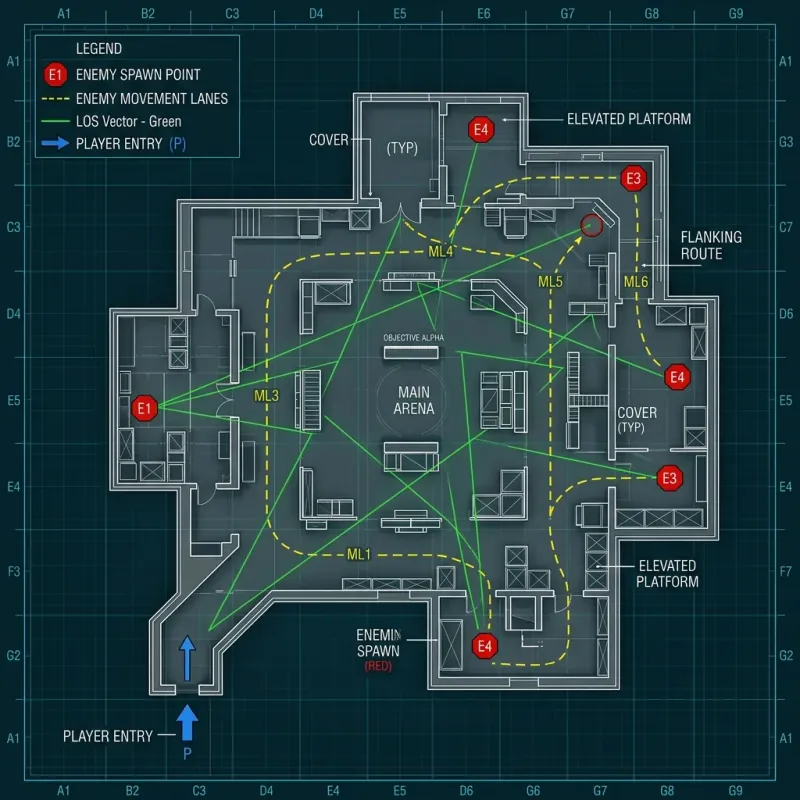
Combat Design
Establishing rhythm and mechanical encounters. Defining interaction between players and enemy types.
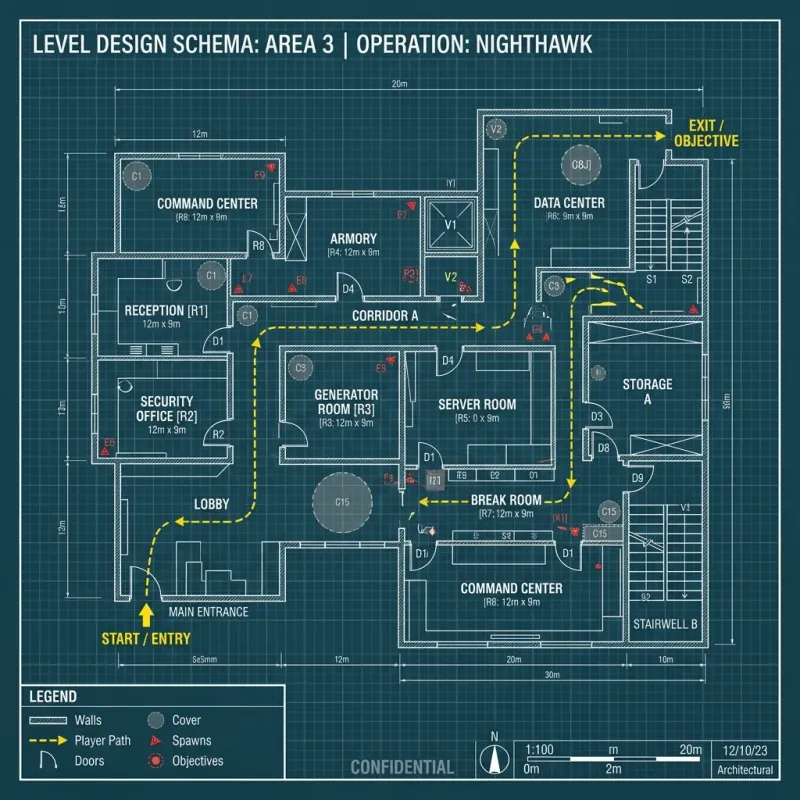
Layout Drafting
Creating 2D structural logic and flow. Rapid iteration through top-down sketches before 3D.
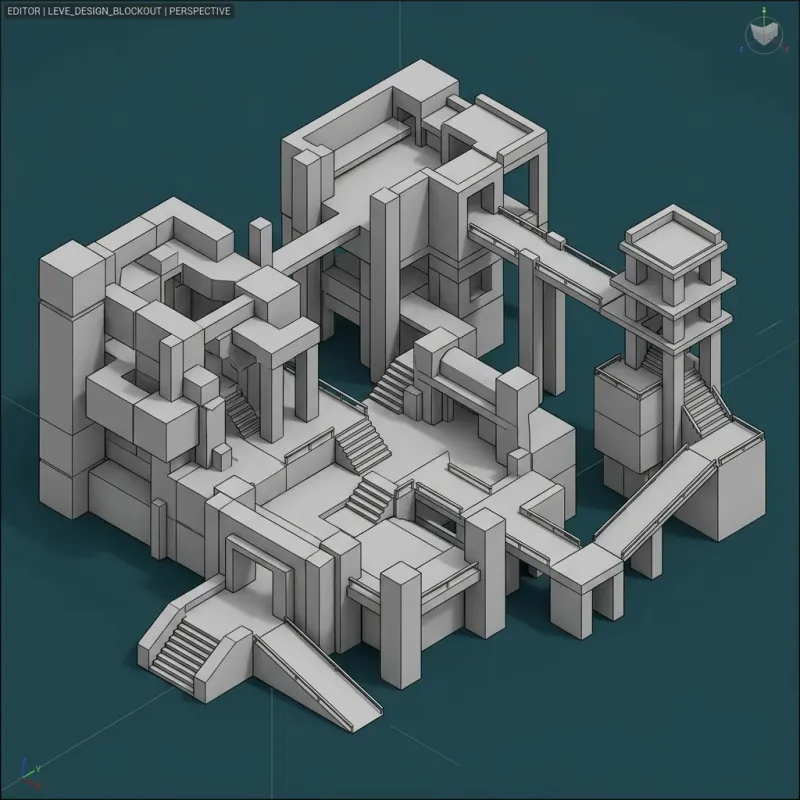
Blockout Phase
3D grayboxing and prototyping. Testing scale, metrics, and navigation in-engine.

Scripting
Implementing mission logic, event gates, and world reactivity. Making the level 'alive'.
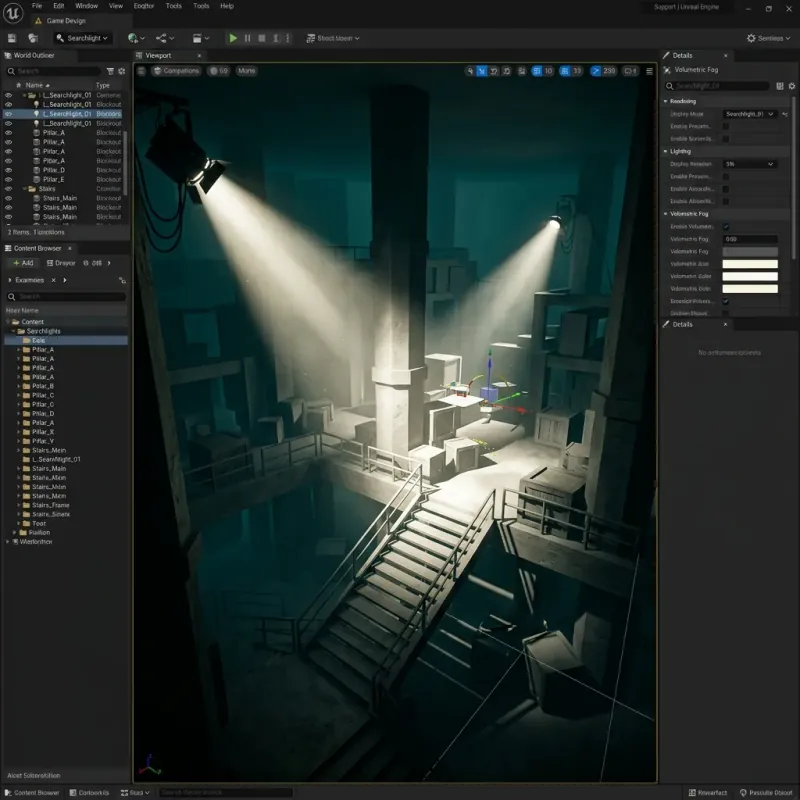
Lighting
Enhancing depth, readability, and mood. Using light to guide player attention and narrative.
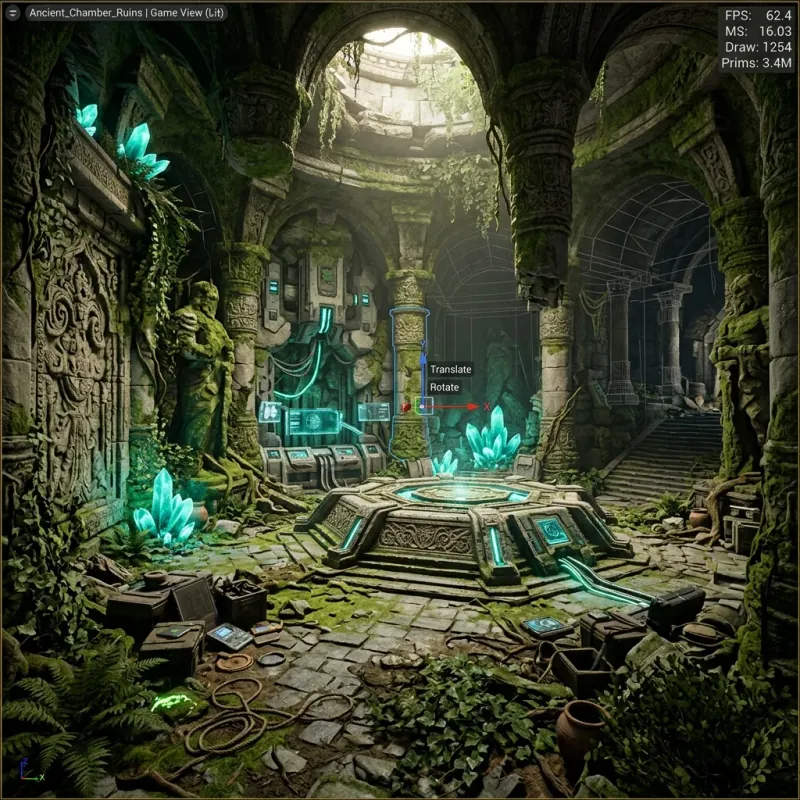
Environment Art
Final art pass, landmarking, and environmental storytelling. Adding 'the skin' to the level.

Release & Docs
Documentation and productization. Creating devlogs and technical descriptions.
Average Turnaround
3-4 WKS
Testing Cycles
12-15
Understanding the
Human Variable
Level design is not just architecture; it is psychology. By decoding player types and cultural zeitgeists, we build worlds that resonate on a fundamental human level.
Bartle Player Taxonomy
The four core pillars of interaction within virtual environments. Understanding these balances ensures long-term player retention.
Killers
Focused on competition and imposing their will on others.
Achievers
Driven by points, levels, and concrete status symbols.
Socializers
Games as a medium for human connection and interaction.
Explorers
Uncovering the mechanics and hidden corners of the world.
Culture Zeitgeist
Current trends influencing global level design aesthetic.
Cognitive Load
Designing spaces that challenge the player without inducing frustration or mental fatigue.
Agency & Flow
How player choices affect spatial layout and the psychological "Flow State" of gameplay.
Communal Spacing
Designing hub areas that facilitate spontaneous social interaction and narrative sharing.
Designing for Intent
Every corner, light source, and obstacle is a signal. By mapping the player's psychological intent to spatial geometry, we create "Implicit Navigation" - where the player feels they are making a choice, while the designer subtly guides the path.
- Contrast-Driven Directionality
- Reward/Risk Spatial Ratios
- Environmental Storytelling Echoes
Engine Specific Metrics
Standardized production metrics used for professional scale across major game engines.
Standard Scale
REAL-WORLD
Grid System
OCTREE

Unity

Unreal Engine
Source/Quake
Advanced Spatial Studies
Conducting structural breakdowns of masterpiece levels through Paintover Analysis and Labeled Mapping. Every study focuses on the "Parti" - the core architectural idea that defines the level's identity.
150+
Studied Maps
45
Deep Overlays
Paintover Analysis
Critical breakdown of flow and sightlines.
Labeled Mapping
High-res structural documentation.
Pacing Models
Beat-sheets and intensity curves.
Metric Zoos
In-engine scale reference maps.
Game & Level Design Portfolio
& Unreal Environments
Selected work demonstrating spatial flow, narrative pacing, and technical implementation.