June 21, 2026
7 min read
Optimizing Long-Term Cohort Value: Inside Playrix's D28 IAP ROAS Strategy with Unity Vector
Key Takeaways
- •The User Acquisition Paradigm Shift in Casual Gaming
- •The Machine Learning Foundation: Unity Vector
- •The Google Play Paradigm Shift
Optimizing Long-Term Cohort Value: Inside Playrix's D28 IAP ROAS Strategy with Unity Vector
In the highly competitive mobile gaming landscape, casual games require sophisticated user acquisition (UA) strategies to remain profitable and scale. Traditional methods that focus solely on immediate, short-term performance often miss the long-term value generated by highly engaged players. To address this, Playrix—a leading mobile gaming studio famous for casual hits like Fishdom, Gardenscapes, Homescapes, and Township—partnered with Unity Ads to test and deploy a next-generation bidding strategy.
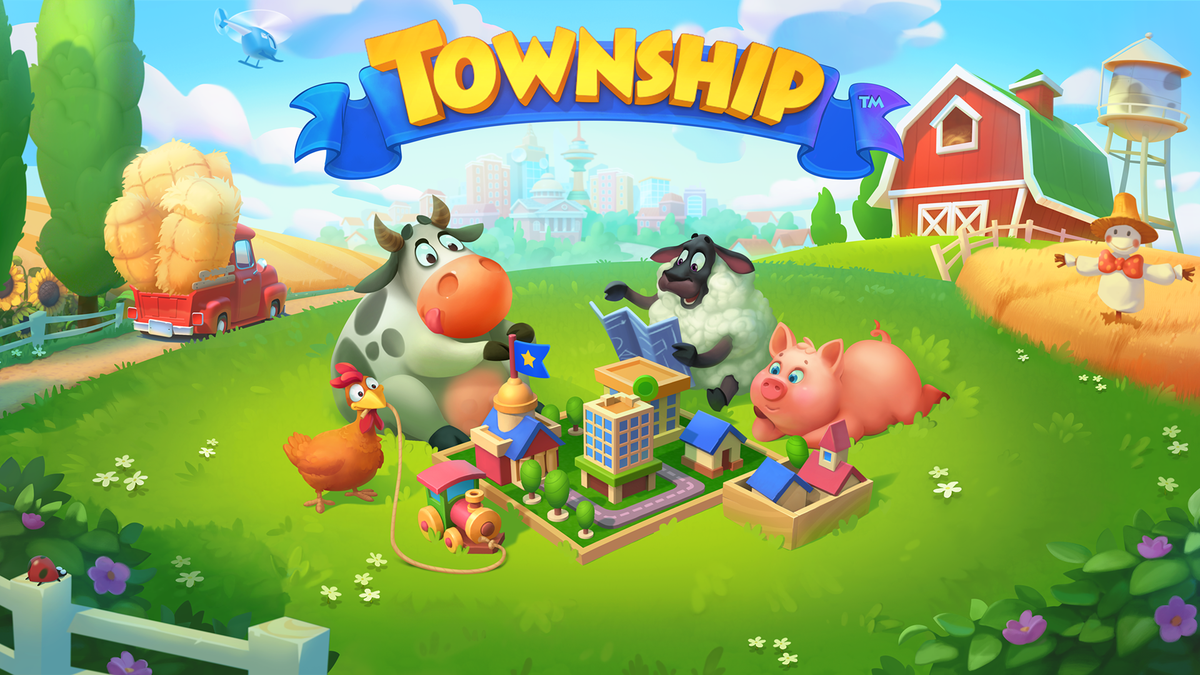
Led by Aleksandr Bajev, Marketing Producer at Playrix (responsible for network partnerships, retargeting, benchmarks, and marketing intelligence), the studio undertook a comprehensive campaign to scale their hit title Township. This deep dive analyzes the technical and economic mechanisms behind their integration of Unity Ads' Day-28 (D28) In-App Purchase (IAP) Return on Ad Spend (ROAS) optimizer, powered by the machine learning engine, Unity Vector.
The User Acquisition Paradigm Shift in Casual Gaming
For years, mobile game publishers evaluated campaign success based on immediate metrics. If a campaign did not break even on its ad spend within the first few days, it was often deemed a failure. However, this short-term mindset is ill-suited for modern casual games like Township, which feature deep city-building, farming, and social simulation systems.
In Township, players develop their towns over weeks, months, and even years. The monetization loop is designed around long-term engagement, with players purchasing in-game currency and items as their towns grow more complex. Consequently, the true value of a user cohort may not manifest until weeks after install. To capture these high-value players, UA managers must transition from short-term heuristic models to predictive machine learning systems that can estimate a user's Day-28 and long-term lifetime value (LTV).
The Machine Learning Foundation: Unity Vector
At the core of Playrix's user acquisition evolution is Unity Vector, Unity's advanced machine learning framework designed to optimize targeting and bidding. In mobile advertising, historical bidding systems relied on static heuristics or short-term conversion data. These systems struggled to predict how a user’s behavior on day one would translate to long-term monetization on day twenty-eight or beyond.
Unity Vector addresses this by analyzing multi-dimensional user signals to perform granular predictive modeling. By leveraging machine learning, Vector can identify and target user cohorts who are most likely to match a game's specific monetization profile.
The Google Play Paradigm Shift
The real-world impact of Unity Vector is clearly demonstrated in Playrix's performance on Android. Historically, Playrix allocated very limited budget and saw minimal scale on Google Play through Unity Ads. However, following the release of the Vector model, Playrix observed a significant, granular improvement in targeting efficiency.
Starting in the second half of the year, this improvement became so pronounced that Playrix was able to scale its campaigns on Google Play dramatically. As a result, Unity on Google Play transitioned from an underutilized channel to one of the top acquisition channels in Playrix's overall marketing portfolio.
Deciphering D28 vs. D7 IAP ROAS Optimization
To understand why Playrix tested and scaled the D28 IAP ROAS optimizer, it is necessary to contrast it with the standard Day-7 (D7) ROAS optimizer.
The Day-7 (D7) Paradigm
D7 campaigns optimize for quick conversions. The bidding engine looks for users who will make an in-app purchase within the first seven days of installing the game. While this provides rapid feedback loop data, it is often optimized for impulse purchasers or players who burn through content quickly, rather than long-term fans.
The Day-28 (D28) Paradigm
D28 campaigns focus on a longer-term cohort horizon. By optimizing for day twenty-eight return on ad spend, the Unity Vector algorithm seeks out users whose behavior indicates deep, sustained engagement.
Here is how the two optimization strategies compare:
| Metric / Dimension | Day-7 (D7) Optimization | Day-28 (D28) Optimization |
|---|---|---|
| Optimization Focus | Immediate, short-term conversions | Long-term engagement and cohort LTV |
| User Retention | Standard / Variable | Significantly better |
| Cost Per Install (CPI) | Standard | Higher |
| Revenue Per Install (RPI) | Front-loaded | Compounded and higher over time |
| Feedback Loop | Fast (7 days) | Gradual (28 days) |
The Economics of D28 Bidding
A major hurdle in long-term ROAS optimization is the initial cost. Because D28 campaigns target highly valuable, high-retention users, they typically command a higher Cost Per Install (CPI). In traditional marketing setups, a high CPI might cause campaigns to be flagged or shut down.
However, Playrix's technical UA team recognized that "retention comes first." Since the retention of users acquired via the D28 optimizer is significantly better, their long-term value (LTV) is higher. Over time, the higher CPIs of D28 campaigns were outshined by better Revenue Per Install (RPI) as these high-retention players continued to engage and make purchases in Township.
Multi-Campaign Orchestration: Concurrency Strategy
Rather than replacing their D7 campaigns with D28, Playrix adopted a concurrent, multi-campaign strategy. This dual-optimization framework allowed them to balance short-term revenue flow with long-term cohort value.
Gradual Scaling and Curve Monitoring
Because the LTV curve of D28 cohorts is different from D7 cohorts, Playrix scaled their D28 spend gradually. They closely monitored the performance data to ensure that the long-term revenue curve remained stable and predictable.
By comparing the performance of D28 campaigns directly against D7 benchmarks, the marketing intelligence team could verify that the D28 campaigns were indeed delivering the expected premium users.
The Scaling Effect
Once the stability of the long-term curve was confirmed, Playrix scaled the D28 campaigns. By running D7 and D28 campaigns concurrently (D7 + D28), Playrix achieved two critical outcomes:
1. Higher Overall Spend: The combination allowed them to invest more budget without cannibalizing their existing user base.
2. Greater Total Scale: The total acquisition scale achieved under their expected performance targets was significantly higher than what was possible using D7 optimization alone.
Strategic Implementation and Partner Collaboration
Implementing a brand-new optimization engine requires close alignment between the game studio and the ad network. During the early testing phase of the D28 IAP ROAS optimizer, Playrix relied heavily on support from the Unity Ads partner team.
Geography and Title Selection
One of the most important decisions when launching a new campaign model is choosing the correct target. The Unity team suggested specific geographies (geos) and titles that would be ideal for the initial test. Based on these recommendations, Playrix selected Township as the pilot game.
This collaborative, data-driven approach minimized initial risk and allowed Playrix to establish a solid performance baseline before scaling the campaigns globally. Trusting the partner team's recommendations on geo-targeting and title selection directly facilitated the successful UA outcomes Playrix achieved.
Conclusion: The Future of UA Bidding
For Playrix, the combination of Unity Vector and the D28 IAP ROAS optimizer has transformed Unity Ads from a tactical ad network into a stable, significant channel within their overall marketing mix. By moving away from short-term hacks and focusing on long-term cohort value, Playrix has demonstrated a sustainable model for user acquisition in the casual gaming sector.
By focusing on user retention, monitoring the long-term curve, and leveraging machine learning engines like Unity Vector, game developers can overcome the limitations of high CPIs and build a highly profitable, scalable user base. The success of this campaign serves as a blueprint for other developers looking to scale their titles in a mature mobile market.