Optimizing AI Memory: Full-Stack Codesign for Performance

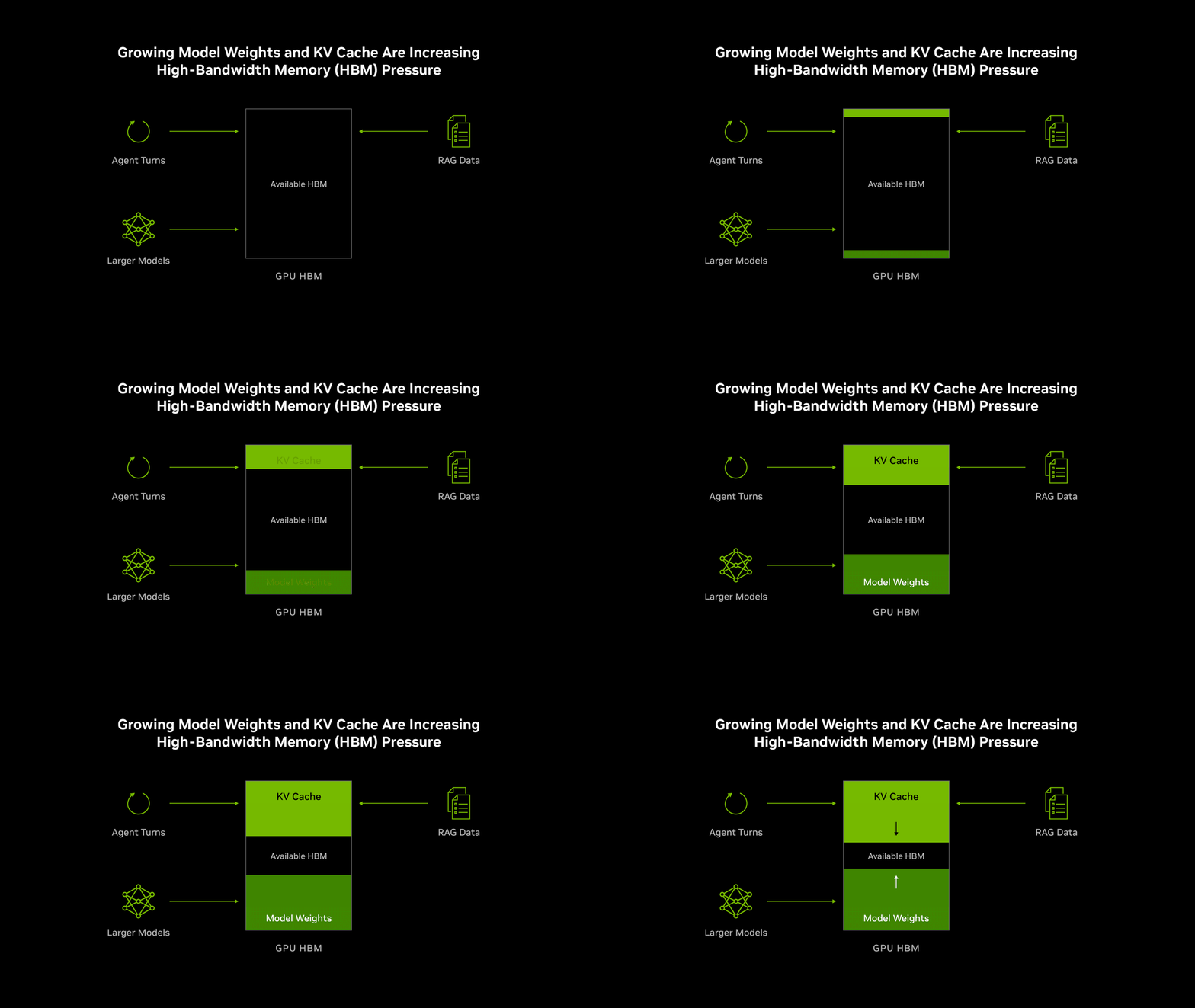
- The Escalating AI Memory Challenge
- High Bandwidth Memory: The Hardware Foundation
- HBM Evolution and Impact
- The Full-Stack Codesign Philosophy
- Interdependent Optimization
- Practical Strategies for Developers
- 1. Memory Profiling and Analysis
- 2. Data Layout and Locality
- 3. Memory-Aware Algorithms
- 4. Dynamic Memory Management
- 5. Leveraging Optimized Libraries
- The Future: HBM4 and Beyond
Key Takeaways
- •The Escalating AI Memory Challenge
- •High Bandwidth Memory: The Hardware Foundation
- •HBM Evolution and Impact
As technical directors and senior developers, we are constantly pushing the boundaries of what's possible in game development, especially with the increasing integration of AI. However, the relentless demand for larger models, longer contexts, and sophisticated agentic applications is creating unprecedented pressure on GPU memory. This isn't just a cost issue; it's a fundamental performance bottleneck that threatens to cap our ambitions. The NVIDIA blog post, "More Performance From Every Byte: How Full-Stack Codesign Solves AI’s Memory Challenge," highlights a critical approach: full-stack codesign. This strategy is essential for achieving optimal performance by addressing memory challenges from the silicon level all the way up to the application layer.
The Escalating AI Memory Challenge
The current landscape of AI development, particularly in areas like real-time game AI, procedural content generation, and intelligent NPCs, is characterized by an insatiable appetite for memory. Modern foundation models, with billions of parameters, require vast amounts of VRAM. Furthermore, the trend towards longer context windows for AI agents, allowing them to retain more information and make more informed decisions, directly translates to higher memory usage.
Consider an AI agent in a complex simulation environment. It might need to load a large language model, maintain a history of interactions, track environmental states, and generate dynamic responses. Each of these components contributes to peak memory consumption. If memory bandwidth or capacity becomes a bottleneck, the entire system's throughput suffers, leading to slower iteration times for developers and reduced responsiveness in live applications.
The problem is exacerbated by market dynamics: memory supply can tighten, and prices can rise, making brute-force hardware upgrades less feasible. This necessitates a more intelligent, holistic approach to memory management and optimization.
High Bandwidth Memory: The Hardware Foundation
At the heart of addressing this memory challenge is the adoption of advanced memory technologies. High BandBandwidth Memory (HBM) is a crucial enabler, offering significantly higher bandwidth compared to traditional GDDR memory. NVIDIA has been at the forefront, rapidly integrating new HBM generations into its accelerated computing stacks.
The shift to HBM3e and anticipating HBM4 represents a generational leap. HBM stacks memory dies vertically, integrating them much closer to the GPU die on an interposer. This drastically reduces the physical distance data needs to travel, allowing for wider interfaces and much higher clock speeds.
HBM Evolution and Impact
Let's visualize the impact of HBM generations on memory bandwidth:
- HBM2/HBM2e: Established the vertical stacking paradigm, offering a substantial boost over GDDR5/6.
- HBM3: Further improved bandwidth and capacity per stack.
- HBM3e: An enhanced version of HBM3, delivering even greater throughput, crucial for the most demanding AI workloads.
- HBM4: The next frontier, promising yet another significant increase in bandwidth and potentially capacity, which will be vital for future AI model sizes and complexity.
Integrating these technologies is not trivial. It requires close collaboration with memory partners and deep engineering expertise to ensure stable, high-performance operation. This "codesign" begins at the earliest stages of chip and system architecture.
The Full-Stack Codesign Philosophy
The core idea of full-stack codesign is that optimal performance isn't achieved by optimizing individual components in isolation. Instead, it requires a synchronized effort across the entire technology stack, from the fundamental hardware to the highest-level application code. For AI memory, this means understanding how memory is accessed, utilized, and managed at every layer and then designing each layer to complement the others.
The NVIDIA article identifies key layers in this full-stack approach:
1. Hardware Architecture: The physical design of the GPU, memory controllers, and the HBM stacks.
2. System Software: Operating system drivers, memory management units, and kernel-level optimizations.
3. Programming Models: CUDA, OpenCL, and other frameworks that expose hardware capabilities to developers.
4. Libraries and Frameworks: cuDNN, cuBLAS, PyTorch, TensorFlow, etc., which provide optimized primitives and high-level abstractions for AI.
5. Applications: Our game engines, custom AI agents, and simulation environments.
Interdependent Optimization
Let's consider how these layers interact to optimize memory usage:
- Hardware Architecture (E): Provides the raw capacity and bandwidth. Hardware designers must anticipate future memory access patterns of AI workloads.
- System Software (D): Manages virtual memory, schedules memory transfers, and implements caching strategies. Efficient drivers can minimize overhead and maximize effective bandwidth.
- Programming Models (C): CUDA, for instance, offers fine-grained control over memory types (global, shared, texture, constant) and allows developers to optimize data placement and access patterns to leverage HBM's strengths.
- Libraries and Frameworks (B): Highly optimized kernels within libraries like cuDNN are specifically designed to be memory-efficient, minimizing redundant data transfers and maximizing data locality. They implement advanced algorithms that are aware of the underlying memory hierarchy.
- Applications (A): Game developers need to choose memory-efficient AI models, implement smart data streaming, and manage asset loading to fit within available VRAM. Techniques like quantization, pruning, and model distillation reduce memory footprint.
Practical Strategies for Developers
While much of the lowest-level codesign happens at NVIDIA, game developers can significantly benefit by adopting a memory-conscious development paradigm.
1. Memory Profiling and Analysis
The first step to optimization is understanding where memory is being consumed and how it's being accessed. Tools like NVIDIA Nsight Systems and Nsight Compute provide detailed insights into GPU memory usage, bandwidth utilization, and kernel execution patterns.
- Identify Bottlenecks: Pinpoint kernels or data structures that are leading to excessive memory transfers or high latency.
- Analyze Access Patterns: Understand if your AI models are accessing memory sequentially or randomly, and how this impacts cache efficiency.
2. Data Layout and Locality
Optimizing data layout is crucial for HBM. Data that is frequently accessed together should be stored contiguously to maximize cache hit rates and leverage HBM's high bandwidth.
- Structure of Arrays (SoA) vs. Array of Structures (AoS): For GPU computations, SoA often performs better by allowing vectorized access to related data.
- Tiling and Blocking: For matrix operations or convolutions, breaking data into smaller, cache-friendly blocks can significantly improve performance by reusing data already in faster memory tiers (like shared memory on a GPU).
3. Memory-Aware Algorithms
When implementing AI algorithms, consider their memory access characteristics.
- Quantization: Reducing the precision of model weights (e.g., from FP32 to FP16 or INT8) can halve or even quarter the memory footprint with minimal impact on accuracy. This is a powerful technique for deploying large models in memory-constrained environments.
- Pruning and Sparsity: Removing redundant connections or weights from neural networks can reduce model size and accelerate inference.
- Efficient Data Structures: Choose data structures that minimize overhead and fragmented memory.
4. Dynamic Memory Management
For agentic AI, memory requirements can be highly dynamic.
- Memory Pools: Pre-allocate large blocks of memory and manage smaller allocations within them to reduce fragmentation and allocation overhead.
- Streaming and Swapping: For models or contexts too large to fit entirely in VRAM, implement intelligent streaming or swapping mechanisms to bring necessary data into VRAM just before it's needed. This is similar to texture streaming in graphics.
- Context Management: For LLM-based agents, actively manage the length of the conversational context. Summarize or archive older interactions to keep the active context within memory limits without losing critical information.
5. Leveraging Optimized Libraries
Always prioritize using NVIDIA's highly optimized libraries (cuDNN, cuBLAS, TensorRT) and frameworks (PyTorch, TensorFlow) over custom implementations for core AI operations. These libraries are meticulously crafted to leverage the underlying hardware architecture, including HBM, through full-stack codesign. They incorporate the latest research in memory optimization, kernel fusion, and parallel processing.
- TensorRT: For deployment, TensorRT can optimize models for inference, performing graph optimizations, layer fusion, and precision calibration to maximize throughput and minimize latency, often with significant memory savings.
The Future: HBM4 and Beyond
The journey of memory optimization is continuous. As AI models grow exponentially, the pressure on memory will only intensify. The anticipated arrival of HBM4 will provide another leap in raw performance, but the principles of full-stack codesign will remain paramount.
For game developers, this means staying abreast of these hardware advancements and, more importantly, understanding how software methodologies can best exploit them. The synergy between bleeding-edge hardware like HBM and intelligently designed software that leverages it is the key to unlocking the next generation of immersive, intelligent gaming experiences.
By embracing these codesign principles and integrating memory-aware practices into our development workflows, we can ensure our AI systems are not only powerful but also performant and scalable, delivering the highest throughput with the fastest agents. This proactive approach to memory management will be a defining factor in the success of future AI-driven game titles.
At White Cube Studios, we translate technical architecture into shipping systems across our specialized development pillars: