AI in Game Development: A Practical Guide to Responsible Innovation

- AI as a Force Multiplier: Accelerating Production and Content
- Intelligent Asset Creation and Engine Integration
- Streamlining Development Workflows with AI-Powered Tools
- AI for Deeper Gameplay Innovation
- Navigating the Challenges: Quality, Ethics, and Market Dynamics
- The "AI Slop" Deluge and Market Saturation
- Ethical Considerations and Protecting Creative Work
- The Developer's Mindset: Embracing Responsible Innovation
- Conclusion
Key Takeaways
- •AI as a Force Multiplier: Accelerating Production and Content
- •Intelligent Asset Creation and Engine Integration
- •Streamlining Development Workflows with AI-Powered Tools
The discourse around AI in game development has shifted dramatically in recent years. What was once speculative now forms a tangible, evolving part of our production pipelines and creative processes. As developers, we're navigating a landscape brimming with potential, yet also shadowed by significant challenges. It's a frontier demanding both technical prowess and a thoughtful, ethical approach.
At WhiteCube Studios, we're constantly evaluating these advancements, not as a replacement for human creativity, but as powerful augmentative tools. My perspective, honed through years of shipping titles, is that AI isn't just a trend; it's an inflection point that demands our strategic attention.
AI as a Force Multiplier: Accelerating Production and Content
The most immediate impact of AI is its ability to accelerate development, particularly in content generation and workflow automation. This is where we see practical, tangible benefits for studios of all sizes, offering advantages such as:
- Intelligent Asset Creation: Streamlining the generation of variations, texturing, or optimization for 3D assets.
- Advanced Simulation & Prototyping: Facilitating the transformation of complex simulation ideas into working applications with AI agents.
- Automated Workflows: Enhancing command-line interfaces with AI for faster builds, tests, and iterative processes.
- Smart QA: Employing AI agents to plan experiments, execute code, and verify results, improving quality assurance.
Intelligent Asset Creation and Engine Integration
Consider Unity's recent acquisition of Synty Studios, bringing their popular POLYGON 3D asset packs to Unity Spark. This move signals a clear direction towards integrating artist-made assets with AI-driven tools, streamlining the creation of diverse content. Imagine AI assisting in generating variations, texturing, or even optimizing these assets for performance. Synty Studios Joins Unity, Bringing Artist-Made Assets to Unity Spark
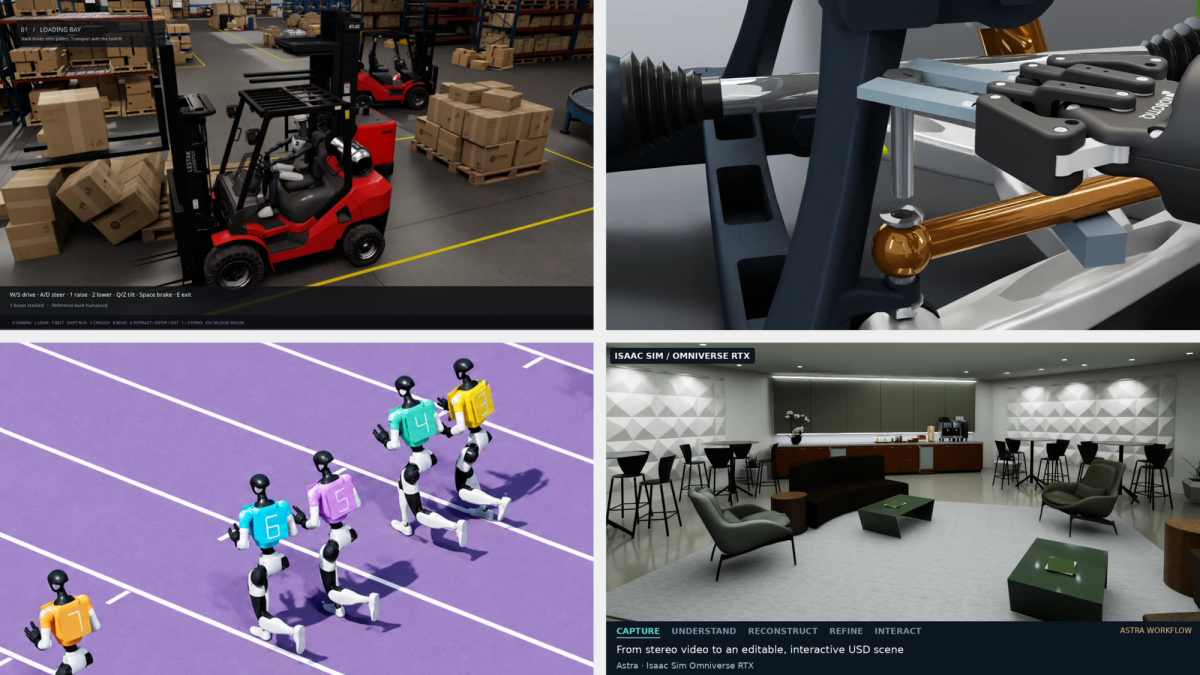
NVIDIA is also pushing the boundaries with their Omniverse platform, where developers can combine frontier AI models with Omniverse libraries. This allows for assembling assets, connecting physics, and checking scene behavior, effectively turning simulation ideas into working applications with AI agents. This isn't just about making art faster; it's about making complex simulations more accessible and iterative. Into the Omniverse: How Developers Turn Ideas Into Simulations With Frontier AI Agents
Furthermore, the availability of NVIDIA RTX Spark compact desktops from partners like ASUS, Dell, and MSI brings local AI agents, image, and video generation, and model fine-tuning directly to developers' Windows PCs. These systems, with significant unified memory and NVIDIA's AI software stack, provide a robust environment for working with larger local models, significantly boosting creative and development workflows. NVIDIA RTX Spark Compact Desktops Out Now
Streamlining Development Workflows with AI-Powered Tools
Beyond content, AI is revolutionizing our core development workflows. The release of Unity CLI 1.0, for instance, marks a significant step towards command-line automation. What's truly exciting is its potential to connect with AI coding agents like Claude Code, Codex, Grok Build, or Antigravity. This enables automated builds and tests directly from the terminal, drastically cutting down iteration times. The Unity CLI 1.0 is here!
NVIDIA's initiatives also highlight this trend. Ian Buck, at SC26, unveiled new tools for AI agents designed to plan experiments, execute code, and verify results on researchers' own systems. While presented in a scientific context, the implications for game development—especially in areas like complex system design, procedural generation logic, or even automated QA—are profound. Ian Buck Kicks Off NVIDIA’s Week at SC26 as Science Enters the Age of Agents
These advancements signify a shift. We're moving towards a future where intelligent assistants integrate seamlessly into our toolchains, handling repetitive tasks and allowing us to focus on the truly creative and challenging aspects of game design.
AI for Deeper Gameplay Innovation
The application of AI extends far beyond production efficiencies. Major players are investing heavily in AI for core gameplay innovation, suggesting a future where games are more adaptive, dynamic, and personalized.
Imagine AI-driven NPCs with truly dynamic personalities, procedural quests that react intelligently to player choices, or adaptive difficulty systems that learn from individual playstyles in real-time. This level of AI integration can transform the player experience, making each playthrough unique and deeply engaging. Even in playtesting, Unity suggests we consider how to act on feedback "when you build with AI," highlighting the interconnectedness of AI with every stage of development. How to playtest your first video game
Navigating the Challenges: Quality, Ethics, and Market Dynamics
While the potential is vast, we cannot ignore the significant challenges and concerns emerging alongside AI's rapid adoption. As developers, it's our responsibility to approach these issues head-on.
The "AI Slop" Deluge and Market Saturation
Veteran game designer Howard Scott Warshaw, known for classics like Yars' Revenge and infamously E.T. the Extra-Terrestial, recently drew a stark parallel. He likened the potential deluge of AI-made games to the glut of poor-quality titles that preceded the US video game crash of 1983. This warning resonates deeply. The creator of E.T. on the Atari 2600 likens the deluge of AI-made games to the glut of poor-quality titles released ahead of the US video game crash of 1983
The concern is that the ease of AI-driven content generation could flood platforms with low-effort, low-quality games, making it harder for genuinely innovative titles to stand out. This raises questions about discoverability and the overall perceived value of indie games, particularly on platforms like Steam. The concept of "clone-proof" games becomes more relevant, as rapid AI iteration could lead to a proliferation of similar concepts. How Clone-Proof Is Your Game? 4 Signs to Check
Ethical Considerations and Protecting Creative Work
The ethical implications of AI are equally critical. European Game Worker unions have published a manifesto warning against unchecked AI usage, outlining concerns regarding grievances, pitfalls, and proposing solutions. This highlights a crucial need for industry-wide standards and protections for creators. European Game Worker unions publish manifesto warning against unchecked AI usage
Voice actor Jennifer Hale, in a GDC Side Quest podcast, also emphasized the importance of protecting creative work in the age of AI. This extends beyond voice acting to all creative disciplines within game development, from concept art to music composition. As an industry, we must establish clear guidelines for data sourcing, attribution, and fair compensation when AI tools leverage existing creative works. Jennifer Hale Reflects on Iconic Roles and Industry Evolution on GDC Side Quest Podcast
The Developer's Mindset: Embracing Responsible Innovation
So, how do we, as game developers, navigate this complex landscape? The answer lies in responsible, strategic, and human-centric integration of AI.
1. Augmentation, Not Replacement: View AI as a powerful co-pilot, not a replacement for human creativity or decision-making. Its strength lies in handling repetitive, data-intensive, or computationally heavy tasks, freeing up developers to focus on high-level design, artistic vision, and emotional storytelling.
2. Strategic Integration: Identify specific pain points in your development pipeline where AI can genuinely add value. Is it automated testing, procedural asset variation, intelligent NPC behavior, or personalized player experiences? Don't just implement AI for AI's sake.
3. Quality Control is Paramount: Even with AI-generated content, human oversight and curation remain essential. Establish robust quality assurance processes to ensure that AI-assisted assets and features meet your game's artistic and technical standards. The goal is to elevate quality, not dilute it.
4. Ethical Sourcing and Transparency: Be mindful of the data used to train your AI models. Ensure it is ethically sourced and that you have the necessary rights and permissions. Transparency with players about AI's role in your game can also foster trust.
5. Continuous Learning: The AI landscape is evolving at an incredible pace. Stay informed about new tools, techniques, and ethical discussions. Attend conferences like GDC, which consistently highlight key trends shaping game development, including AI. 2026 GDC Trends Report: 5 Insights on the Future of Game Development
Conclusion
AI in game development is a double-edged sword. On one side, it offers unprecedented opportunities for accelerating production, automating tedious tasks, and unlocking entirely new forms of gameplay innovation. The advancements from Unity with CLI and Synty Spark, and NVIDIA's comprehensive AI ecosystem, are undeniable testaments to this potential.
On the other side, we face legitimate concerns about market saturation with "AI slop," the ethical implications for creative labor, and the fundamental challenge of maintaining artistic integrity. These are not trivial issues; they demand our collective attention and proactive solutions.
At WhiteCube Studios, we believe the path forward involves embracing AI with an informed, critical, and responsible mindset. By leveraging its power strategically, while safeguarding our creative principles and fostering an ethical development environment, we can truly build the next generation of groundbreaking games. The future isn't about AI replacing us; it's about AI empowering us to create more, better, and faster.
At White Cube Studios, we translate technical architecture into shipping systems across our specialized development pillars: