AI in Game Dev: Powering Creativity, Demanding Responsibility

- The Acceleration Engine: AI-Driven Tools for Developers
- Unity CLI 1.0 and AI Agent Integration
- NVIDIA's Local AI Revolution: RTX Spark
- Streamlined Asset Pipelines with Synty Studios
- Navigating the Ethical and IP Minefield
- The Union's Call for Responsibility
- The Specter of AI Cloning
- Protecting Creative Voices
- Strategies for Responsible AI Integration
- Strategic Adoption and Human Oversight
- Focus on Uniqueness and Strong IP
- Understand Limitations and Evolving Ethics
- The Developer's Role in Shaping AI's Future
Key Takeaways
- •The Acceleration Engine: AI-Driven Tools for Developers
- •Unity CLI 1.0 and AI Agent Integration
- •NVIDIA's Local AI Revolution: RTX Spark
The landscape of game development is undergoing a seismic shift, driven by the rapid evolution of Artificial Intelligence. As game developers, we stand at a critical juncture: embracing AI for unprecedented creative and efficiency gains, while simultaneously navigating the complex ethical and practical challenges it presents. This isn't just about adopting new tools; it's about shaping the very future of our craft with foresight and responsibility.
The Acceleration Engine: AI-Driven Tools for Developers
The practical applications of AI in game development are expanding daily, offering tangible benefits for streamlining workflows and automating tedious tasks. From code generation to asset creation, new tools are emerging that promise to accelerate our development cycles. It's an exciting time, particularly for Unity game developers and those leveraging NVIDIA's latest offerings.
Unity CLI 1.0 and AI Agent Integration
Unity has made a significant stride with the release of Unity CLI 1.0 out of beta. This command-line interface is more than just a convenience; it's a gateway for integrating powerful AI agents directly into our build and test pipelines. Imagine connecting tools like Claude Code, Codex, Grok Build, or Antigravity to your Unity project.
This allows for automating builds and tests directly from the terminal, a paradigm shift for continuous integration and rapid iteration. For any Unity game developer, this means less time wrestling with manual processes and more time focusing on core game design and innovation. It's about empowering developers to build at the speed of their ideas.
NVIDIA's Local AI Revolution: RTX Spark
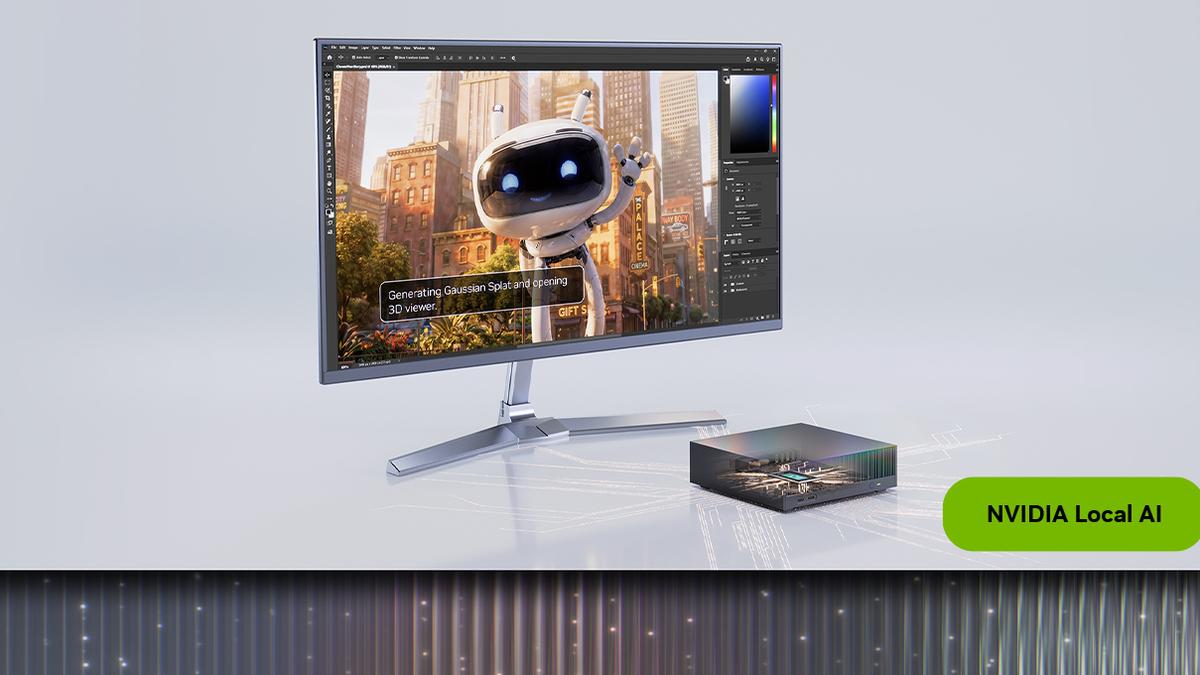
NVIDIA is pushing the boundaries of local AI capabilities, bringing serious processing power directly to developers' desktops. The new NVIDIA RTX Spark compact desktops are designed for local AI agents, enabling on-device image and video generation, alongside model fine-tuning. This offers incredible potential for artists and designers to rapidly prototype AI-generated content without relying on cloud services.
Furthermore, NVIDIA's vision extends to AI agents capable of planning experiments, running code, and checking results on researchers' own systems. For larger-scale development and research, powerful NVIDIA solutions can turn a desk into a supercomputing lab, providing significant compute for advanced AI development. These local solutions grant greater control, privacy, and speed, critical for sensitive projects.
Streamlined Asset Pipelines with Synty Studios
While not directly an AI feature, Unity's acquisition of Synty Studios and the integration of their POLYGON 3D asset packs into Unity Spark has significant implications for AI-driven content creation. High-quality, consistent assets are the fuel for many generative AI models.
Having a robust, accessible library of artist-made assets within the Unity ecosystem means developers can more easily feed models for prototyping environments, characters, or props. This synergy between curated assets and AI tools can dramatically reduce the time spent on initial content generation, allowing iteration to happen faster.
Navigating the Ethical and IP Minefield
The power of AI comes with a profound responsibility. As we embrace these tools, we must also confront the significant ethical and intellectual property (IP) challenges that have emerged. The game industry is actively grappling with these issues, and developers need to be aware of the implications.
The Union's Call for Responsibility
European Game Worker unions have published a manifesto warning against unchecked AI usage. This highlights a crucial concern: the potential for AI to displace human labor, devalue creative work, or be used in ways that are unethical. As developers, we must consider the human impact of our AI integrations.
This isn't just a philosophical debate; it impacts livelihoods and the future of creative professions within our industry. Responsible AI integration means understanding these concerns and actively seeking solutions that augment human creativity rather than diminish it.
The Specter of AI Cloning
A pressing concern for indie game marketing and development, especially for smaller studios, is the rise of AI cloners. The speed at which AI can generate content raises fears of "fast-follow clones" that can quickly flood the market. This issue is a frequent topic of discussion among indie developers.
However, a counter-perspective suggests that the first game to release a strong demo can often "smother out" these clones. The key lies in creating a "clone-proof" game through unique game design, compelling mechanics, and strong IP. While AI can replicate styles, it struggles to replicate true innovation and a well-executed vision.
Protecting Creative Voices
The discussion around protecting creative work in the age of AI extends to every aspect of game development, including voice acting. Acclaimed voice actor Jennifer Hale recently reflected on this topic on the GDC Side Quest podcast. Her insights underscore the importance of safeguarding original performances and ensuring fair compensation when AI tools utilize existing creative works.
This concern is not limited to voice. It applies to art, music, narrative, and code. As developers, we must be diligent in understanding the provenance of data used to train AI models and advocate for ethical practices that respect creators' rights.
Strategies for Responsible AI Integration
As game developers, we have a unique opportunity to shape the narrative and practice of AI in our industry. It's not about avoiding AI, but about integrating it thoughtfully and responsibly.
Strategic Adoption and Human Oversight
Embrace AI tools like Unity CLI's automation capabilities or NVIDIA Spark's local generation power for tasks that benefit from efficiency and scale. Use them to generate prototypes, assist with mundane coding, or create variations. However, always retain human oversight and judgment. AI should augment our creativity, not replace our critical decision-making or artistic vision. The human element remains paramount in refining, curating, and injecting soul into our games.
Focus on Uniqueness and Strong IP
In an era where AI can quickly generate "good enough" content, truly unique game design and strong intellectual property become even more valuable. Invest in innovative mechanics, compelling narratives, and distinctive art styles that are difficult for AI to replicate meaningfully. This is where your studio's identity and competitive edge will lie. Your game's core loop, its emotional resonance, and its unique selling propositions are your best defense against generic AI clones.
Understand Limitations and Evolving Ethics
Stay informed about the capabilities and limitations of AI technologies. Understand the legal and ethical frameworks evolving around AI-generated content, copyright, and data usage. Engage with industry discussions, union perspectives, and policy changes. Our collective informed participation will be crucial in establishing best practices for the entire game development community.
The Developer's Role in Shaping AI's Future
The integration of AI into game development is not a question of "if," but "how." We, the developers, are the architects of this future. By leveraging powerful new tools like Unity CLI 1.0 and NVIDIA Spark with a keen awareness of the ethical and IP challenges, we can build incredible new experiences while upholding the values of creativity, fairness, and innovation. Let's collectively strive for an AI-powered future that empowers us to create better games, not just faster ones, and respects the human ingenuity at its core.
At White Cube Studios, we translate technical architecture into shipping systems across our specialized development pillars:
