Warhammer Blood Bowl Beta Guide: Mastering New Mechanics

Key Takeaways
- •Understanding the Turnover Mechanic and Risk Sequencing
- •Risk Stratification Protocol
- •Tackle Zones and Pitch Spatial Control
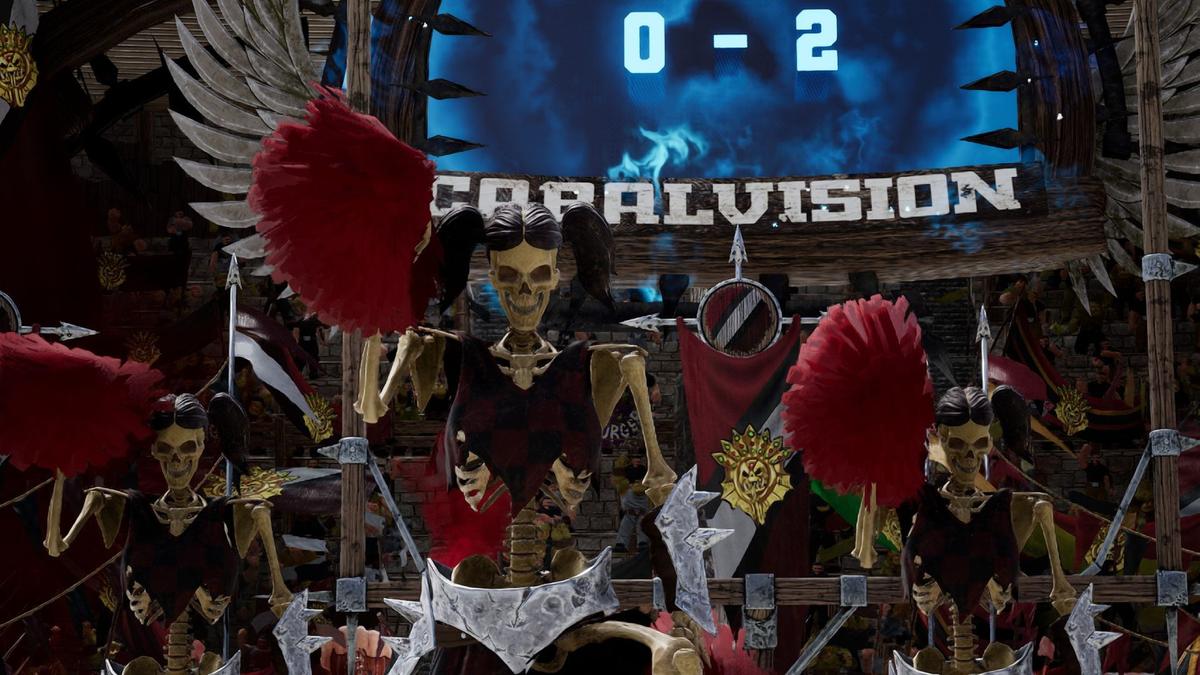
Warhammer Blood Bowl continues to stand as one of the most mechanically demanding tabletop adaptations in digital gaming. Rather than rewriting the foundational rules of Games Workshop's brutal fantasy sports classic, the latest iteration functions as an extensive systemic overhaul. Often characterized as a refined "Blood Bowl 3.5" upgrade, this playtest focuses on tightening core gameplay loops, improving match flow responsiveness, and clarifying match state feedback.
For coaches returning to the pitch or newcomers looking to compete during the beta playtest, navigating Blood Bowl requires an understanding of game balance, probabilistic risk management, and positional spatial control. Every movement decision carries catastrophic turnover potential, making tactical literacy vital to sustaining your drives and defending against opposing touchdowns.
Understanding the Turnover Mechanic and Risk Sequencing
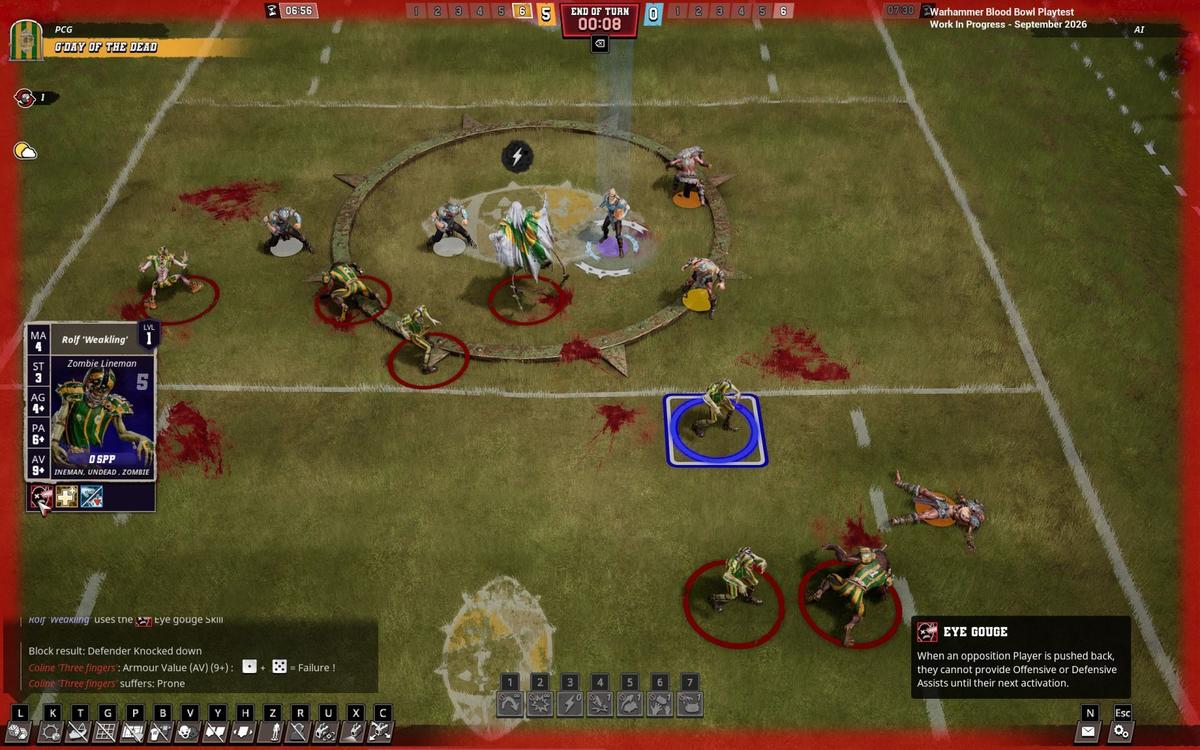
The governing principle of Blood Bowl game design is the turnover rule. Any failed action that causes an active player to drop the ball, fail a dodge, get knocked down, or miss a pass instantly terminates the coach's entire turn. Unresolved moves are forfeited immediately, leaving players exposed across the pitch.
Because of this harsh rule constraint, high-level tactical play depends completely on action sequencing. Coaches must categorize actions into zero-risk moves, low-risk calculations, and high-risk gambles. Executing mandatory non-dice actions prior to rolling any dice guarantees board development without the hazard of premature turn endings.
Risk Stratification Protocol
To consistently dominate possessions and maintain board control, follow this sequential execution plan on every offensive and defensive turn:
- Free Standing and Repositioning: Stand up downed players who do not require agility rolls. Move uninhibited players to reinforce coverage areas where no opposing tackle zones apply.
- Forming Assists: Reposition secondary lineman adjacent to targets to establish offensive assists before throwing any blocks.
- Favorable Dice Engagement: Execute two-dice or three-dice blocks where your strength advantage gives you selection authority over the block results.
- Ball Handling and Ground Pickups: Attempt ball pickups and handoffs only after offensive cages and screen walls are firmly set in place.
- Breakaway Gambles: Execute one-dice blocks, blitzes through enemy zones, or high-risk dodges as the final operations of your turn.
Tackle Zones and Pitch Spatial Control
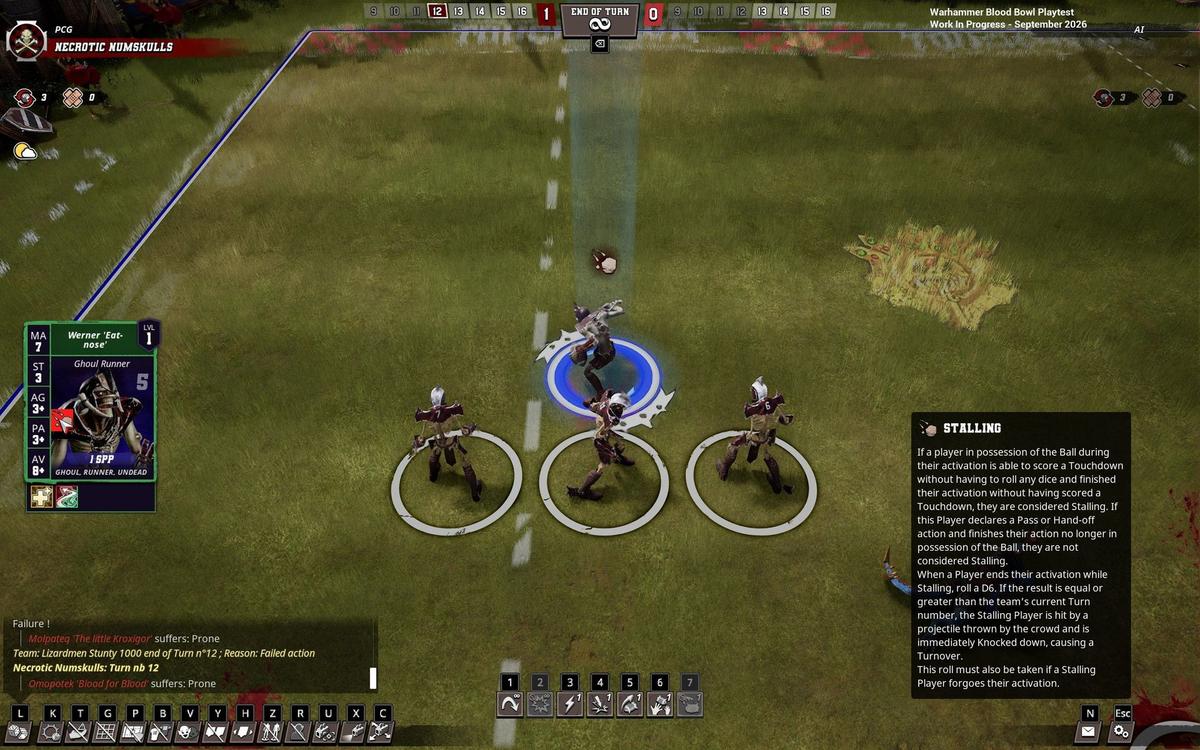
Spatial geometry dictates Blood Bowl victory conditions. Every upright player projects a tackle zone across the eight squares surrounding them. Opponents entering, moving through, or attempting to dodge out of these squares suffer negative modifiers to their agility checks.
Effective game design in turn-based tactics relies on zoning to restrict opponent pathfinding. In Blood Bowl, defensive lines should rarely form continuous base-to-base contact. Packing players cheek-by-jowl allows the opposing offense to generate chain blocks and push defenders backward into clustered inefficiency.
The Defensive Screen Strategy
Instead of engaging in direct scrums, top coaches utilize spaced screening. By leaving a single empty square between each defender, an impassable tackle barrier is erected across the pitch.
- Space Distribution: Position your defensive players two squares apart. This forces opposing ball carriers to burn agility rolls simply attempting to dodge through the overlapping tackle zones.
- Preventing Multi-Blocks: Spaced screens make it impossible for offensive lines to perform follow-up blocks against adjacent teammates in a single sequence.
- Depth and Layering: Run a dual-line screen. The front row absorbs blitzes and stalls momentum, while the secondary sweeper layer intercepts loose balls and tags outflanking runners.
The Anatomy of the Standard Offensive Cage
Advancing the ball against disciplined defenses demands structured convoy architecture. The offensive "cage" is the premier tactical formation across virtually every roster archetype, from heavy Orc squads to agile Elven teams.
A textbook cage positions the ball carrier in the center square of a three-by-three grid, protected by four corner guards occupying the diagonals. Because diagonal defenders cover the lateral and forward squares with overlapping tackle zones, opposing players cannot directly target the ball carrier without knocking down at least one corner guardian first.
Sustaining Cage Integrity
- Anchor Corners Firmly: Ensure corner defenders remain upright. If an opponent blitzes a corner and knocks them prone, shift adjacent linemen into the perimeter gap immediately on your next turn.
- Avoid Unnecessary Contact: Do not advance the cage into base contact with opposing lineman unless you intend to punch a hole through the line with a designated blitz action.
- Maintain Pivot Flexibility: Move the core unit cohesively. Leaving one corner guard detached by more than one square fractures the entire tackle zone envelope and exposes the ball runner.
Reroll Economy and Playtest Adaptations
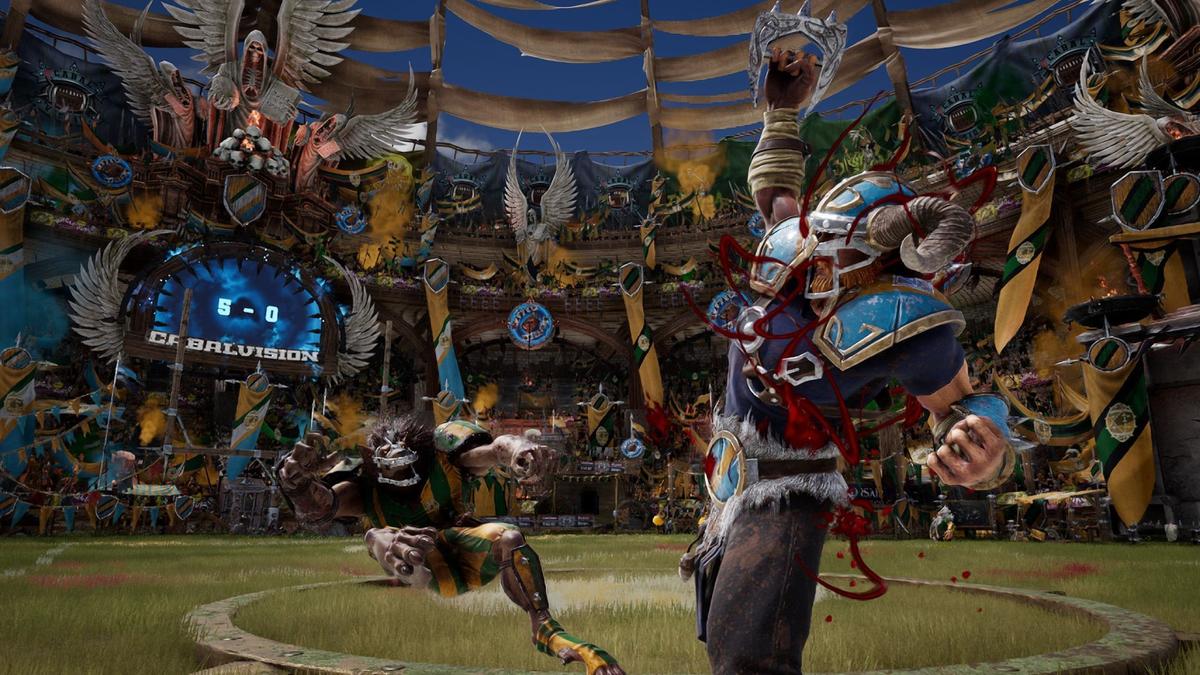
Team rerolls represent your most precious resource over both sixteen-turn halves. In the updated beta environment, interface refinements provide clearer visual indicators of probability checks and skill modifiers, giving players better telemetry before committing resources.
Managing rerolls requires discipline. Coaches often waste rerolls during early turns on inconsequential block dice, leaving themselves defenseless when an essential pickup fails in the endzone during turn eight or sixteen.
Guidelines for Spending Rerolls
- Preserve for Turnover Prevention: Never spend a team reroll on a block result of "Pushed" early in a turn unless that push directly opens a touchdown lane.
- Prioritize Ball Security: Save rerolls almost exclusively for failed pickups, critical catches, and must-make dodges involving the active ball carrier.
- Track Skill Redundancies: Exploit inherent player traits like Dodge, Pass, or Catch. These passive skills grant free single-action rerolls, allowing you to preserve team rerolls for unprotected linemen.
Adapting to the Beta Playtest Polish
The upgrade to this updated iteration improves camera stability, menu responsiveness, and clarity in line-of-scrimmage setup phases. Leverage the improved UI to verify assist calculations prior to executing hits.
By applying disciplined turn sequencing, structuring tight screens, advancing via robust cage geometry, and strictly protecting your team reroll bank, you will steadily minimize reliance on lucky dice and transform your Blood Bowl playtest run into a dominant competitive campaign.
At White Cube Studios, we translate technical architecture into shipping systems across our specialized development pillars: