June 22, 2026
6 min read
Valve's $1050 Steam Machine: A Developer's Deep Dive
Key Takeaways
- •Introduction
- •The Supply Chain Crisis: AI vs. Game Dev Silicon
- •Scaling Across Valve's Hardware Spectrum
Introduction
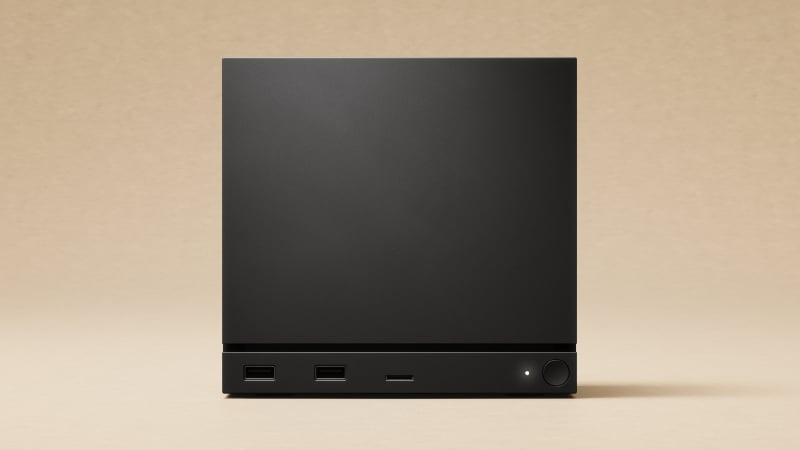
Valve has officially entered the living room hardware arena once again, and this time, the price tag is turning heads. The newly announced Steam Machine starts at a staggering $1,049 USD for the 512GB base model and climbs to $1,349 USD for the 2TB version. Unlike the highly successful and entry-level friendly Steam Deck, which starts at $399 and democratized handheld PC gaming, the Steam Machine is a premium, high-end desktop-in-a-console-shell designed to sit under a 4K TV.
For game developers, this is not just another hardware release. It introduces a challenging targeting paradigm. We are no longer just optimizing for a low-power, 15-watt handheld target at 800p resolution. We now must scale our games upward to support a high-end, high-TDP living room machine targeting native 1440p or 4K resolutions. As a developer, navigating this massive gap between Steam Deck and Steam Machine is a technical balancing act of rendering pipelines, asset budgets, and modern upscaling integrations.
The Supply Chain Crisis: AI vs. Game Dev Silicon
To understand the Steam Machine's eye-watering price tag, we have to look behind the scenes at the silicon supply chain. In statements accompanying the announcement, Valve admitted that their original pricing goals are "no longer viable" due to ongoing hardware supply issues. This is a polite way of describing a brutal reality: the global artificial intelligence boom has crowded game developers out of advanced packaging and manufacturing capacity.
Currently, companies like NVIDIA are purchasing every scrap of TSMC's CoWoS (Chip-on-Wafer-on-Substrate) packaging and high-bandwidth memory (HBM) supply to build Hopper and Blackwell superchips for enterprise data centers. Valve’s custom AMD APU relies on these same advanced silicon nodes and packaging channels. When data centers are willing to pay tens of thousands of dollars per chip, small-form-factor gaming hardware suffers from reduced allocations and inflated component costs.
For developers, this supply chain bottleneck translates directly into adoption metrics. The Steam Machine will not have the rapid, massive install base of the Steam Deck. It will roll out slowly, beginning with a randomized preorder queue starting June 25. Developers should expect a highly enthusiastic but niche enthusiast audience initially, meaning that targeting this platform must be done without sacrificing the broader PC and Steam Deck markets.
Scaling Across Valve's Hardware Spectrum
The divergence in performance targets between Valve’s two primary hardware offerings requires a robust, scalable graphics configuration pipeline. Developers cannot afford to maintain completely separate codebases for the Steam Deck and the Steam Machine. Instead, we must architect engines to scale dynamically.
| Parameter | Steam Deck Target | Steam Machine Target |
|---|---|---|
| Typical Target Resolution | 1280 x 800 (800p) | 2560 x 1440 (1440p) / 3840 x 2160 (4K) |
| Thermal Design Power (TDP) | 15W Max | High-TDP Desktop-Class Power |
| Asset Quality Level | Low to Medium | High to Ultra |
| Primary Upscaler | FSR 2 / FSR 3 Temporal | FSR 4 Neural AI |
| Target Frame Rate | 30 - 60 FPS | 60 - 120 FPS |
To manage this range of targets, games must utilize dynamic resolution scaling (DRS) alongside a unified asset quality pipeline. In Unity 6 or Unreal Engine 5, developers should set up automated tier-based asset cooking. High-fidelity textures, complex shaders, and dense meshes can be baked out for the Steam Machine profile, while the same assets are aggressively mipmapped, simplified, and optimized for the Steam Deck's 15-watt envelope.
The Architectural Pivot to FSR 4 Neural Upscaling
The most technically exciting news hidden within the Steam Machine launch is Valve's collaboration with AMD on FSR 4 (FidelityFX Super Resolution 4) support. FSR 4 represents a major architectural shift from previous iterations. While FSR 1, 2, and 3 relied on hand-crafted spatial and temporal heuristics, FSR 4 is a fully AI-driven neural upscaling technology, aligning it with NVIDIA’s DLSS and Intel’s XeSS.
Driving 4K living room gaming on console-sized hardware requires aggressive upscaling. Pushing native 4K at 60 frames per second is incredibly expensive for an APU. By integrating FSR 4, Valve and AMD are betting that machine learning can bridge the gap, generating high-fidelity frames from lower-resolution render targets (such as 1080p or 1440p) without the temporal artifacts, ghosting, or shimmering common in older upscalers.
For engine programmers, integrating FSR 4 means preparing the rendering pipeline to output clean, high-precision motion vectors and depth buffers to feed the neural network. Because neural upscaling runs on specialized hardware execution blocks, developers must also profile their games to ensure that the upscaler's overhead does not bottleneck the GPU's main render pass.
Designing User Interfaces for Two Viewports
Another critical but often overlooked design challenge is user interface (UI) scaling. The Steam Deck is played at arm's length on a small 7-inch screen. The Steam Machine is played from a couch, ten feet away from a 55-inch television. A UI font size or layout that works perfectly on one will be completely unreadable on the other.
To address this, developers must implement a responsive, DPI-aware UI framework. Using canvas scale factors in Unity or anchor-based layouts in Unreal, the UI should automatically adapt its layout depending on the detected display device. On the Steam Deck, elements like inventory slots, mini-maps, and dialogue text need to be physically larger relative to the screen size. On the Steam Machine, these elements can scale down to maximize screen estate, while critical text must maintain a high enough contrast and font size to prevent eye strain at a distance.
Conclusion: Balancing the Valve Ecosystem
The $1,050 Steam Machine is a bold, premium experiment by Valve to capture the high-end PC living room market. While the pricing will limit immediate mass-market adoption, it establishes a new high-performance target within the Steam Ecosystem.
As game developers, our goal is to build games that feel native and run beautifully regardless of the platform. By establishing robust asset-scaling pipelines, preparing for AMD's AI-driven FSR 4 upscaling, and designing responsive UIs, we can ensure our titles deliver a premium experience on the Steam Machine without neglecting the millions of players on the Steam Deck. The future of PC gaming is diverse, and our engineering must be just as adaptable.