June 10, 2026
7 min read
Unreal Engine MegaLights on Mobile: Inside Arm's Tech
Key Takeaways
- •The Challenge of Mobile Ray Tracing and MegaLights
- •Enter the Neural Stack: Arm's Three Pillars of Graphics Acceleration
- •1. Neural Super Sampling (NSS)
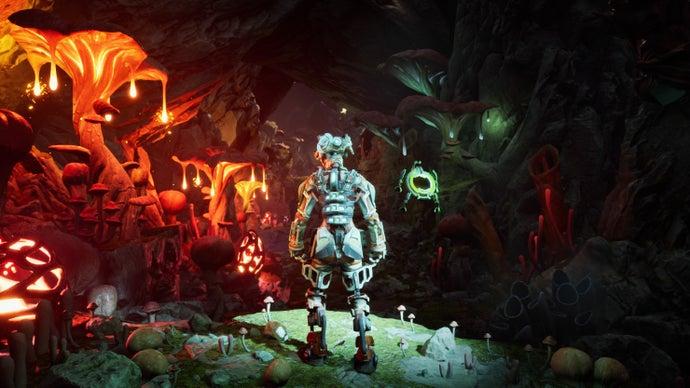
On June 10, 2026, a groundbreaking announcement sent a clear signal to the game development community about the future of mobile graphics. Arm, in collaboration with Sumo Digital, unveiled Neural Dawn—a 120-minute, four-level tech demo set in a sprawling cave network. While a new cave explorer demo is always interesting, Neural Dawn represents a monumental milestone: it is the first mobile implementation of Unreal Engine's MegaLights technology running in real-time.
Built using Unreal Engine 5.6.1, the demo showcases desktop-class visuals, including real-time ray-traced shadows and complex dynamic lighting, on a mobile device. For years, mobile developers have had to compromise on lighting, relying heavily on pre-baked lightmaps and static probes. The arrival of MegaLights on mobile, enabled by Arm's new neural graphics stack, marks the beginning of a new era in mobile game rendering.
The Challenge of Mobile Ray Tracing and MegaLights
To appreciate what Arm and Sumo Digital have achieved, we first need to understand the rendering cost of MegaLights. Introduced in Unreal Engine 5.5, MegaLights allows developers to place hundreds of dynamic, shadow-casting light sources in a scene without the traditional performance penalties. On desktop and console platforms, it achieves this by using a stochastic light selection algorithm and advanced ray-tracing pipelines.
However, bringing this to mobile has long been considered a pipe dream. Mobile hardware is bound by strict physical constraints:
- Power Budgets: Mobile processors typically operate under a 3-5 watt thermal envelope. Exceeding this causes rapid battery drain and thermal throttling, which drops frame rates.
- Bandwidth Limitations: High-fidelity ray tracing requires massive memory bandwidth to traverse Bounding Volume Hierarchies (BVH) and fetch textures. Mobile LPDDR memory simply cannot compete with GDDR6 or unified console memory architectures.
- Shader Overhead: Calculating ray-triangle intersections and denoising the resulting noisy images in real-time requires significant compute power that mobile GPUs cannot spare.
Because of these bottlenecks, Epic Games did not officially support MegaLights on mobile platforms. Up until now, mobile developers targeting high visual fidelity had to stick to forward rendering, static lighting, or very limited dynamic shadow maps.
Enter the Neural Stack: Arm's Three Pillars of Graphics Acceleration
The key that unlocked MegaLights on mobile is Arm's new neural graphics technology. Rather than forcing the GPU's hardware ray-tracing units to do all the heavy lifting, Arm offloads the most expensive parts of the rendering pipeline to specialized neural accelerators (NPUs) built directly into their next-generation Mali GPUs.
This neural graphics stack operates on three core pillars:
1. Neural Super Sampling (NSS)
Neural Super Sampling is Arm's answer to DLSS and FSR. Instead of rendering the game at a native high resolution (such as 1440p or 1080p), the engine renders the scene at a much lower base resolution (like 720p or even 540p). The NPU then uses a lightweight neural network to reconstruct a high-quality, high-resolution image. Because rendering at 540p requires a fraction of the pixel fill rate of 1080p, the GPU has more headroom to calculate complex lighting equations and dynamic shadow maps.
2. Neural Super Sampling and Denoising (NSSD)
Ray-traced shadows and reflections are inherently noisy because the engine can only cast a limited number of rays per pixel to maintain performance. Denoising these images—turning a grainy, speckled shadow into a smooth, realistic penumbra—is one of the most computationally expensive steps in modern rendering.
Arm's NSSD uses a neural network trained specifically to reconstruct clean lighting and shadow maps from highly sparse ray-traced inputs. By replacing traditional, expensive mathematical denoisers with a fast neural network running on the NPU, Arm allows Unreal Engine 5.6.1 to clean up MegaLights' stochastic shadows in milliseconds, making real-time mobile ray tracing viable.
3. Neural Frame Rate Upscaling (NFRU)
To achieve smooth, responsive gameplay, games need to run at high frame rates. However, rendering 60 or 120 unique frames per second with dynamic lighting is incredibly demanding. NFRU is a frame generation technology designed specifically for mobile power envelopes. It analyzes motion vectors and historical frame data to generate intermediate frames entirely on the NPU. This allows a game rendering at a base of 30 FPS to be displayed at a buttery-smooth 60 FPS, or 60 FPS to be upscaled to 120 FPS, without placing any additional load on the main rendering pipeline.
The Hardware: Next-Gen Arm Mali GPUs
It is important to note that this is not a software-only solution. The Neural Dawn tech showcase is designed to run on upcoming Android devices powered by Arm's next-generation Mali GPUs, which feature dedicated, hardware-level neural accelerators. These new chips are expected to launch in late 2026.
By coupling dedicated neural cores with traditional shader cores, Arm has created a heterogeneous rendering pipeline. The shader cores focus on geometry and base material passes, the hardware ray-tracing units handle sparse ray intersections, and the NPU takes over denoising, upscaling, and frame generation. This division of labor keeps the device cool while delivering visuals that rival current-generation home consoles.
What This Means for Mobile Game Developers
For game developers and level designers, this technology is a paradigm shift. We are moving away from the constraints of baked lighting towards fully dynamic environments.
- Dynamic Environments: With MegaLights, we can build games where players can destroy light sources, carry moving lanterns, or explore environments with changing times of day, all while maintaining realistic, soft shadows.
- Streamlined Workflows: Baking lightmaps is a time-consuming process that slows down iteration times. If we can rely on real-time neural lighting, we can test level designs instantly, dramatically speeding up the production pipeline.
- New Optimization Vectors: Instead of spending hours tweaking lightmap resolutions and merging meshes to reduce draw calls, developers will focus on configuring and profiling the neural graphics stack. We will need to balance base resolution, denoiser inputs, and NPU utilization to find the sweet spot for our target hardware.
While we are still a few months away from seeing these next-generation Arm chips in retail consumer devices, the Neural Dawn demo proves that the technical foundation is solid. The future of mobile gaming is not just about raw silicon power—it is about intelligent, neural-assisted rendering.
As we move closer to the release of these new mobile platforms, developers should start familiarizing themselves with Unreal Engine's MegaLights system and scalable rendering pipelines. Keep your assets clean, understand your memory footprints, and get ready for a world where desktop-class lighting is in the palm of your hand.
For teams looking to integrate advanced rendering pipelines or optimize their games for next-generation mobile hardware, feel free to reach out via my /contact page.