June 17, 2026
6 min read
Thatgamecompany at 20: The Power of Emotional Game Design
Key Takeaways
- •Introduction: Redefining What Games Can Be
- •The Anti-Columbine Spark: Designing for Empathy
- •The Spectrum of Emotion: A Chronology of Play
Introduction: Redefining What Games Can Be
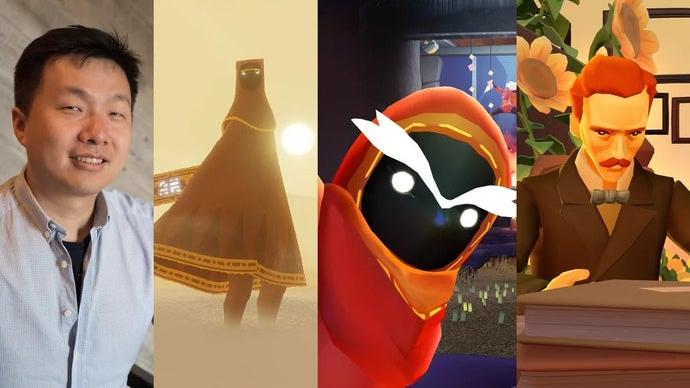
As a game developer, I often find myself reflecting on why we build what we build. In an industry frequently dominated by gameplay loops centered on combat, mechanical optimization, and power fantasies, it is easy to lose sight of the broader emotional canvas of our medium. That is why the 20th anniversary of Thatgamecompany is such a vital milestone to dissect. Over two decades, CEO Jenova Chen and his team have consistently pushed the boundaries of interactive art, proving that games can evoke feelings far beyond the standard dopamine rush of victory.
Their journey from a student project at the University of Southern California (USC) to a studio that recently announced the upcoming "Dear Van Gogh" experience for Sky: Children of the Light is a masterclass in creative vision. In a recent interview with GamesIndustry.biz, Chen looked back at the studio’s history, providing invaluable lessons on how we can design games with emotional resonance and human truth at their core.
The Anti-Columbine Spark: Designing for Empathy
To understand Thatgamecompany's design philosophy, we have to look back to the mid-2000s. During this period, the gaming industry was navigating a highly charged post-Columbine media climate. Mainstream media frequently scrutinized video games, often reducing the entire medium to a source of violence, addiction, and anti-social behavior.
For Jenova Chen, this was a personal and professional challenge. Growing up, games were often stigmatized. As he noted in the GamesIndustry.biz interview, where he grew up, video games were often viewed as gambling, oversexualized, or excessively violent. He recalled that his parents would have felt ashamed had he told them he wanted to make video games.
This stigma fueled a desire to change the narrative. At USC, Chen and co-founder Kellee Santiago set out to create interactive experiences that could evoke positive, complex emotions like awe, serenity, and connection. They wanted to prove to the world—and to their own families—that games are a legitimate, high-art form of expression. For us as developers, this is a reminder that design constraints and cultural challenges can be the ultimate fuel for innovation.
The Spectrum of Emotion: A Chronology of Play
Thatgamecompany's portfolio represents a deliberate exploration of different emotional states. Instead of designing around mechanics first, they design around an emotional goal. Let’s break down their trajectory:
- flOw (2007): Born from Chen's academic research into Mihaly Csikszentmihalyi's flow theory, this meditative game focused on a minimalist, fluid state of focus. By allowing players to dynamically adjust the difficulty through their in-game choices, it created a serene, stress-free entry point into interactive art.
- Flower (2009): A poetic exploration of the tension between nature and urban development. The player guides a gust of wind, gathering flower petals across sprawling fields. It is a masterclass in using color, sound, and motion to convey a sense of liberation and environmental harmony.
- Journey (2012): Arguably one of the most influential games of the 21st century. Journey stripped away traditional multiplayer mechanics—no chat, no matchmaking lobbies, no competitive scoring—and replaced them with a wordless, anonymous cooperative experience. By limiting communication, the game fostered a deep, instinctual sense of companionship and empathy.
- Sky: Children of the Light (2019): Expanding on the cooperative foundation of Journey, Sky transitioned the studio's philosophy into a massive, live-service social platform. Centered on compassion and shared wonder, the game has surpassed 300 million downloads, proving that emotional experiences can scale to massive global audiences.
The Evolution of Emotional Focus
To visualize how Thatgamecompany shifted its design goals over time, we can look at the transition from individual, internal emotional states to collective, social connection:
This evolution shows a clear shift. The studio moved from designing internal emotional states for a single player to cultivating global communities of empathy. As developers, this trajectory highlights how we can expand our design horizons from mechanical loops to social ecosystems.
From Arthouse to High Art: "Dear Van Gogh"
The next chapter in Thatgamecompany's 20-year journey is the newly announced "Dear Van Gogh" interactive experience, scheduled to launch inside Sky: Children of the Light on July 17, 2026.
This project represents the culmination of the studio’s art-first philosophy. Rather than presenting Vincent van Gogh through the typical historical lens of a "tortured genius," the experience will invite players into a living canvas. According to the GamesIndustry.biz coverage, the experience focuses on Van Gogh's life, his paintings, his personal struggles, and his relationship with his brother, Theo.
By centering the narrative on themes of devotion, resilience, and the crucial family support that made his art possible, Thatgamecompany is using interactive play to explore universal human truths. It is a powerful example of how games can collaborate with art history to create new forms of educational and emotional engagement.
Practical Takeaways for Modern Game Developers
As game creators, we can learn several key lessons from Thatgamecompany’s two-decade legacy:
- Design for the Emotional Curve: Before writing a line of code or designing a level, define the emotional journey of the player. Build mechanics that support that feeling, rather than fitting emotions around pre-existing gameplay loops.
- Embrace Mechanical Minimalism: Sometimes, removing features is more powerful than adding them. Journey succeeded because it removed voice and text chat, forcing players to connect through actions.
- Build Systems of Kindness: Sky proves that multiplayer environments do not have to be toxic. By designing systems that reward generosity and cooperation, we can foster healthy, long-lasting player communities.
Reflecting on these principles reminds us of the incredible potential we hold in our hands. If you are looking to design emotionally resonant systems, optimize player engagement, or collaborate on your next level design project, let's start a conversation on my contact page.