June 30, 2026
5 min read
Steam's Personalized Calendar: The New Indie Launch Meta
Key Takeaways
- •How the Personalized Calendar Works
- •Understanding the Visibility Tiers
- •Adjusting Your Launch Strategy
Earlier this month, Valve sent shockwaves through the indie game development community by raising the threshold to appear in the "Popular Upcoming" (PU) tab. What was once a reasonably achievable milestone of roughly 7,000 to 10,000 wishlists has skyrocketed to somewhere around 100,000 wishlists. According to Valve's official Steamworks blog, this change was made in response to player feedback "to better capture the most anticipated releases of the coming month."
For most indie developers, this change felt like a death sentence for their launch visibility. The Popular Upcoming tab had long been the critical first rung on the Steam visibility ladder—a way for smaller, niche titles to get front-page real estate and build launch-day momentum. Raising the bar to 100,000 wishlists effectively reserves that space for well-funded double-A and triple-A releases.
As a game developer who works with engine tooling and level design, I know how critical it is to understand these platform-level shifts. When Valve changes the visibility rules, we cannot just keep doing the same old marketing. We have to adapt.
Fortunately, Valve simultaneously introduced a new feature that fundamentally shifts the indie launch meta: the Personalized Calendar. Far from being a minor UI tweak, the Personalized Calendar is proving to be a highly effective, algorithm-driven visibility engine that might actually offer a better deal for indies than the old Popular Upcoming system ever did.
How the Personalized Calendar Works
Unlike the static, aggregate-based lists of the old Steam storefront, the Personalized Calendar relies entirely on recommendation algorithms. It generates a custom calendar view for players based on their individual play histories, library contents, and the activity of similar players.
For developers, the most significant aspect of the Personalized Calendar is its visibility window. In the past, the Popular Upcoming list offered a very narrow window of front-page placement, typically peaking just a few days before a game's release. The Personalized Calendar, by contrast, offers a two-month pre-launch window of visibility on the front page, followed by up to one month of post-launch visibility.
This extended window represents a massive increase in total exposure time on the Steam storefront. Instead of a high-stress, make-or-break week, developers now have a three-month window to capture player interest and secure critical wishlists and purchases.
Understanding the Visibility Tiers
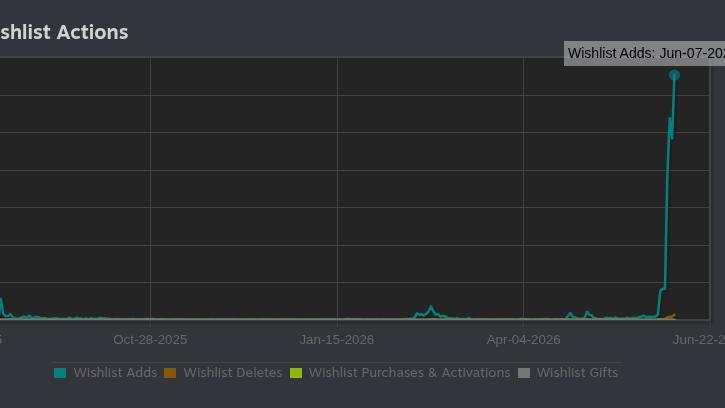
While the Personalized Calendar is much more accessible than the new Popular Upcoming list, it is not a free pass. It still operates on a tiered wishlist system. Early data and developer reports from June 2026 suggest that visibility scales with wishlist milestones.
Below is a flowchart representing how Steam's algorithm matches player interests and developer metadata to determine calendar featuring:
Developers with as few as 5,000 wishlists are seeing their games appear on the calendars of highly targeted, relevant users, generating consistent daily wishlist boosts. For games that cross higher thresholds, the algorithm scales up the number of impressions accordingly, matching them to a broader audience of similar users.
Adjusting Your Launch Strategy
With the visibility ladder rewritten, developers must adapt their marketing pipelines to leverage this new system. The standard playbook of setting up a Steam store page and letting it sit until a month before launch is officially obsolete.
- Set a Hard Release Date 6 to 8 Weeks Early: To enter the Personalized Calendar pool, you must set a specific, public release date at least six to eight weeks before launch. The algorithm cannot place a game on a player's calendar if it doesn't know when the release is. Under the new meta, holding back your release date means throwing away two months of free front-page algorithmic traffic.
- Keep Your Store Page Active for Longer: Because the Personalized Calendar offers a 2-month pre-launch window, the store page needs to be fully optimized much earlier. High-quality capsule art, polished trailers, and clear descriptions are critical. If the algorithm serves your game on a player's calendar and they click through to an unoptimized page, the impression is wasted. Focus on creating a compelling Steam page early to maximize the conversion rate of this traffic.
- Maximize Early Access 1.0 Transitions: The Personalized Calendar is not just for brand-new launches. Valve has extended the feature to support Early Access titles transitioning to version 1.0. By setting an official 1.0 release date, developers can trigger a fresh round of calendar visibility. This effectively gives developers two separate shots at front-page exposure: once for the initial Early Access launch, and again for the 1.0 release.
Why the New Meta is a Net Positive
The initial reaction to the Popular Upcoming changes was grief and frustration. However, as developers analyze the early performance metrics of the Personalized Calendar, the consensus is shifting toward optimism.
The old Popular Upcoming tab was a brute-force system. It favored games that could generate massive, aggregate wishlist counts, regardless of whether those wishlists were from highly engaged players or casual observers. The Personalized Calendar, by contrast, targets players who are statistically most likely to play your specific genre. A smaller number of highly targeted impressions can yield a significantly higher conversion-to-purchase rate than a massive blast of untargeted front-page views.
For indie game developers specializing in niche genres, the Personalized Calendar levels the playing field. It moves the goalposts from raw, aggregate metrics to targeted, high-intent player matching. By locking in release dates early and optimizing store pages for genre-specific keywords, indie developers can ride the wave of Steam's new algorithm to a successful launch.