June 23, 2026
7 min read
Sand: Raiders of Sophie — Deconstructing PvPvE Land-Ship Design and Solo Attrition
Key Takeaways
- •The "Land-Ship" Paradigm Shift
- •Trampler Engineering: Modular Vehicle Architecture
- •The Solo Attrition Loop: Coordinating Under Pressure
The "Land-Ship" Paradigm Shift
With the release of Hologryph and TowerHaus’s SAND: Raiders of Sophie into Steam Early Access, the multiplayer sandbox genre has received a fresh shot of diesel fuel. On paper, the pitch is deceptively simple: take the crew-centric cooperative sailing mechanics of Rare's Sea of Thieves and transplant them onto a desolate, desert-bound world. Yet, by swapping rolling waves for shifting sand dunes and wooden galleons for walking dieselpunk fortresses called "Tramplers," the developers have introduced a set of technical and spatial challenges that radically alter the pacing, spatial design, and stakes of the extraction shooter loop.
For game designers, SAND offers a fascinating case study in how vehicle mechanics can serve as the primary interface between players and the game world. In most extraction shooters, vehicles are either transient extraction tools or high-speed traversal options with limited player interaction. In SAND, however, the vehicle is your mobile home, your armor, your storage unit, and your primary offensive platform. Understanding the spatial and mechanical design of these "land-ships" is key to deconstructing why the game succeeds as a cooperative sandbox, and why it presents such a punishing wall for solo players.
Trampler Engineering: Modular Vehicle Architecture
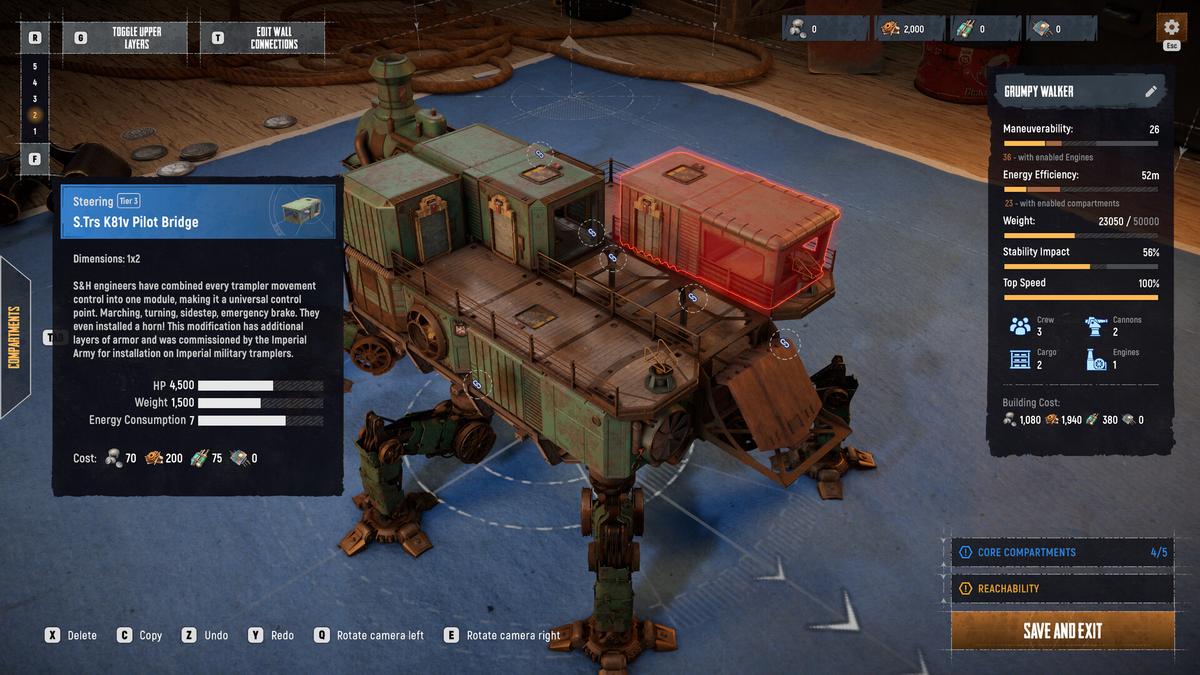
At the heart of SAND’s gameplay loop is the Trampler—a multi-legged, walking steam-engine fortress that players operate, maintain, and customize. Unlike traditional vehicles in game engines that are represented as single rigid bodies with simple health states, the Trampler is treated as a modular assembly of distinct physical and logical systems.
From a design perspective, modularity does more than just offer visual customization; it directly impacts the vehicle's physics model, center of mass, turn rates, and power distribution. A heavier Trampler with reinforced armor plating and heavy cannon turrets requires a more powerful boiler and engine, which in turn increases fuel consumption and reduces climbing speed on steep dunes.
Here is a block diagram illustrating how these modular systems interface with the central Trampler chassis:
Each module has its own health pool and collision mesh. If an enemy crew focuses fire on your walking legs, your speed will degrade, eventually leaving you stranded in the open. If they pierce your boiler room, steam pressure drops, shutting down power to your weapon turrets and locomotion. This local damage model transforms vehicle combat from a simple DPS race into a highly tactical exercise in component targeting.
The Solo Attrition Loop: Coordinating Under Pressure
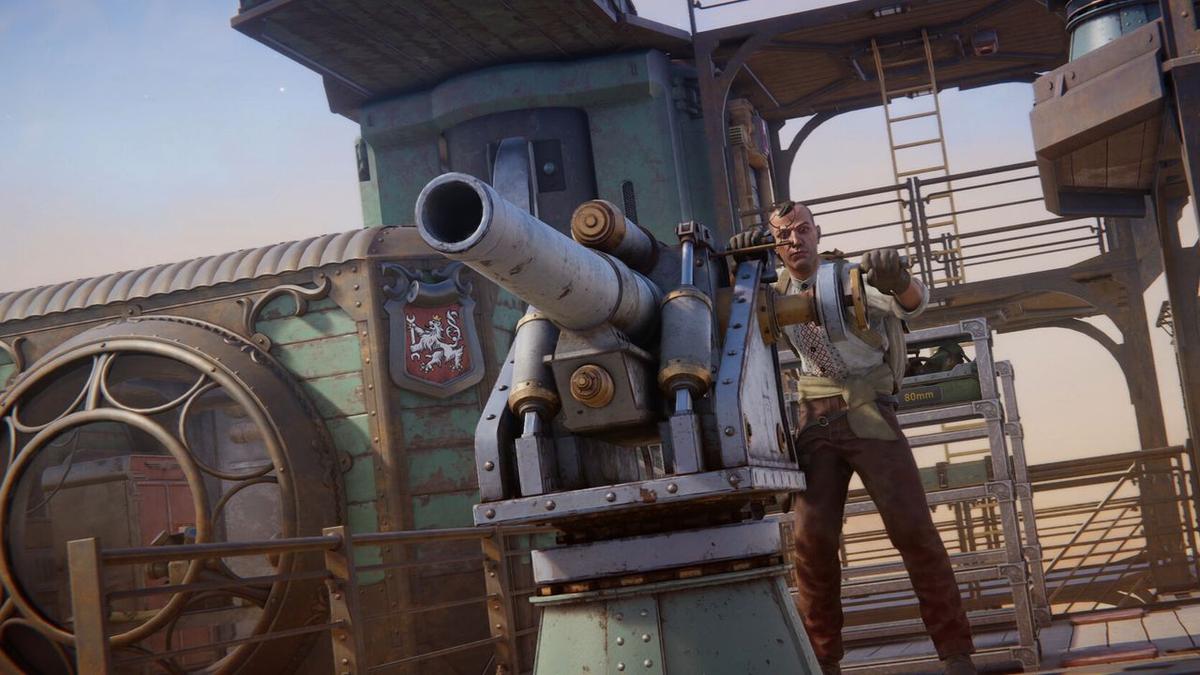
The comparison to Sea of Thieves is most apparent when examining how a crew operates a Trampler. A fully crewed vehicle requires players to divide and conquer: one player at the helm steering and adjusting the throttle, two players manning the port and starboard cannons, and another running below deck to shovel coal into the boiler, repair ruptured steam lines, and extinguish fires.
This division of labor creates natural high-stress cooperation. However, when a solo player enters the cockpit of a Trampler, this parallel task distribution collapses into a serialized bottleneck. A solo pilot must constantly rotate between steering, firing, repairing, and resource management. Under fire, the cognitive load and mechanical friction of swapping roles become a primary source of attrition.
The stakes are compounded by SAND’s extraction rules. If you lose your Trampler in the desert of Sophie, you do not simply respawn with a basic loadout. Your vehicle, along with all the loot stored in its cargo bays, is permanently lost. You must return to the lobby and spend hard-earned currency to assemble a new Trampler from scratch. For solo players, this creates a steep risk curve where a single mistake under fire leads to total economic reset. Game designers must carefully balance this friction, ensuring that solo pilots can build cheaper, lightweight "scout" Tramplers that rely on speed and stealth rather than raw firepower.
Dunes and Ruins: Spatial Level Design on the Sand Sea
The environment of Sophie represents a radical departure from the level design of traditional extraction shooters. Instead of static corridors, choke points, and cover arrays, SAND presents a vast, rolling desert. The "ocean of sand" serves as a macro-space where vehicles navigate, maneuver, and engage in long-range cannon duels.
However, the game's actual extraction loot is concentrated in procedurally and hand-placed ruins—decayed cities and industrial facilities rising out of the sand. This setup requires level designers to bridge two distinct scales:
1. Macro-Scale (Vehicle Navigation): Broad sand channels, deep valleys, and dune crests that provide sightline blockages and cover for multi-ton Tramplers.
2. Micro-Scale (Close-Quarter FPS Combat): The tight corridors, stairwells, and rooms of the ruins where players must dismount from their Tramplers to search for artifacts and engage in foot-based gunplay.
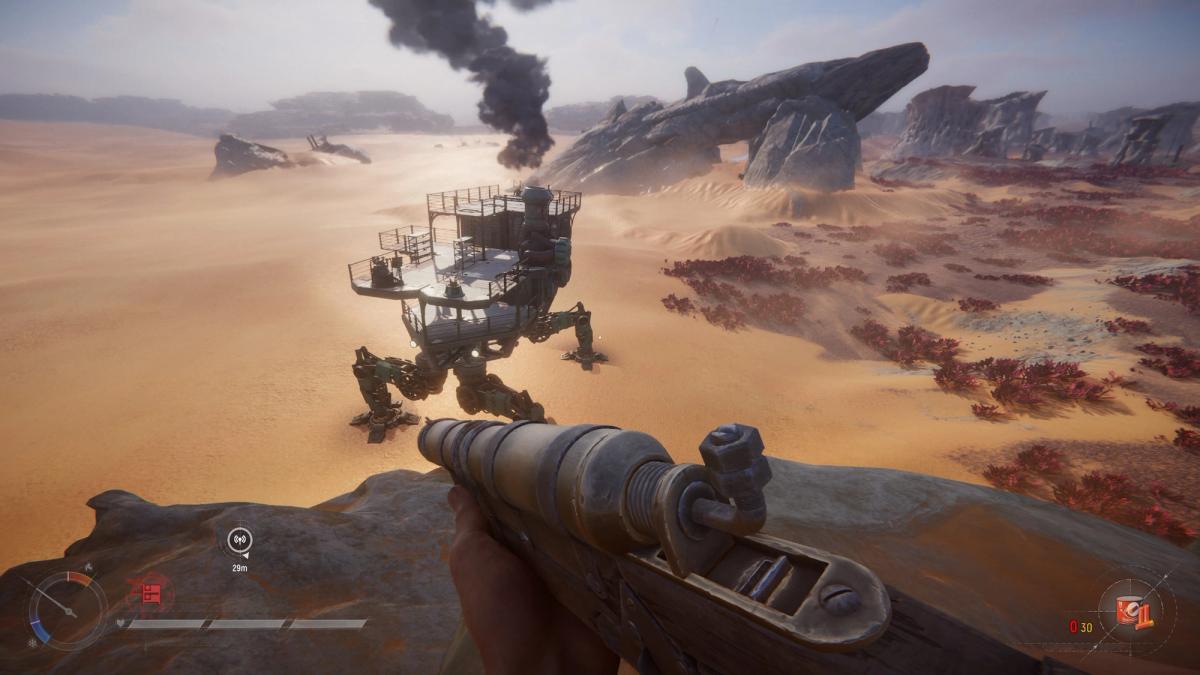
This scale contrast creates a high-tension transition phase. When a crew arrives at a ruin, they must decide where to park their Trampler. Leaving it in the open makes it an easy target for passing crews, while trying to squeeze it into the narrow alleys of a ruin risks getting it wedged or cornered. Once inside the ruins, players are cut off from their vehicle's heavy weapons, turning the gameplay into a tense infantry battle where they must constantly listen for the mechanical thuds of an approaching enemy Trampler.
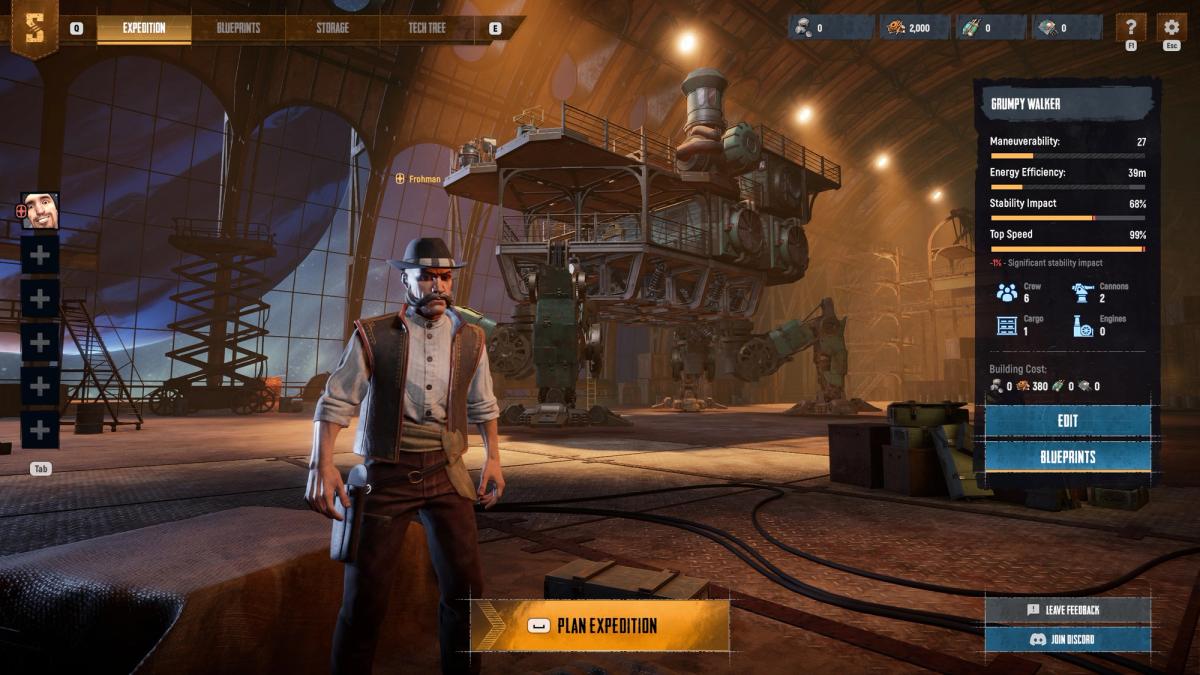
The interface inside the control cabin itself is highly tactile, forcing players to physically interact with dials, levers, and viewport shutters rather than relying on abstract UI overlays.
Pacing and Progression: Voyage Mode vs. Storm Dive
To accommodate different playstyles and ease the brutal attrition of vehicle loss, the developers have structured the progression around two core modes: Voyage Mode and Storm Dive Mode.
Voyage Mode represents the standard extraction loop. Players spawn at the periphery of the map, cruise the sand sea to locate ruins, loot resources, and head to extraction pads to secure their findings. The pacing here is deliberate, punctuated by long stretches of navigation and environmental hazard avoidance, broken up by sudden, violent skirmishes with other crews.
Storm Dive Mode, by contrast, represents a high-stakes, fast-paced endgame. A massive sandstorm sweeps across the map, compressing the playable space and exposing high-value artifacts in its wake. In this mode, the PvPvE density increases exponentially. The sandstorm reduces visibility, rendering long-range sightlines useless and forcing Tramplers into close-quarters ramming and cannon duels. It is a brilliant design tool for driving player interaction and forcing high-tier crews to risk their expensive, fully upgraded vehicles for the ultimate loot.
Technical Retrospective: Designing High-Stakes Co-op
For multiplayer game developers, SAND: Raiders of Sophie is an instructive example of how to build systemic tension through vehicle dependency. By making the vehicle both the player's greatest asset and their biggest liability, Hologryph and TowerHaus have created a loop where every expedition feels incredibly heavy with risk.
For game designers, this offers a clear blueprint on how to merge sandbox cooperative play with high-stakes PvPvE extraction structures. It proves that mechanical complexity and environmental scale can co-exist when anchored by a single, highly interactive vehicle platform.