June 19, 2026
6 min read
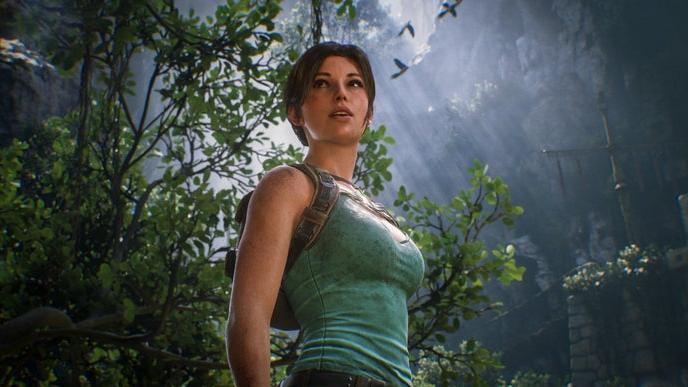
Remaking Lara Croft: The Design Philosophy of Tomb Raider
Key Takeaways
- •The Dual-Track Production Strategy
- •The Spectrum of Game Remakes
- •Designing the Balance: Classic Grid vs. Modern Flow
The announcement that Crystal Dynamics is officially remaking the original 1996 Tomb Raider—now titled *Tomb Raider: Legacy of Atlantis—has sent a wave of excitement through both gamers and the development community. As reported by GamesIndustry.biz*, this project is being developed in collaboration with Polish studio Flying Wild Hog and is slated for a February 2027 release to coincide with the 30th anniversary of Lara Croft's debut.
From my perspective as a game developer, remaking the game that practically defined the 3D action-adventure genre is both a dream project and a potential design minefield. The original Tomb Raider was a masterpiece of grid-based level design, slow-paced exploration, and atmospheric isolation. Modernizing that experience for today’s players without losing the soul of the original requires a delicate hand. In this piece, I want to unpack the design decisions, collaboration strategies, and production realities that define this upcoming remake.
The Dual-Track Production Strategy
One of the most interesting aspects of this announcement is how it fits into the broader roadmap for the franchise. We now have two distinct Tomb Raider titles in active development for the late 2020s:
1. Tomb Raider: Legacy of Atlantis (February 2027): A faithful yet modernized remake of the original 1996 game, focusing on Lara's first adventure.
2. Tomb Raider: Catalyst (Targeted 2027): A brand new, single-player narrative-driven title built in Unreal Engine 5 that aims to unify the distinct timelines of the franchise (the classic era, the legend era, and the survivor trilogy).
From a production standpoint, this dual-track strategy makes complete sense. Unifying the timelines in Tomb Raider: Catalyst is an ambitious narrative and technical challenge. It requires bridging the gaps between three distinct eras of Lara's characterization and lore. By partnering with Flying Wild Hog to develop Legacy of Atlantis in parallel, Crystal Dynamics can celebrate the franchise’s 30th anniversary with a high-fidelity nostalgia trip while giving their core internal team the runway they need to deliver Catalyst without rushing.
In my view, outsourcing the remake to a veteran action studio like Flying Wild Hog—best known for the fast-paced, kinetic action of the Shadow Warrior series—is a brilliant production decision. It allows Crystal Dynamics to supervise the creative direction and narrative continuity, while leveraging external engineering talent to modernize the classic traversal mechanics. This collaborative model is becoming increasingly common in AAA development, allowing studios to manage massive workloads without burning out their internal teams.
The Spectrum of Game Remakes
When approaching a classic game, developers must decide where their project sits on the remake-to-remaster spectrum. GamesIndustry.biz noted that the developers are looking at recent successes in the industry, such as the Resident Evil and Final Fantasy remakes, as blueprints for their approach.
As the diagram shows, Legacy of Atlantis aims to be a fidelity remake. It is not trying to replace the 1996 original but to serve as a high-fidelity "love letter" that translates classic level design into modern game engines.
Designing the Balance: Classic Grid vs. Modern Flow
The core challenge of remaking the 1996 Tomb Raider lies in the movement and level design. The original game was built on a rigid, block-based grid. Lara moved in fixed units: running took a set number of blocks, jumping required precise setups, and grabbing ledges was a matter of mathematical timing. This grid-based structure made the platforming feel like a slow-paced, tense puzzle. In 1996, the environment was the primary enemy, and every room was a traversal challenge.
If you replace those tank controls with modern, fluid, physics-driven traversal (similar to the Survivor trilogy), the original level layouts immediately break. Puzzles that required precise jumps suddenly become trivial. Large chambers that felt cavernous and threatening are crossed in seconds. The sense of vulnerability vanishes.
According to GamesIndustry.biz, the developers are striving to preserve the core feel and spirit of the original while modernizing the gameplay. In my view, this means the level design team must engage in "constructive translation." Instead of a literal 1-to-1 block recreation, they need to design environments that feel as challenging and isolated as the original did in 1996, but use organic geometry instead of visible cubes.
Key design adjustments we can expect include:
- Organic Traversal Guides: Using natural rock formations, worn ledges, and lighting to guide the player, replacing the obvious grid blocks of the original while maintaining the exact leap distances.
- Tense Platforming Puzzles: Preserving the deliberate pacing of the original exploration. Platforming shouldn't just be about holding forward; it should require active observation, ledge-grabbing timing, and route planning.
- Modernized Combat: The original relied on locking onto enemies with dual pistols while flipping left and right to dodge. Modern combat needs to integrate Flying Wild Hog's action expertise, perhaps introducing a more dynamic aiming and dodging system that rewards spatial awareness and positions enemies in a way that matches the remake's updated geometry.
Technology, Prototyping, and the Human Element
Another fascinating detail from the GamesIndustry.biz report is the development methodology. The teams are using generative AI tools for early prototyping and concept exploration, but they have explicitly stated that all final game assets and content are human-created.
From a production efficiency standpoint, using generative AI for rapid prototyping makes sense. It allows designers to quickly generate layout mockups, mood boards, and temp assets to test spacing, lighting, and color theory. However, the decision to rely entirely on human artists and engineers for the final product is crucial.
In a game like Tomb Raider, where atmosphere, isolation, and deliberate pacing are everything, the "human touch" is irreplaceable. AI can generate a generic cave, but it cannot craft the exact placement of a shadow to build tension, the echo of a distant waterfall to hint at an exit, or the sudden, heart-stopping appearance of a T-Rex in a hidden valley. The hand-crafted nature of the level design is what made the 1996 original a masterpiece, and it is what will make the remake successful. It shows a mature understanding of where automation helps development and where human artistry is non-negotiable.
Conclusion: Honoring Game Heritage
As a developer, I am incredibly glad to see the industry entering a phase where classic games are treated with the same respect as classic literature or film. Tomb Raider: Legacy of Atlantis represents a growing trend of developers using remakes not just as quick cash-ins, but as deliberate efforts to preserve and celebrate our medium's heritage.
By balancing the nostalgic essence of the original with modern control standards, and by separating this project from the timeline-unifying ambition of Tomb Raider: Catalyst, Crystal Dynamics and Flying Wild Hog are setting up a blueprint for how to manage a legacy franchise. I will be watching this project closely as we approach its February 2027 release window.
If you would like to discuss game development pipelines, level design translating, or custom tools, feel free to get in touch via my contact page.