July 22, 2026
7 min read
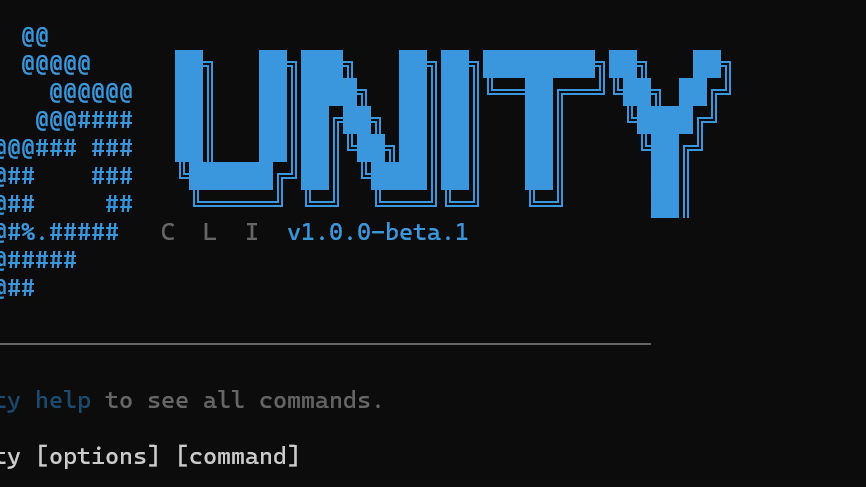
Unity CLI: Automating Game Development Workflows
Key Takeaways
- •The Evolution of Workflow: Why a CLI Matters
- •What the Unity CLI Brings to Your Development Table
- •The Power of `com.unity.pipeline`
As game developers, we're constantly seeking ways to optimize our workflows, reduce manual overhead, and accelerate iteration. In an industry where efficiency directly translates to competitive advantage and creative freedom, tools that empower automation are invaluable. That's why the recent announcement from Unity about their new Unity Command Line Interface (CLI) and the accompanying `com.unity.pipeline` package is such a significant development. This isn't just a minor update; it's a fundamental shift in how we can interact with and leverage the Unity Editor, promising a future of more streamlined, robust, and even AI-driven development.
The Evolution of Workflow: Why a CLI Matters
For years, many of our core interactions with Unity have been tied to its graphical user interface (GUI). While intuitive for direct development, this approach can become a bottleneck when dealing with tasks that need to be repeated, automated, or integrated into larger systems. Think about continuous integration/continuous deployment (CI/CD) pipelines, nightly builds, automated testing, or managing multiple editor versions across a large team. These tasks often require scripting workarounds or external tools trying to "drive" the GUI, which can be fragile and inefficient.
A robust CLI addresses these challenges head-on. It provides a programmatic, text-based interface to perform actions, making them repeatable, scriptable, and easily integrated into any automated system. This is a game-changer for studios of all sizes, but especially for those embracing modern DevOps practices.
What the Unity CLI Brings to Your Development Table
The Unity CLI, as outlined by the Unity Blog, is designed to enable a more structured and efficient way to operate Unity. Its core capabilities revolve around installation, automation, and deeper integration.
Let's break down some of the most impactful features:
- Editor Management: One of the most common headaches for studios is managing Unity Editor installations. Different projects might require different versions, and keeping everyone's environment consistent can be a chore. The CLI allows you to install, update, and manage Unity Editor versions directly from the terminal. This is huge for ensuring build servers and developer machines are always on the correct version without manual intervention.
- Automated Builds: The snippet explicitly mentions the ability to "automate CI, and drive a running Editor or dev build from the terminal." This means you can trigger player builds, asset bundle builds, or any other compilation task with simple commands, making your CI/CD pipelines significantly more reliable and faster.
- Running Tests: Automated testing is crucial for maintaining code quality, but integrating it seamlessly into a pipeline can be tricky. The CLI likely provides commands to execute Unity Test Runner tests, allowing for quick feedback loops on code changes.
- Driving a Running Editor/Build: This is particularly intriguing. The ability to "drive a running Editor or dev build" suggests a level of control that goes beyond simple command execution. It implies a more dynamic, interactive scripting capability, allowing external processes (or even AI agents) to send commands and receive feedback from a live Unity instance.
The Power of `com.unity.pipeline`
The Unity Blog mentions the `com.unity.pipeline` package alongside the CLI. This package appears to be the backbone that gives "scripts and AI agents a fast, structured way to operate Unity." This is crucial because a CLI alone provides the interface, but the pipeline package likely provides the structure and APIs necessary for complex operations.
Think of it this way:
- CLI: The raw commands you type into the terminal (e.g., `unity install 2023.3.0f1`).
- `com.unity.pipeline`: The underlying framework within Unity that exposes specific functions and data structures that these CLI commands (and your custom scripts/AI agents) can reliably interact with. It ensures that the operations are robust and follow best practices.
This combination suggests a well-thought-out system, not just a collection of ad-hoc commands.
Impact on CI/CD and Team Collaboration
The benefits for CI/CD pipelines are immediately apparent. Consider a typical game development scenario:
Before the CLI, steps D, E, and F might involve complex, fragile shell scripts trying to launch the Unity Editor in batch mode, often requiring specific environment setups. With the CLI, these become clear, direct commands, reducing setup time, build failures, and maintenance overhead.
For larger teams, this means:
- Consistency: Everyone can easily ensure they are using the same editor version and build tools.
- Reproducibility: Builds are more likely to be identical across different machines.
- Reduced Friction: Less time spent on environment setup and more time on actual development.
The AI Agent Connection: A Glimpse into the Future
Perhaps the most forward-looking aspect mentioned is how the CLI and `com.unity.pipeline` empower AI agents to operate Unity. This opens up fascinating possibilities for the future of game development:
- Automated Content Creation: Imagine an AI agent generating level layouts, tweaking environmental parameters, or even creating simple assets by issuing commands to Unity.
- Smart Testing: Beyond just running existing tests, AI could explore game states, identify potential bugs or performance issues, and even suggest fixes, all by interacting with a running Unity build via the CLI.
- Procedural Generation on Demand: AI could dynamically generate or modify game elements based on real-time feedback or design parameters, all orchestrated through the CLI.
- Optimized Build Systems: An AI could analyze build logs and resource usage, then use the CLI to dynamically adjust build settings or asset compression to optimize performance or file size.
This vision aligns with the broader industry trend of integrating AI more deeply into creative and technical workflows. By providing a "fast, structured way" for AI to interface with the engine, Unity is laying the groundwork for truly intelligent development assistants.
Embracing the Terminal: A Developer's Perspective
From my perspective as a game developer, this is an incredibly welcome addition. While the GUI is excellent for visual tasks and direct manipulation, the terminal is the natural habitat for automation and scripting. The Unity CLI fills a critical gap, empowering us to:
1. Be More Efficient: Less clicking, more scripting.
2. Build More Robust Pipelines: Reliable, repeatable processes are the bedrock of modern software development.
3. Innovate with AI: Explore new ways to leverage AI to assist with development tasks.
Of course, like any new tool, there will be a learning curve. Developers will need to familiarize themselves with the CLI commands and how to best integrate them into their existing scripts and CI/CD systems. However, the long-term benefits in terms of productivity and scalability are undeniable.
Conclusion
The introduction of the Unity CLI and the `com.unity.pipeline` package marks a significant step forward for the Unity ecosystem. It provides developers with powerful new tools for automation, streamlining existing workflows, and opening up exciting new avenues for AI-assisted game development. This move reinforces Unity's commitment to empowering developers with the flexibility and control needed to build the next generation of games more efficiently and innovatively. I'm genuinely excited to see how studios will leverage these capabilities to push the boundaries of what's possible in game creation.