August 14, 2026
9 min read
System Shock VR: Adapting a Classic for Immersive Reality
Key Takeaways
- •The Unique Challenge of VR Adaptation
- •Core Design Principles for VR Success
- •Immersion vs. Comfort: The Delicate Balance
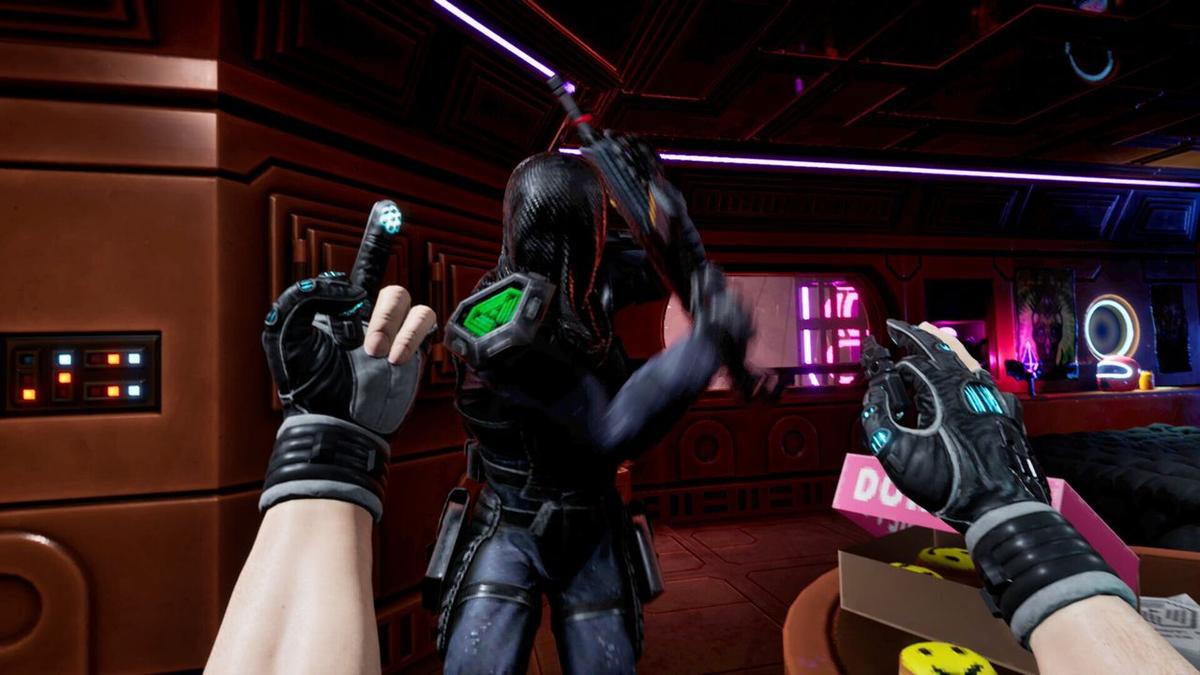
As game developers, we're constantly pushing boundaries, and the announcement that Nightdive's System Shock remake is coming to VR presents a fascinating case study in adapting beloved classic IPs for new, immersive realities. This isn't just about porting a game; it's about fundamentally re-thinking player experience, interaction, and technical optimization to deliver a truly compelling virtual reality experience. For any studio considering a similar venture, the lessons from a title like System Shock are invaluable.
The Unique Challenge of VR Adaptation
Bringing a game like System Shock to VR is far more complex than simply flipping a switch. The original game, and even the excellent remake, were designed for a 2D monitor experience, where player agency is expressed through traditional mouse and keyboard or gamepad inputs. VR, however, demands a re-evaluation of almost every core mechanic. Players are no longer just observing; they are present within the game world. This presence amplifies both the potential for immersion and the risks of discomfort or broken immersion if not handled correctly.
The primary challenge lies in bridging the gap between established 2D design patterns and the inherent demands of virtual reality. What works in a flat-screen game – rapid camera turns, abstract UI elements, or even certain movement speeds – can be jarring, disorienting, or even physically sickening in VR. Our goal as developers is not to merely replicate the original, but to translate its essence into a format that maximizes VR's strengths while mitigating its weaknesses.
Core Design Principles for VR Success
Successful VR adaptation hinges on a few fundamental design principles that prioritize player comfort and immersion.
Immersion vs. Comfort: The Delicate Balance
The ultimate promise of VR is unparalleled immersion. For a game like System Shock, with its claustrophobic corridors, chilling atmosphere, and omnipresent AI antagonist SHODAN, VR could elevate the horror and tension to new heights. However, this immersion must never come at the cost of player comfort. Motion sickness is the bane of VR experiences, and developers must employ robust strategies to prevent it.
- Controlled Movement Options: Offer multiple locomotion choices. Smooth locomotion is often preferred for immersion, but must be carefully tuned. Implement options like "snap turning" (instantaneous small rotations) or "teleportation" for players prone to motion sickness. Allow players to adjust walking speed, turning speed, and even vignetting (darkening the periphery of the screen during movement) to reduce perceived motion.
- Stable Reference Points: Ensure a stable horizon line and minimal camera bobbing. If the player's head movement doesn't match the in-game camera movement, discomfort will quickly set in.
- Physical Interaction: Encourage physical interaction over button presses where appropriate. Picking up items, manipulating panels, or even reloading a weapon by physically reaching for a magazine can be incredibly satisfying and intuitive in VR.
UI/UX Redesign for Three Dimensions
A game's user interface (UI) and user experience (UX) are completely different in VR. Flat-screen menus and HUD elements are no longer viable.
- Diegetic UI: Integrate UI elements directly into the game world. Instead of a health bar floating on the screen, perhaps the player's suit displays vital signs on their wrist, or ammunition counters are physically on the weapon. System Shock's existing reliance on terminals and data logs lends itself well to diegetic presentation, perhaps as interactive screens or physical objects the player picks up.
- Spatial Audio Cues: Leverage 3D audio to provide critical information. The direction of enemy footsteps, the hum of machinery, or SHODAN's chilling voice emanating from a specific location significantly enhances immersion and gameplay.
- Intuitive Menus: If traditional menus are unavoidable, place them in a comfortable, easily accessible space, such as on a virtual wrist-mounted device or as a panel that deploys in the player's field of view. Ensure navigation is simple and uses VR controller inputs effectively.
Interaction Models: Beyond Point and Click
The way players interact with the world fundamentally changes in VR.
- Direct Manipulation: Allow players to directly grab, push, and pull objects with their virtual hands. This is far more engaging than simply looking at an object and pressing a button.
- Weapon Handling: Re-think weapon reloading, aiming, and firing. Dual-wielding, manual reloading, and aiming down sights using physical head and hand movements become core gameplay mechanics. For System Shock's diverse arsenal, this offers a rich opportunity for unique VR interactions for each weapon type.
- Environmental Puzzles: Many of System Shock's puzzles involve manipulating panels, switches, and objects. These translate beautifully to VR, allowing players to physically interact with the environment to solve challenges.
System Shock Specifics in VR
Applying these principles to System Shock requires a thoughtful approach to preserve its identity while embracing VR's potential.
SHODAN's Presence: Enhancing the Antagonist
SHODAN, the malevolent AI, is the heart of System Shock. In VR, her omnipresence can be amplified. Imagine her voice not just in your ears, but spatially aware, echoing from specific vents or appearing as holographic projections that fill your personal space. The "Strap Shodan on your face. Insect." quote from the article hints at this direct, invasive presence, which VR is uniquely suited to deliver. Her taunts and threats will feel far more personal and terrifying when she directly addresses you in a virtual space.
Exploration and Puzzles: Maintaining Original Intent
The exploration of Citadel Station and its intricate puzzles are central to System Shock.
- Navigation: While smooth locomotion is desirable, teleportation can be a valid alternative for navigating complex or dangerous areas, especially for players new to VR. The level design, with its interconnected areas, needs to be traversable without causing disorientation.
- Terminal Interaction: The game's numerous terminals are perfect for VR. Players can physically reach out and type on virtual keyboards or manipulate controls with their hands, making data logs and system management feel more tangible.
- Cyberspace: The abstract cyberspace segments could be completely reimagined for VR, offering a unique, disorienting, and visually distinct experience that contrasts with the physical world of Citadel Station.
Combat Mechanics: Reimagining Gunplay and Melee
Combat in System Shock is often tense and resource-driven. VR can make it even more visceral.
- First-Person Shooting: Aiming with physical hand movements and tracking targets in 3D space is a natural fit for VR. Manual reloading mechanics, distinct weapon handling for each firearm (e.g., pumping a shotgun, pulling back the bolt on a rifle), and physical melee swings will add depth.
- Enemy Encounters: The tight corridors and unexpected enemy placements will be amplified in VR. The feeling of being cornered by a mutant or a robot will be far more intense. Developers must ensure enemy AI and attack patterns are tuned for VR, avoiding cheap shots or unavoidable damage that frustrates players.
- Grenades and Gadgets: Throwing grenades or deploying gadgets with physical gestures can be highly satisfying, adding another layer of strategic depth to combat encounters.
Technical Considerations for a Seamless VR Experience
Beyond design, the technical implementation is crucial for a successful VR title.
Performance Optimization: Frame Rate is King
Maintaining a high and consistent frame rate (typically 90 FPS or higher) is paramount in VR to prevent motion sickness and ensure smooth visuals.
- Aggressive Optimization: This means extensive LOD (Level of Detail) implementation, efficient culling, texture streaming, and careful shader optimization. System Shock's intricate environments will require significant attention to detail here.
- Target Hardware: Developers must decide on their target VR platforms and optimize accordingly. PC VR offers more power, but standalone headsets like Meta Quest require even more stringent optimization.
- Dynamic Resolution Scaling: Implementing dynamic resolution scaling can help maintain frame rate in demanding scenes by slightly lowering rendering resolution, often imperceptibly to the player.
Input Systems: Intuitive and Responsive
VR controllers offer a wide range of input possibilities, from precise hand tracking to haptic feedback.
- Controller Mapping: Design intuitive controller mappings that feel natural. Minimize button clutter and leverage analog sticks, triggers, and grip buttons effectively.
- Haptic Feedback: Utilize haptic feedback to enhance immersion, providing tactile sensations for impacts, weapon firing, or environmental interactions.
- Hand Tracking: If supported, hand tracking can offer a truly controller-free experience for certain interactions, making the player feel even more connected to their virtual hands.
Audio Design for Spatial Immersion
Spatial audio is not just a nice-to-have in VR; it's essential.
- 3D Audio Engine: Implement a robust 3D audio engine that accurately positions sounds in space, allowing players to pinpoint the location of enemies, environmental hazards, or narrative cues.
- Reverb and Occlusion: Simulate realistic sound propagation, where sounds are muffled by walls (occlusion) and echo in large spaces (reverb), further enhancing the sense of presence.
- Dynamic Soundscapes: Create dynamic soundscapes that react to player actions and environmental changes, adding to the tension and atmosphere of Citadel Station.
The VR Adaptation Process
The journey from a 2D game to a compelling VR experience is iterative and requires constant testing.
The diagram illustrates a typical workflow. Starting with an assessment of how well the original game's mechanics lend themselves to VR, developers then move into identifying which elements need a complete redesign versus those that primarily require optimization. UI and UX are almost always a redesign, followed by rigorous implementation of comfort features. The entire process is a loop of iterative testing and incorporating player feedback, which is particularly vital in VR development due to the subjective nature of comfort and immersion.
Conclusion
Nightdive's decision to bring the System Shock remake to VR is an exciting development for the immersive gaming landscape. It highlights a growing trend: not just creating new VR experiences, but thoughtfully re-interpreting cherished classics for a new dimension of play. For game developers, this serves as a powerful reminder that adapting an existing IP for VR is a complex but rewarding endeavor. It demands a deep understanding of VR's unique constraints and opportunities, a commitment to player comfort, and a creative vision to translate the original's magic into a truly immersive, three-dimensional world. The success of System Shock in VR will undoubtedly pave the way for more classic titles to embrace the future of interactive entertainment.