August 12, 2026
7 min read
Rixels: 4J Studios' 98% Texture Memory Breakthrough for Game Devs
Key Takeaways
- •Understanding the Memory Crunch in Game Development
- •What Are Rixels and How Do They Achieve Such Savings?
- •Game-Changing Implications for Developers
As game developers, we're constantly pushing the boundaries of visual fidelity, creating worlds that are more immersive and detailed than ever before. But with great visuals comes great responsibility – specifically, the challenge of managing ever-increasing memory requirements. This is especially true for textures, which can quickly become a significant bottleneck, impacting performance, loading times, and even what platforms our games can target.
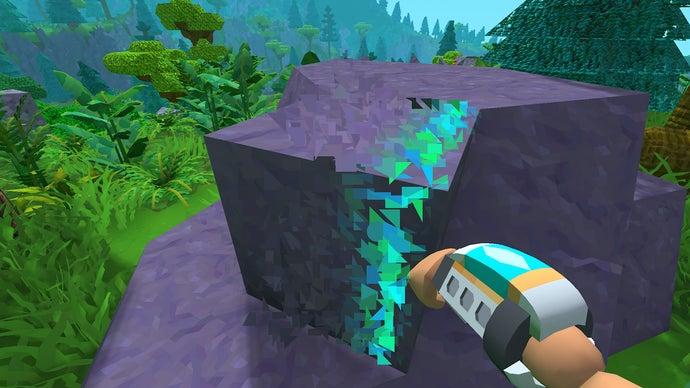
That's why a recent announcement from 4J Studios, the developer behind Reforj, caught my eye: their new technology called Rixels. According to GamesIndustry.biz, Rixels are "modified pixels that reduce texture memory requirements by 98%." Yes, you read that right – 98 percent! As someone who's spent countless hours optimizing assets, this figure is nothing short of revolutionary.
Understanding the Memory Crunch in Game Development
Before we dive into Rixels, let's quickly recap why texture memory is such a big deal. Every pixel in a texture, along with its associated data (color, alpha, normal maps, etc.), consumes a certain amount of memory. High-resolution textures, multiple texture layers, and complex materials all add up.
Consider a typical texture pipeline:
- Source Asset: High-resolution image (e.g., 4K, 8K) from artists.
- Compression: Lossy or lossless compression applied (e.g., DXT, BCn, ASTC, ETC2) to reduce file size and VRAM usage.
- Mipmaps: Generated to optimize rendering at different distances.
- Streaming: Managed to load textures as needed, avoiding loading everything into memory at once.
Even with these techniques, modern games can easily consume gigabytes of VRAM just for textures. This directly impacts:
- Performance: Less VRAM means more swapping, leading to hitches and lower frame rates.
- Platform Compatibility: Lower-spec devices (Nintendo Switch, mobile phones, older consoles) have very limited memory, forcing developers to make significant compromises on texture quality.
- Asset Budgeting: Artists must often work within strict texture budgets, limiting their creative freedom.
What Are Rixels and How Do They Achieve Such Savings?
The core concept behind Rixels, as introduced by 4J Studios, is a novel approach to how texture data is stored and processed. While the specific technical details are still under wraps as the Dundee-based studio has applied to patent the technology, the description "modified pixels that reduce texture memory requirements by 98%" suggests a fundamental shift beyond traditional compression methods.
It's likely that Rixels don't just compress existing pixel data more efficiently, but rather redefine what a "pixel" represents in memory or how its information is sampled. This could involve:
- Procedural Generation at Runtime: Instead of storing every pixel, Rixels might store parameters that allow the GPU to reconstruct or generate pixel data on the fly, dramatically reducing the stored footprint.
- Intelligent Data Structuring: A highly optimized data structure that leverages spatial or color coherence in textures, storing only the "differences" or "instructions" needed to render complex patterns.
- Adaptive Detail Encoding: Dynamically adjusting the level of detail encoded per pixel based on its importance, visibility, or screen space, rather than storing uniform data for the entire texture.
To illustrate the magnitude of this reported saving, let's visualize it:
This chart, representing a hypothetical 98% reduction, vividly demonstrates the potential impact. If a traditional texture pipeline requires 100MB for a set of assets, Rixels could theoretically bring that down to a mere 2MB.
Game-Changing Implications for Developers
The potential implications of Rixels for game development are vast and exciting:
1. Enhanced Performance and Visuals Across All Platforms
- Lower-End Hardware: Imagine the Nintendo Switch running games with texture quality previously only seen on high-end PCs. This could unlock new possibilities for developers targeting memory-constrained devices, allowing them to create more visually rich experiences without sacrificing performance.
- High-End Hardware: On powerful systems, the freed-up VRAM could be reallocated to other demanding assets like complex geometry, advanced lighting, or more sophisticated AI, pushing the boundaries of realism even further.
2. Faster Loading Times
Reduced texture memory directly translates to smaller asset sizes. Smaller assets mean faster loading from disk or network, leading to quicker game launches, seamless level transitions, and an overall smoother player experience.
3. Greater Artistic Freedom
Artists could work with significantly higher resolution source textures without worrying as much about the final memory footprint. This means less time spent on downscaling, re-baking, and optimizing textures, allowing them to focus on pure artistic creation.
4. Simplified Asset Pipelines
If Rixels handle much of the optimization automatically, it could streamline parts of the asset pipeline. Developers might spend less time on manual texture compression settings or creating multiple LOD versions of textures.
5. Potential for New Game Experiences
With fewer memory constraints, developers could explore game types that were previously unfeasible. Think of games with incredibly vast, seamless worlds featuring unique, high-detail textures everywhere, or titles that rely on dynamic, real-time texture generation on a massive scale.
Challenges and The Road to Adoption
While the prospect of Rixels is incredibly promising, several questions and challenges remain before it could become an industry standard:
- Proprietary Nature: As 4J Studios is patenting the technology, its widespread adoption will depend on their licensing strategy. Will it be an open standard, or a proprietary solution available only through specific partnerships or engines?
- Integration Complexity: How easily can Rixels be integrated into existing game engines like Unity, Unreal Engine, or custom-built solutions? Developers have deeply ingrained workflows and tools; a new texture technology would need robust plugins and toolchain support.
- Runtime Overhead: While memory footprint is reduced, there might be a computational cost at runtime to reconstruct or interpret the Rixel data. How efficient is this process, and does it introduce new performance bottlenecks elsewhere (e.g., on the GPU's compute units)?
- Quality and Artifacts: Does the 98% reduction come with any visual compromises or artifacts that traditional textures don't have? The visual quality must be comparable or superior for widespread adoption.
- Learning Curve: Artists and technical artists would need to understand how to work with Rixels effectively. New tools and pipelines would necessitate training and adaptation.
The Future of Texture Optimization
The announcement of Rixels by 4J Studios is a significant moment, highlighting that even fundamental aspects of game rendering can still see massive innovation. For years, we've seen incremental improvements in texture compression and streaming. A 98% reduction in memory requirements suggests a paradigm shift.
This kind of breakthrough could democratize high-fidelity graphics, making them accessible to a broader range of hardware and development teams. It could also free up valuable resources, allowing studios to invest more in gameplay innovation, storytelling, or other areas that truly differentiate their titles.
As developers, we'll be keenly watching for more technical details from 4J Studios. If Rixels deliver on their promise without introducing significant new trade-offs, they could very well reshape how we think about and manage texture assets for the next generation of games. It's a reminder that even in a mature industry, there's always room for clever engineering to solve long-standing problems.
What are your thoughts on Rixels? Could this be the next big leap in game graphics optimization?