August 13, 2026
10 min read
NVIDIA Nemotron 3.5 Lightning: Powering Agentic AI in Games
Key Takeaways
- •Understanding Agentic AI in Game Development
- •NVIDIA Nemotron 3.5 Lightning: The Efficiency Powerhouse
- •Technical Advantages for Game Developers:
As a technical director, I've witnessed the evolution of AI in game development accelerate at an unprecedented pace. We're moving beyond static AI behaviors and reactive chatbots towards a future dominated by autonomous, intelligent agents. This shift demands not just more powerful hardware, but also highly efficient models and robust frameworks capable of orchestrating complex, long-running AI workloads. NVIDIA's recent advancements, particularly with Nemotron 3.5 Lightning and NeMo Switchyard, offer a compelling vision for how we can architect these next-generation agentic AI systems within our games.
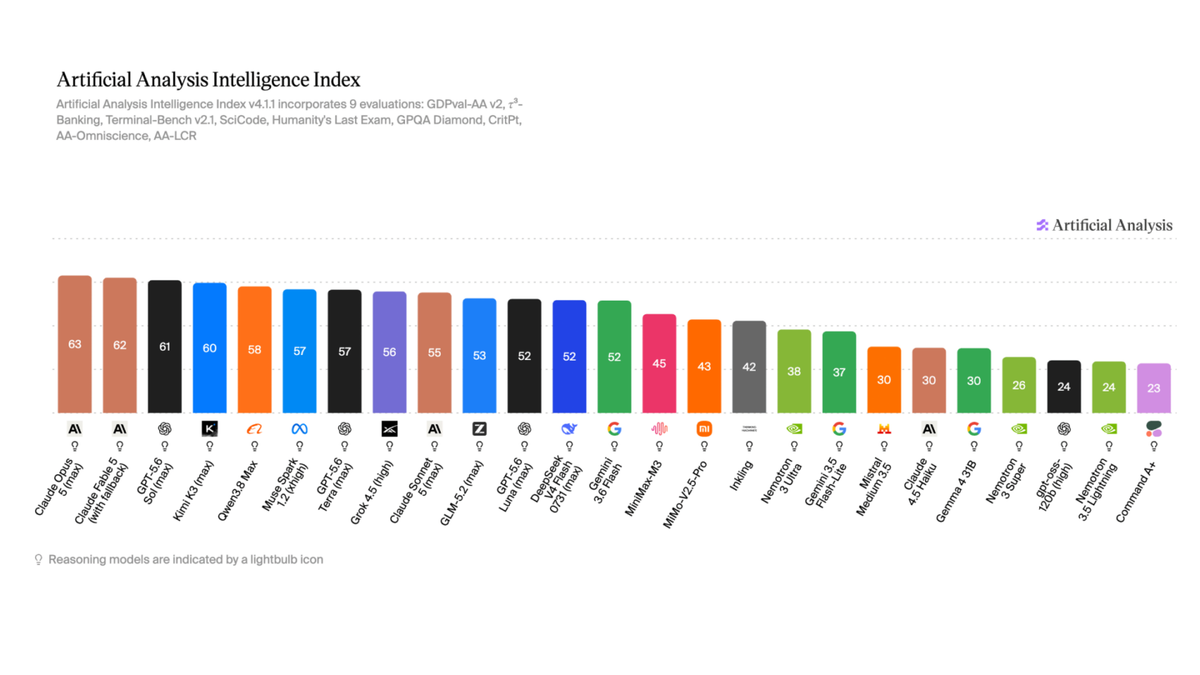
The core challenge with current large language models (LLMs) and generative AI is their computational cost, especially for persistent, dynamic agent behaviors. While powerful, many models are too slow or resource-intensive for real-time game environments, particularly when considering local inference on player machines or scalable cloud deployments. Nemotron 3.5 Lightning directly addresses this by offering what NVIDIA describes as the "highest-efficiency model in its class for long-running agentic AI workloads." Coupled with NeMo Switchyard, a framework designed to manage and optimize these agents, we now have a powerful toolkit for injecting true autonomy into our digital worlds.
Understanding Agentic AI in Game Development
Before diving into the technical specifics, let's clarify what "agentic AI" means in our context. Unlike traditional finite-state machine AI or simple decision trees, agentic AI refers to systems capable of:
- Goal-Oriented Behavior: Defining and pursuing complex objectives over extended periods.
- Perception and Reasoning: Interpreting environmental cues, understanding context, and making logical deductions.
- Planning and Execution: Generating multi-step plans to achieve goals and adapting those plans based on new information.
- Memory and Learning: Retaining information from past interactions and experiences to inform future actions.
- Tool Use: Interacting with external systems or game mechanics (e.g., using an inventory item, casting a spell, interacting with an NPC via an API).
In games, this translates to NPCs that don't just follow predefined scripts but can dynamically react, strategize, and learn. Imagine an enemy AI that adapts its tactics based on player behavior over several encounters, or a dynamic quest giver who generates tasks based on the evolving state of the world and player actions. This is the promise of agentic AI.
NVIDIA Nemotron 3.5 Lightning: The Efficiency Powerhouse
Nemotron 3.5 Lightning is an expansion of NVIDIA's Nemotron 3 model family, specifically engineered for efficiency in agentic AI tasks. The key here is its optimization for "long-running workloads." Traditional LLMs can be quite verbose, leading to increased inference time and computational overhead. Nemotron 3.5 Lightning aims to reduce this by being a more compact and faster model while retaining high intelligence.
According to NVIDIA, Nemotron 3.5 Lightning is designed to provide best-in-class efficiency, making it suitable for scenarios where an AI agent needs to perform many sequential reasoning steps or maintain a persistent state. This is critical for game agents that must continuously monitor the environment, update their internal models, and execute complex action sequences without causing performance bottlenecks.
Technical Advantages for Game Developers:
1. Reduced Latency: Faster inference times mean agents can react more quickly and fluidly within a real-time game loop. This is paramount for maintaining player immersion and responsiveness.
2. Lower Computational Footprint: A more efficient model requires fewer GPU resources. This allows for either more complex individual agents, a larger number of concurrent agents, or the ability to run these agents on less powerful hardware, including local consumer RTX GPUs.
3. Local Inference Capability: The ability to run Nemotron 3.5 Lightning efficiently on NVIDIA RTX GPUs means that sophisticated agentic AI can be deployed client-side, reducing reliance on cloud infrastructure and enabling offline play or enhanced privacy. This is a game-changer for many titles.
4. Specialization for Agentic Workloads: Unlike general-purpose LLMs, Nemotron 3.5 Lightning is tailored for the iterative, goal-seeking nature of agents, likely incorporating architectural choices that favor planning, memory management, and tool-use capabilities.
For game developers, this means we can consider incorporating truly intelligent NPCs that exhibit emergent behaviors, rather than relying solely on hand-authored scripts. This opens doors for more dynamic narratives, unpredictable gameplay, and richer player experiences.
NeMo Switchyard: Orchestrating Intelligent Agents
While Nemotron 3.5 Lightning provides the raw intelligence, NeMo Switchyard is the conductor that orchestrates multiple models and tools to build sophisticated agentic systems. It's a framework designed to streamline the development, evaluation, and deployment of agentic AI applications.
Think of NeMo Switchyard as an intelligent router for AI requests. Instead of a single, monolithic model attempting to handle every task, NeMo Switchyard can dynamically select and route requests to the most appropriate specialized model or tool. This modular approach is incredibly powerful for game development.
How NeMo Switchyard Works:
1. Dynamic Model Routing: When an agent needs to perform an action or answer a query, NeMo Switchyard can analyze the request and determine which underlying model (e.g., a specific Nemotron 3.5 variant, a specialized vision model, a knowledge retrieval system) is best suited to handle it.
2. Tool Integration: It facilitates the integration of various "tools" or APIs that agents can use to interact with the game world. For example, an agent might use a "movement tool" to navigate, an "inventory tool" to manage items, or a "dialogue tool" to generate speech.
3. Evaluation and Optimization: NeMo Switchyard includes capabilities for evaluating the performance of different models and routing strategies, allowing developers to optimize the agent's behavior and efficiency.
4. Multi-Modal Capabilities: By integrating different types of models, NeMo Switchyard can enable agents to process and generate information across various modalities (text, vision, audio), leading to more comprehensive and human-like interactions.
The Agentic AI Workflow with NeMo Switchyard:
Here's a simplified view of how NeMo Switchyard might manage an agent's decision-making process:
In this flow, a game event or player input is perceived by the agent. NeMo Switchyard then acts as the central intelligence hub, deciding whether to route the request to Nemotron 3.5 Lightning for high-level reasoning and plan generation, or to a more specialized AI model (like a dedicated pathfinding algorithm or a dialogue generation model) for a specific sub-task. If Nemotron 3.5 generates a plan that involves interacting with the game world, NeMo Switchyard routes it through a "tool use module" that translates the AI's intent into executable game API calls.
The Synergy: Nemotron 3.5 Lightning and NeMo Switchyard in Game Development
The combination of Nemotron 3.5 Lightning's efficiency and NeMo Switchyard's orchestration capabilities presents a powerful paradigm for game development.
Practical Applications:
- Advanced NPC Behaviors: Create NPCs with dynamic personalities, evolving relationships, and complex goal systems. Imagine a shopkeeper who remembers past interactions, offers personalized deals, and even develops a "grudge" if you consistently haggle too aggressively.
- Dynamic Quest Generation: Instead of fixed quest lines, agents could dynamically generate objectives based on the current game state, player reputation, and emergent world events, leading to truly unique playthroughs.
- Intelligent Enemy AI: Enemies that learn player weaknesses, coordinate complex group tactics, and adapt their loadouts or abilities over time.
- Adaptive Game Masters: For procedural or sandbox games, an "AI Game Master" could use these technologies to dynamically adjust difficulty, spawn events, or even craft mini-narratives in response to player actions and world simulation.
- Procedural Content Generation (PCG): Agents could be tasked with generating level layouts, item descriptions, lore snippets, or even character backstories, ensuring consistency and thematic coherence through their reasoning capabilities.
Performance Considerations:
NVIDIA emphasizes the ability to run Nemotron 3.5 Lightning on RTX GPUs. This is a crucial distinction. While cloud-based inference offers scalability, local inference provides minimal latency and can offload processing from central servers, improving the responsiveness of agents. For games, a hybrid approach might be optimal: complex, world-level agents running in the cloud, while individual NPC behaviors are handled client-side by efficient models like Nemotron 3.5 Lightning.
The efficiency of Nemotron 3.5 Lightning means that even with a significant number of agents, the performance overhead can be managed. NeMo Switchyard further helps by ensuring that the most appropriate model is used for each task, preventing over-reliance on a single, potentially slower, large model.
Technical Implementation Considerations
Integrating these technologies into a game engine (like Unreal Engine or Unity) will involve several layers:
1. Model Deployment: Packaging Nemotron 3.5 Lightning for efficient inference. This might involve using NVIDIA's TensorRT for optimization and creating C++ or C# bindings for direct engine integration.
2. NeMo Switchyard Integration: Developing an interface within the game engine that allows game logic to query NeMo Switchyard. This could be a Python-based backend service (if running locally or in the cloud) or a more tightly integrated C++ library.
3. Tool Definitions: Creating robust "tools" that agents can use. These tools are essentially wrappers around existing game engine APIs (e.g., `MoveTo(target_position)`, `Attack(enemy_id)`, `UseItem(item_id)`). The agent's plan will output calls to these tools.
4. Agent Memory Management: Implementing a system for agents to store and retrieve contextual information, short-term memories, and long-term knowledge. This could involve vector databases or other persistent storage mechanisms accessible to the AI.
5. Fine-tuning and Customization: While Nemotron 3.5 Lightning is a powerful base model, game-specific fine-tuning with in-game dialogue, lore, and behavior examples will be essential to make agents feel truly integrated into the game world.
6. Monitoring and Debugging: Agentic AI systems can be complex and unpredictable. Robust logging, visualization tools, and debugging interfaces will be critical for understanding agent behavior and diagnosing issues.
Future Prospects and Challenges
The rise of efficient agentic AI models like Nemotron 3.5 Lightning, combined with orchestration frameworks like NeMo Switchyard, marks a significant step towards truly intelligent and dynamic game worlds. However, challenges remain:
- Controllability: Ensuring that emergent agent behaviors align with design goals and don't lead to undesirable or game-breaking outcomes.
- Performance Scaling: While efficient, managing hundreds or thousands of concurrent complex agents in a large open world will still be a significant engineering feat.
- Development Complexity: Building and debugging agentic AI systems is inherently more complex than traditional scripted AI. New workflows and tools will be needed.
- Ethical Considerations: As agents become more sophisticated, questions around their autonomy, potential for unintended behavior, and player perception will become increasingly important.
Despite these challenges, the trajectory is clear. The ability to give our digital characters and systems a greater degree of intelligence, adaptability, and autonomy will fundamentally reshape how we design and experience games. NVIDIA's Nemotron 3.5 Lightning and NeMo Switchyard are providing the technical foundation for us to build these next-generation interactive experiences. As technical directors, it's our responsibility to explore these tools, understand their implications, and strategically integrate them to push the boundaries of what's possible in game development.