July 16, 2026
11 min read
NVIDIA Jetson Thor: Architecting Edge AI for Robotics & Games
Key Takeaways
- •The Paradigm Shift: Edge AI for Robotics and Autonomous Systems
- •Deconstructing the NVIDIA Thor Architecture
- •Jetson Thor T3000 and T2000: Technical Capabilities
As technical directors in game development, we constantly evaluate emerging hardware and software architectures that promise to push the boundaries of real-time simulation, advanced AI, and immersive experiences. The recent introduction of NVIDIA's Jetson Thor T3000 and T2000 modules presents a fascinating development in the realm of edge AI and robotics, with significant implications that, while not directly gaming-focused, can inform and inspire our approaches to complex, intelligent systems within games. This guide will delve into the technical underpinnings of the Jetson Thor architecture, its capabilities for running foundation models at the edge, and how these advancements could influence the future of game AI and development pipelines.
The Paradigm Shift: Edge AI for Robotics and Autonomous Systems
The landscape of robotics and autonomous machines is undergoing a profound transformation. What was once confined to research labs is now rapidly moving toward mass-market deployment. This shift demands a new class of computing hardware: compact, power-efficient AI supercomputers capable of running sophisticated AI models, particularly "foundation models," directly at the edge. The motivation is clear: to enable real-time decision-making, enhance privacy, reduce reliance on cloud connectivity, and operate within strict power and size envelopes.
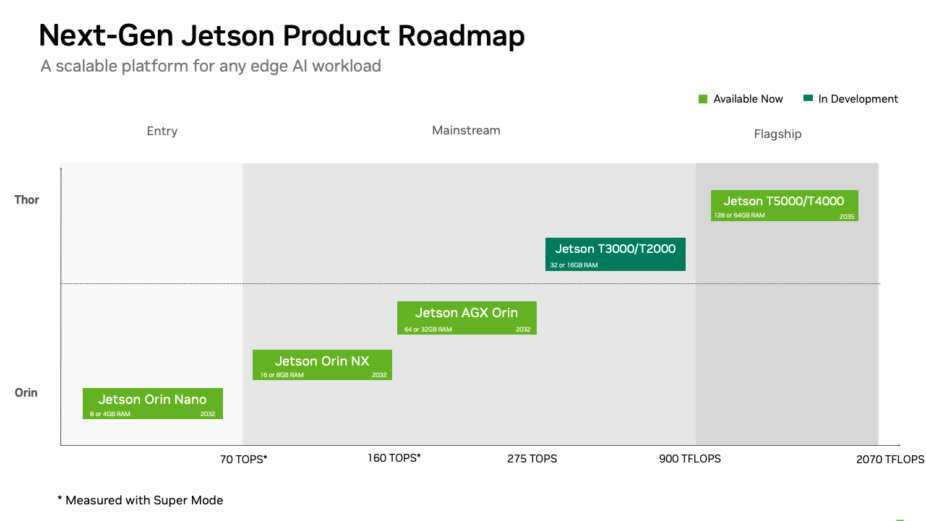
NVIDIA's response to this escalating demand is the Jetson Thor architecture, embodied in the new T3000 and T2000 modules. These modules are specifically designed to meet the rigorous requirements of next-generation general-purpose robots and autonomous machines, bringing unprecedented AI compute power to the device itself.
Deconstructing the NVIDIA Thor Architecture
The NVIDIA Thor architecture represents a significant leap in integrated, high-performance computing for edge applications. While specific silicon details for the T3000 and T2000 are not fully disclosed in the initial announcement, the core philosophy of Thor is to integrate a powerful, heterogeneous compute platform optimized for AI workloads within a compact, power-constrained form factor.
At its heart, a system built on the Thor architecture is an "AI supercomputer" on a module. This typically implies a tightly coupled integration of several key components:
- Advanced GPU: NVIDIA's prowess in GPU technology is central. For edge AI, this means a GPU optimized for inference and potentially some training, featuring Tensor Cores for accelerated matrix operations crucial to deep learning. This GPU provides the parallel processing muscle needed for large neural networks and foundation models.
- High-Performance Multi-core CPU: A robust CPU is essential for general-purpose computing, managing the operating system, handling I/O, orchestrating AI workloads, and running traditional algorithmic tasks.
- Dedicated AI Accelerators: Beyond the GPU's general AI capabilities, dedicated hardware accelerators might be present to handle specific AI tasks with extreme efficiency, such as vision processing units (VPUs) or specialized inference engines.
- High-Bandwidth Memory (HBM or LPDDR5X): Running foundation models, which can have billions of parameters, requires substantial and fast memory. Thor-based modules would integrate high-bandwidth memory to feed the GPU and accelerators efficiently, preventing bottlenecks.
- Integrated I/O and Connectivity: For robotics, seamless integration with a multitude of sensors (cameras, LiDAR, radar, IMUs) and actuators is critical. The architecture must provide high-throughput interfaces like PCIe, USB, Ethernet, and potentially custom sensor interfaces.
- Power Management Unit (PMU): Given the emphasis on "power-efficient," sophisticated power management is built-in to dynamically adjust performance and power consumption based on workload, ensuring optimal operation within thermal and power budgets.
This integrated design allows the Jetson Thor modules to execute complex AI pipelines, from sensor data ingestion and pre-processing to multi-modal foundation model inference and real-time decision-making, all on a single, compact device.
Figure 1: Conceptual Components and Pillars of the Jetson Thor Architecture
Jetson Thor T3000 and T2000: Technical Capabilities
The T3000 and T2000 modules are the initial products leveraging the Thor architecture. While precise technical specifications like CUDA core counts or CPU configurations were not detailed in the snippet, their stated purpose gives us a strong indication of their capabilities. They are described as "new modules" designed to "enable mass-market robotics and edge AI." This implies:
- Scalability: The introduction of both T3000 and T2000 suggests a tiered performance offering, allowing developers to choose the right balance of compute, memory, and power for their specific application. The T3000 would presumably offer higher performance for more demanding foundation models or complex multi-sensor fusion tasks, while the T2000 targets more cost- and power-sensitive applications.
- Foundation Model Readiness: The core capability highlighted is "running foundation models at the edge." Foundation models, such as large language models (LLMs) or large vision models (LVMs), are characterized by their vast parameter counts and require significant computational resources (FLOPS) and memory bandwidth for efficient inference. These modules are engineered to handle these large models with low latency, which is crucial for real-time robotic interaction.
- Robustness for Real-World Deployment: Mass-market robotics implies industrial-grade reliability, extended temperature ranges, and long-term support. The modules are likely designed with these factors in mind, going beyond consumer-grade hardware.
The ability to deploy these powerful AI capabilities in compact, power-efficient packages is a game-changer for robotics, allowing for more sophisticated, autonomous behaviors without relying on constant cloud communication.
Enabling Foundation Models at the Edge
The ability to run foundation models directly on an edge device like Jetson Thor offers several critical advantages for robotics and, by extension, future game AI:
1. Reduced Latency: Cloud inference introduces network latency, which is unacceptable for real-time control loops in robotics or highly responsive game AI. Edge processing eliminates this, enabling instantaneous reactions.
2. Enhanced Privacy and Security: Sensitive data from sensors (e.g., cameras in a home robot) can be processed locally without being transmitted to the cloud, significantly improving data privacy and reducing security risks.
3. Offline Operation: Robots equipped with edge AI can operate autonomously in environments with limited or no network connectivity, such as remote industrial sites or disaster zones.
4. Lower Bandwidth Requirements: Processing data locally drastically reduces the amount of data that needs to be sent to the cloud, saving bandwidth and associated costs.
5. Cost Efficiency (Operational): While the initial hardware cost might be higher than a thin client, the long-term operational costs associated with cloud compute and data transfer can be significantly reduced.
For game developers, these benefits translate directly into the potential for more intelligent, responsive, and context-aware NPCs, dynamic environments, and even localized AI agents that enhance gameplay without heavy server-side computation.
Impact on Robotics and Autonomous Machines
The Jetson Thor modules are poised to accelerate the deployment of advanced robotics across various sectors. The "general-purpose robots and autonomous machines" mentioned in the article encompass a wide array of applications:
- Logistics and Manufacturing: Autonomous guided vehicles (AGVs), robotic arms performing complex assembly tasks, quality control systems with advanced vision.
- Healthcare: Surgical robots, patient care robots, autonomous delivery systems within hospitals.
- Agriculture: Autonomous farming equipment, crop monitoring robots.
- Service Robotics: Delivery robots, cleaning robots, security robots capable of complex navigation and interaction.
- Humanoid Robots: Enabling more natural language understanding, sophisticated manipulation, and adaptive behaviors for human-robot interaction.
These applications demand not just raw compute but also a robust software stack (like NVIDIA's Isaac ROS, CUDA, and TensorRT) to translate the hardware capabilities into deployable solutions.
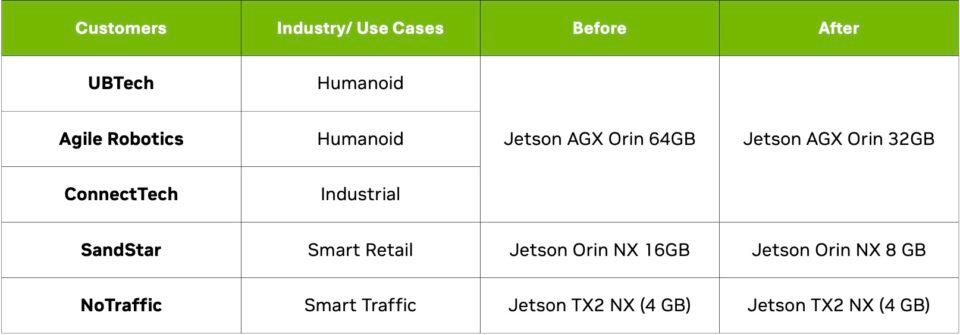
Figure 2: NVIDIA's Vision for Jetson Use Cases (from source article)
Implications for Game Development and Simulation
While the Jetson Thor is explicitly targeted at robotics and edge AI, its underlying capabilities and the paradigm shift it represents have profound implications for game development, particularly in the realm of advanced AI and real-time simulation.
1. Advanced NPC Intelligence at the Client Side
Imagine NPCs in open-world games that are not only driven by scripting and behavior trees but also by localized foundation models. These models could enable:
- Dynamic Dialogue Systems: NPCs capable of more nuanced, context-aware conversations, understanding player intent and adapting their responses in real-time without constant cloud lookups.
- Adaptive Behavior: NPCs that learn from player actions or environmental changes, exhibiting emergent behaviors that go beyond pre-programmed states. A guard might truly "understand" a complex distraction rather than just reacting to a sound cue.
- Realistic Social Simulation: Agents that maintain complex relationships, remember past interactions, and react emotionally or socially in ways that are difficult to script.
The power-efficiency of Jetson Thor, if translated into future desktop or console GPUs, suggests that such client-side AI could become feasible even within constrained game budgets.
2. Real-time Procedural Content Generation (PCG)
Edge AI supercomputers could drive more sophisticated real-time PCG. Instead of pre-generating massive worlds, parts of the environment, quest lines, or even enemy encounters could be generated dynamically based on player actions, story context, or learned preferences. Foundation models, trained on vast datasets of game assets and rules, could synthesize new content on the fly, making every playthrough unique.
3. Enhanced Physics and Environmental Interaction
More powerful local compute can lead to richer, more interactive physics simulations. Imagine environments where every object reacts realistically, not just to player input but also to dynamic AI agents. Complex fluid simulations, soft-body dynamics, and destruction physics could run more extensively client-side, offloading some of the burden from the CPU.
4. AI-Powered Development Tools and Co-Pilots
Beyond in-game applications, the advancements in edge AI could empower developers. Local AI co-pilots could assist with:
- Asset Generation: Generating textures, models, or animations based on high-level descriptions or reference images directly on a powerful workstation.
- Code Generation and Refactoring: Intelligent assistants that understand game engine APIs and best practices, helping to write and optimize game code.
- Playtesting and Balancing: Autonomous AI agents that play the game, identify bugs, suggest balance changes, and even generate new test cases.
By bringing foundation models to the edge, these tools can offer instantaneous feedback and iteration, drastically improving developer productivity.
5. Multi-Agent Systems and Swarm Intelligence
For strategy games or simulations involving large numbers of units, Jetson Thor's capabilities could allow for more complex multi-agent AI. Each unit could possess a more sophisticated local model, leading to more emergent and intelligent swarm behaviors, dynamic pathfinding, and coordinated tactics that are less reliant on centralized command structures.
Challenges and Future Outlook
While promising, integrating such advanced edge AI into mainstream game development presents challenges:
- Resource Management: Effectively utilizing the heterogeneous compute resources (GPU, CPU, accelerators) without creating bottlenecks.
- Tooling and Workflow: Developing robust tools and pipelines for training, deploying, and managing foundation models within game engines.
- Performance Optimization: Ensuring that these complex AI models run within strict performance budgets (framerate, memory) alongside rendering and other game systems.
- Data Privacy and Ethics: As AI becomes more sophisticated and personalized, ethical considerations around data usage and AI behavior become paramount.
The Jetson Thor modules are a clear indicator of NVIDIA's commitment to pushing AI compute to the periphery. For game developers, this means the future holds the promise of truly intelligent NPCs, dynamically evolving game worlds, and powerful AI-assisted development workflows. By understanding these architectural shifts, we can better prepare our engines and design philosophies for the next generation of interactive experiences. The ability to run massive foundation models locally on power-efficient hardware is not just for industrial robots; it's a foundational technology that will redefine what's possible in virtual worlds.
Conclusion
NVIDIA's Jetson Thor T3000 and T2000 modules represent a critical advancement in edge AI, bringing the power of foundation models to compact, power-efficient platforms. This technological evolution, initially targeting mass-market robotics and autonomous machines, provides a compelling blueprint for the future of intelligent systems. For game developers, these advancements signal a coming era where highly sophisticated, real-time AI can be deployed client-side, enabling unprecedented levels of NPC intelligence, dynamic content generation, and powerful developer tools. As we continue to push the boundaries of immersive experiences, understanding and adapting to these edge AI architectures will be paramount in crafting the next generation of games.