August 25, 2026
7 min read
NVIDIA's Gamescom 2026: Ray-Traced Nanite, DLSS 4.5, and Native Anti-Cheat
Key Takeaways
- •The Dawn of Ray-Traced Nanite: Visual Fidelity Unleashed
- •What This Means for Developers:
- •DLSS 4.5: The Performance Multiplier Evolves
Gamescom 2026 has kicked off with a bang, and as a developer, I'm always keen to see what new tools and technologies are on the horizon. This year, NVIDIA has delivered some truly significant announcements that could reshape how we approach game development, particularly in the realms of rendering, performance, and security. The big reveals from their Gamescom presentation include ray-traced Nanite, DLSS 4.5, and a new native anti-cheat solution. These aren't just incremental updates; they represent foundational shifts that empower us to create more immersive, performant, and secure gaming experiences.
For anyone in the trenches of game development, these technologies from NVIDIA are more than just buzzwords. They are practical tools that promise to solve some of our most persistent challenges. Let's dive into what each of these means for us, the creators.
The Dawn of Ray-Traced Nanite: Visual Fidelity Unleashed
Unreal Engine 5's Nanite has already been a game-changer for handling incredibly detailed geometry without sacrificing performance. It allows us to import cinematic-quality assets directly into our games, with the engine intelligently streaming and rendering only the necessary detail. But for many, the holy grail has been combining this geometric freedom with the stunning realism of ray tracing.
NVIDIA's announcement of ray-traced Nanite is precisely that breakthrough. As reported by GamesIndustry.biz, this integration means that now, the massive geometric detail managed by Nanite can interact with ray-traced lighting, reflections, and shadows in a physically accurate way.
What This Means for Developers:
- Unprecedented Detail: We can push visual fidelity even further, knowing that our highly detailed environments and characters will beautifully react to realistic lighting. Think about intricate architectural details casting soft, accurate shadows, or complex materials reflecting light with pixel-perfect precision.
- Simplified Asset Pipelines: The core benefit of Nanite — importing high-poly models without manual LODs — is now extended to ray tracing. This reduces the art team's burden, allowing them to focus on creation rather than optimization for different rendering paths.
- Dynamic Environments: Ray-traced Nanite opens doors for truly dynamic lighting scenarios that were previously performance nightmares. Imagine real-time destruction that accurately casts new shadows and reflects light as geometry changes, all while maintaining high frame rates.
The synergy between Nanite's micro-polygon rendering and ray tracing is a monumental step towards photorealism in real-time games. It's a testament to how hardware and software innovation continue to push creative boundaries.
DLSS 4.5: The Performance Multiplier Evolves
NVIDIA's Deep Learning Super Sampling (DLSS) technology has become indispensable for many modern AAA titles. It uses AI to upscale lower-resolution frames to higher resolutions, delivering impressive performance gains without a significant drop in visual quality. With DLSS 4.5, NVIDIA is taking another leap forward.
While specific technical details are still emerging, the "4.5" iteration suggests refinements and improvements over previous versions. This likely includes:
- Enhanced Image Reconstruction: Expect even sharper images, better handling of fine details, and reduced ghosting or artifacting, especially in motion.
- Improved Frame Generation: DLSS 3's Frame Generation has been a powerful tool for boosting frame rates. DLSS 4.5 likely brings further optimizations to this, potentially reducing latency or improving temporal stability.
- Wider Application: As DLSS matures, its integration becomes smoother across various game engines and rendering pipelines, making it easier for us to implement in our projects.
For developers, a more efficient and higher-quality DLSS means we can target higher resolutions and frame rates for players, even with demanding graphical settings enabled by technologies like ray-traced Nanite. It's a crucial component in the performance equation, ensuring that visual advancements don't come at an unbearable cost to the player experience.
Native Anti-Cheat: Securing the Game Experience
Beyond graphics, NVIDIA's announcement of a native anti-cheat solution is a critical development, especially for multiplayer game developers. Cheating remains a pervasive problem that erodes player trust and compromises the integrity of competitive games. An integrated, hardware-backed anti-cheat offers a robust layer of defense.
Traditional anti-cheat systems often operate at the software level, leading to an arms race between cheat developers and anti-cheat engineers. By introducing a "native" solution, likely leveraging hardware-level security features within NVIDIA's GPUs and drivers, the goal is to make cheating significantly harder to implement and detect.
Key Benefits for Game Developers:
- Enhanced Security: A deeper integration with the hardware stack can provide more secure methods for verifying game integrity and detecting tampering, making it much more difficult for cheats to evade detection.
- Reduced Development Burden: While implementation details are yet to be fully revealed, a native solution could potentially offload some of the anti-cheat development and maintenance burden from individual studios.
- Improved Player Experience: Ultimately, a more secure environment fosters a healthier player community, encouraging fair play and long-term engagement. This is vital for the longevity of any online title.
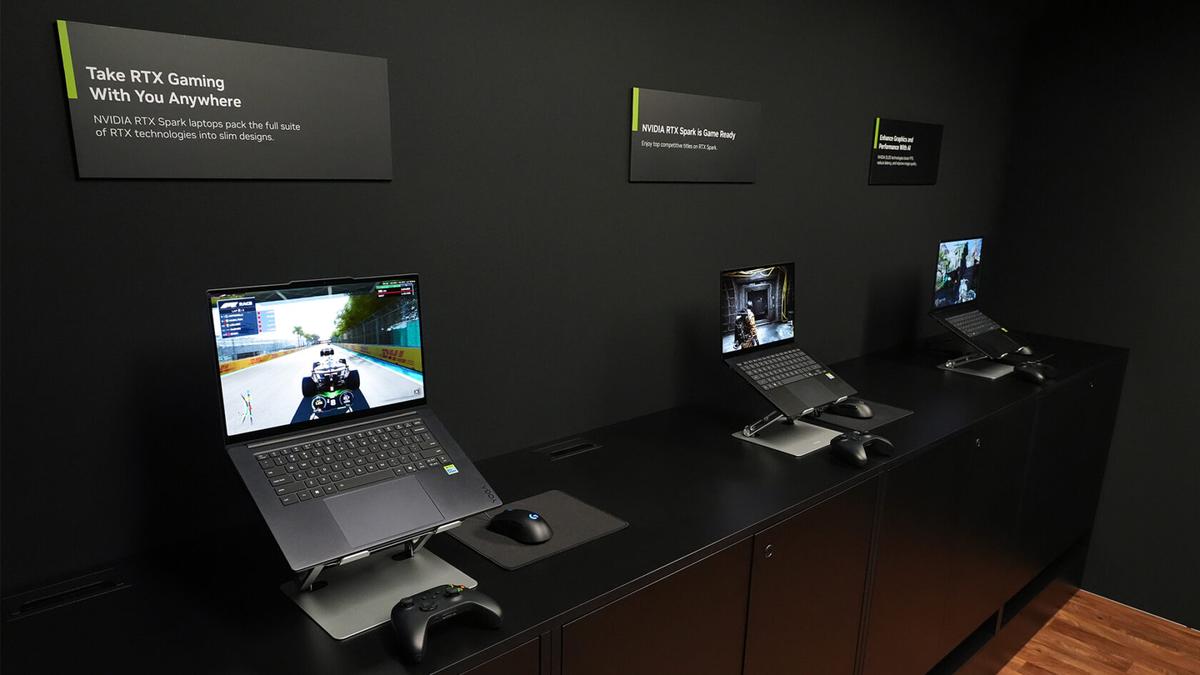
For studios like Electronic Arts, Embark, and Ubisoft, who are already bringing titles to NVIDIA RTX Spark as mentioned by the NVIDIA Blog, a robust anti-cheat solution is paramount. It ensures that the cutting-edge experiences they deliver are protected from those who would undermine them.
The Broader Ecosystem: RTX Spark and the Future
These announcements aren't isolated features; they are integral parts of NVIDIA's broader ecosystem, particularly highlighted by the mention of NVIDIA RTX Spark. This platform, which leading publishers and developers are already adopting, seems to be a comprehensive suite for leveraging NVIDIA's latest technologies.
Consider the interplay:
This diagram illustrates how these components work together. As developers, we're not just getting individual tools; we're seeing NVIDIA build out a more cohesive platform that integrates rendering, performance, and security from the ground up. This streamlined approach, especially with "leading publishers" already on board, suggests a future where these advanced capabilities become standard, not just niche features.
Developer Takeaways: Pushing the Boundaries
This Gamescom 2026 showing from NVIDIA is a clear signal that the bar for visual fidelity, performance, and online security in games is continually rising. For us, the developers, this means:
- Embrace New Rendering Paradigms: Ray-traced Nanite encourages us to think bigger with our asset creation and scene complexity. The era of compromises between detail and performance is slowly fading.
- Prioritize Performance Scaling: DLSS 4.5 reinforces the importance of adopting upscaling technologies. It's no longer just an option; it's a necessity for reaching a broad audience with high-end graphics.
- Invest in Security from Day One: A native anti-cheat solution underscores that security is a feature, not an afterthought. For any multiplayer game, building on a secure foundation is non-negotiable.
The industry is moving rapidly, and staying ahead means understanding and integrating these powerful tools. NVIDIA's commitment to developer-facing updates, as GamesIndustry.biz noted, gives us the power to craft experiences that truly stand out. It's an exciting time to be a game developer, with the technology to match our most ambitious creative visions.

NVIDIA Blog provided a video about RTX Spark, showcasing the visual fidelity and technological advancements.