July 19, 2026
9 min read
NVIDIA's Full-Stack AI & Robotics in Japan: Game Dev Impact
Key Takeaways
- •Understanding NVIDIA's Full-Stack AI and Robotics Vision
- •The Significance of Robotics and Edge AI
- •Japan's Ecosystem: A Blueprint for Innovation
As a technical director in game development, staying ahead of the curve in AI and robotics is no longer optional—it's foundational. NVIDIA's holistic approach to AI, particularly evident in its collaborations within Japan's vibrant tech ecosystem, offers profound insights into the future of interactive entertainment. This guide will deconstruct NVIDIA's "full-stack" strategy for AI and robotics, examining its components and detailing how these advancements are poised to revolutionize game development, from hyper-realistic NPC behaviors to unprecedented virtual world simulations.
Understanding NVIDIA's Full-Stack AI and Robotics Vision
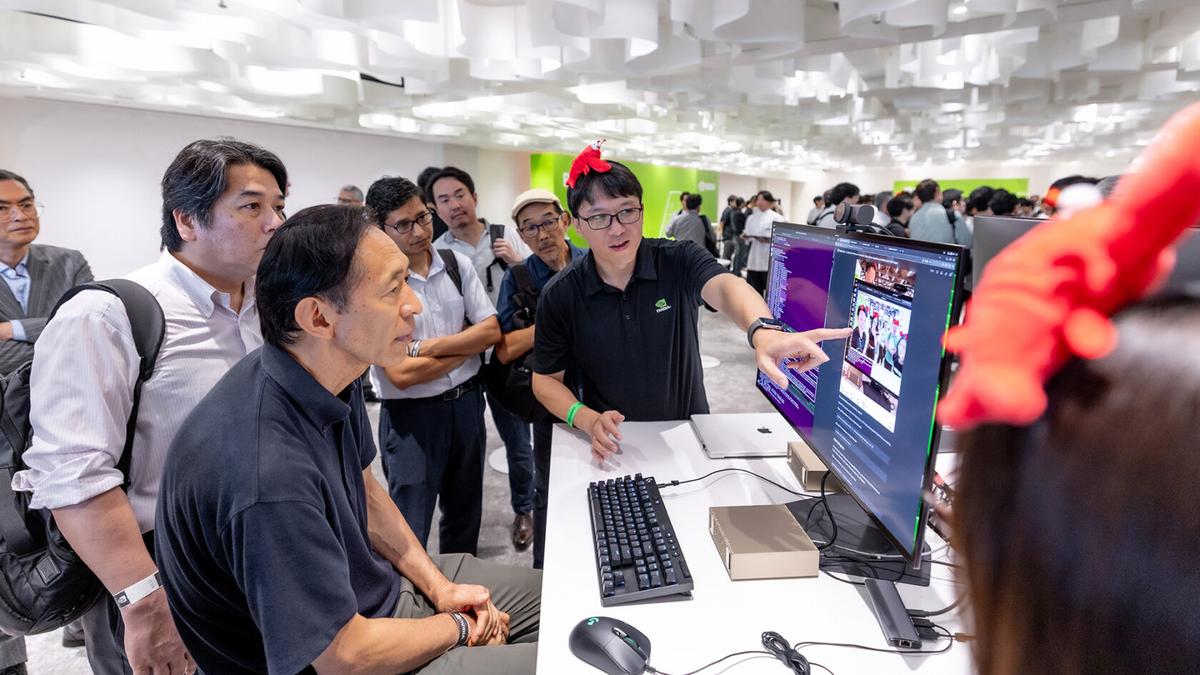
NVIDIA's vision for AI and robotics is not merely about providing powerful hardware; it's about building a complete, integrated ecosystem that spans from the silicon to the application layer. This "full-stack" approach ensures seamless development, deployment, and scaling of AI-powered solutions across diverse industries. Japan stands out as a critical hub for this innovation, being "one of the world’s centers of AI — building across the full stack with NVIDIA technologies." This includes collaborations with "leading manufacturers, robotics pioneers, infrastructure builders, and iconic gaming companies."
At its core, the full stack encompasses:
1. Accelerated Computing Infrastructure: High-performance GPUs and specialized AI processors for both training and inference workloads.
2. System Software & Libraries: CUDA, cuDNN, TensorRT, and other fundamental libraries that optimize AI operations for NVIDIA hardware.
3. AI Frameworks & Models: Support for popular deep learning frameworks (e.g., PyTorch, TensorFlow) and access to pre-trained foundation models.
4. Application-Specific Platforms: SDKs and platforms tailored for specific domains like robotics (Isaac), simulation (Omniverse), and generative AI.
5. Cloud-to-Edge Deployment: Solutions that enable AI models to be deployed efficiently from data centers to embedded devices at the edge.
This integrated architecture is designed to maximize efficiency and performance, reducing the friction typically associated with developing complex AI systems.
The Significance of Robotics and Edge AI
The convergence of AI and robotics is a major theme within NVIDIA's strategy. General-purpose robots and autonomous machines are transitioning from research labs to real-world deployment. This shift demands compact, power-efficient AI supercomputers capable of running sophisticated foundation models at the edge. In game development, this trend has several implications:
- Advanced NPC Behavior: Imagine NPCs in open-world games with truly adaptive learning capabilities, trained on foundation models and performing complex tasks with real-time decision-making. These agents could mimic human-like navigation, interaction, and even emotional responses, far beyond scripted AI.
- Dynamic World Generation: Edge AI could power localized, procedural content generation in real-time, adapting environments, quests, or enemy encounters based on player actions and immediate context, reducing reliance on pre-baked assets.
- Robotics for Game Testing & Development: The principles of real-world robotics can be applied to virtual agents for automated game testing, simulating player behavior, or even for procedural animation generation based on physical constraints.
The ability to deploy powerful AI models to edge devices means that complex AI doesn't solely reside in the cloud; it can be integrated directly into game logic running on local machines, leading to more responsive and immersive experiences.
Japan's Ecosystem: A Blueprint for Innovation
Japan's role as an AI and robotics powerhouse, with its "leading manufacturers, robotics pioneers, infrastructure builders, and iconic gaming companies," makes it a crucial proving ground for NVIDIA's full-stack strategy. This concentrated ecosystem fosters rapid innovation and collaboration across traditionally disparate fields.
Consider the interplay:
- Manufacturing & Robotics: Advances in industrial automation and physical robotics directly inform the development of robust simulation tools and AI agents that understand real-world physics and interaction.
- Infrastructure Builders: The development of high-performance computing infrastructure supports the massive training datasets and complex models required for cutting-edge AI.
- Gaming Companies: Iconic Japanese gaming companies can leverage these advancements to push the boundaries of virtual characters, procedural environments, and interactive narratives. The article explicitly highlights NVIDIA's engagement with the Japanese AI ecosystem, showcasing its latest advancements.
This cross-industry synergy accelerates the development cycle for AI technologies, making sophisticated tools and methodologies available faster to game developers.
Impact on Game Development: A Technical Deep Dive
The implications of NVIDIA's full-stack AI and robotics strategy for game development are transformative, touching every aspect from content creation to player experience.
1. Hyper-Realistic AI Agents and NPCs
The full-stack approach enables the creation of truly "agentic" AI within games. Unlike traditional finite-state machines or behavior trees, agentic AI can:
- Learn and Adapt: NPCs can learn from player interactions and environmental changes, developing unique behaviors over time.
- Understand Context: Leveraging large language models (LLMs) and vision models, NPCs can interpret complex situations, engage in natural dialogue, and make contextually appropriate decisions.
- Perform Complex Tasks: Robotics-inspired AI can enable NPCs to perform intricate physical tasks, navigate complex environments dynamically, and interact with objects in a physically plausible manner.
This level of AI sophistication requires not just powerful GPUs for inference but also robust training pipelines, comprehensive SDKs, and efficient deployment mechanisms—all provided by the full stack.
2. Real-time Simulation and Generative Worlds
NVIDIA's Omniverse platform, while not explicitly mentioned in the Japan article, embodies the full-stack philosophy for simulation. It allows for the creation of physically accurate, real-time virtual worlds. This translates directly to game development through:
- Procedural Content Generation (PCG) 2.0: Beyond simple noise functions, AI-powered PCG can generate highly detailed and coherent game worlds, terrains, foliage, and even architectural structures, informed by foundation models.
- Dynamic Environments: Real-time physics simulations, fluid dynamics, and destruction can be managed with unprecedented fidelity, reacting dynamically to player actions and AI interactions.
- AI Training in Virtual Worlds: Game developers can use these synthetic environments to train their in-game AI agents, iterating rapidly on behaviors before deploying them into the game engine. This reduces the need for costly and time-consuming manual scripting.
3. Streamlined Development Workflows
The integrated nature of NVIDIA's full stack means game developers gain access to a cohesive set of tools and APIs, streamlining the integration of advanced AI.
Figure 1: Simplified AI Integration Workflow with NVIDIA's Full Stack
This workflow illustrates how developers can leverage NVIDIA's ecosystem from data generation to deployment, ensuring that AI models are optimized for real-time performance within game engines. Tools like TensorRT for inference optimization are critical for achieving high frame rates with complex AI.
4. Robotics Principles for Game Mechanics
The advancements in physical robotics can inspire novel game mechanics. Consider:
- Physically Accurate Character Locomotion: Instead of canned animations, character movement could be procedurally generated based on real-time physics and environmental constraints, similar to how robots adapt to uneven terrain.
- Complex Puzzle Solving: Puzzles could involve manipulating objects with realistic physics, requiring players to understand and apply robotic control principles.
- Co-op with AI Companions: AI companions could exhibit sophisticated collaboration and problem-solving, leveraging multi-agent reinforcement learning techniques derived from robotics research.

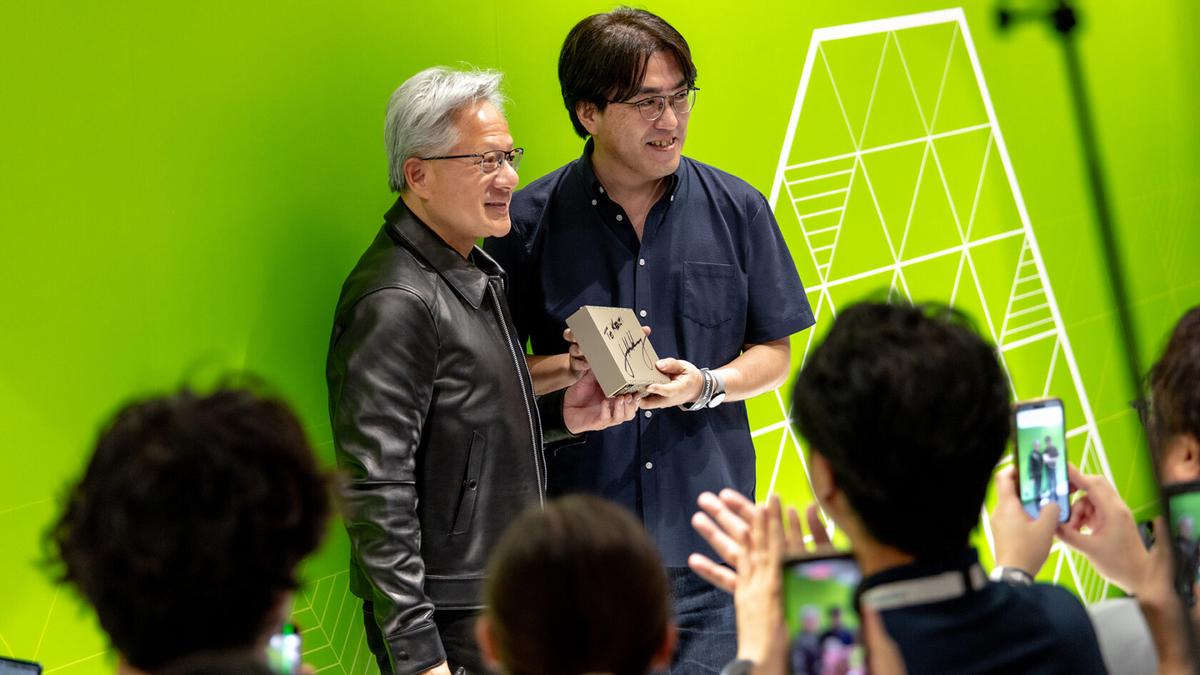
NVIDIA's presence in Japan includes partnerships with iconic gaming companies like SEGA, showcasing the breadth of its ecosystem integration.
Technical Considerations for Implementation
For technical directors, integrating this level of AI requires careful planning and a deep understanding of the underlying technologies.
Hardware Abstraction and Optimization
The core of NVIDIA's full stack is its GPU architecture and the CUDA platform. Game engines need to effectively abstract and utilize these parallel processing capabilities. Technologies like DLSS and Frame Generation, while primarily rendering features, highlight NVIDIA's commitment to optimizing workloads on its hardware. Future AI features will similarly demand tight integration with the hardware layer.
Data Pipelines for AI Training
Developing robust AI requires vast amounts of data. The full stack facilitates this by:
- Synthetic Data Generation: Using tools within the NVIDIA ecosystem to generate diverse and high-quality training data from game environments, reducing the need for manual labeling.
- Data Augmentation: Techniques to expand existing datasets, making AI models more robust and generalizable.
Model Lifecycle Management
From experimentation to deployment, managing AI models is complex. NVIDIA's platforms provide tools for:
- Experiment Tracking: Monitoring training runs, hyperparameter tuning, and model performance.
- Version Control: Managing different iterations of AI models.
- Deployment & Monitoring: Ensuring models perform optimally in live game environments and can be updated efficiently.
Figure 2: AI Model Development & Deployment Lifecycle in Game Development
This iterative process is crucial for continuously improving game AI, and a full-stack approach provides the necessary tools at each stage.
Challenges and Future Outlook
While the potential is immense, integrating full-stack AI and robotics presents challenges:
- Talent Gap: The need for developers proficient in both game development and advanced AI/machine learning.
- Computational Cost: Training large foundation models is computationally intensive, requiring significant resources.
- Complexity Management: The sheer complexity of managing an entire AI stack, from hardware to applications, can be daunting.
However, the rapid advancements showcased by NVIDIA, particularly in collaborative ecosystems like Japan, suggest that these challenges are being actively addressed. The future of game development will likely see a seamless blend of traditional game logic with sophisticated, adaptive AI agents, driven by full-stack solutions. Games will become more dynamic, responsive, and immersive, offering experiences that were previously confined to science fiction. As technical directors, our role will be to harness these powerful tools, guiding our teams to build the next generation of interactive worlds.
The integration of NVIDIA's full-stack AI and robotics capabilities, exemplified by its deep engagement in Japan, marks a pivotal moment for the game industry. By understanding and leveraging these comprehensive technologies, we can unlock unprecedented levels of realism, intelligence, and interactivity in our games, shaping the future of digital entertainment.