July 27, 2026
8 min read
Miyamoto: Why Raw Power Isn't Gamers' Top Priority Anymore
Key Takeaways
- •Miyamoto: Why Raw Power Isn't Gamers' Top Priority Anymore
- •The Shifting Sands of Player Expectations
- •The Developer's Dilemma: Performance vs. Innovation
Miyamoto: Why Raw Power Isn't Gamers' Top Priority Anymore
As game developers, we often find ourselves caught in the relentless cycle of technological advancement. Every new console generation, every GPU release, brings with it the promise of more polygons, higher frame rates, and increasingly realistic visuals. Yet, a recent statement from a titan of our industry, Shigeru Miyamoto, reminds us to pause and reflect. According to Kotaku, Miyamoto believes that gamers have grown disinterested in hardware specs, suggesting that cutting-edge graphics and performance are no longer the primary drivers for customer engagement. And honestly, as Vikas Singh, a professional game developer, I find myself nodding in agreement.
This isn't to say that performance doesn't matter. Of course, it does. A smooth, responsive experience is fundamental. But Miyamoto's insight points to a deeper truth: the pursuit of raw power for its own sake might be a diminishing return. What does this mean for us, the creators on the front lines, grappling with engine optimizations, asset pipelines, and the constant pressure to deliver?
The Shifting Sands of Player Expectations
Think back to the early days of 3D gaming. Every jump in polygon count, every new lighting technique, felt revolutionary. Developers pushed hardware to its absolute limits, and players eagerly devoured the visual spectacle. The "wow" factor of graphical fidelity was a significant selling point.
However, as Miyamoto suggests, this dynamic has evolved. We've reached a point where baseline graphical quality is incredibly high. Most modern games, even on mid-range hardware, look good. The marginal gains from pushing beyond "good" to "hyper-realistic" often come at an exponential cost in development time, resources, and computational power, without necessarily translating to a proportional increase in player enjoyment.
Miyamoto's perspective, as reported by Kotaku, highlights that gaming trends show "cutting edge graphics and performance are no longer the priority for customers." This isn't just a Nintendo-centric view; it reflects a broader industry shift. Players are increasingly looking for:
- Compelling Gameplay: Innovative mechanics, engaging loops, and satisfying challenges that keep them coming back.
- Rich Storytelling & World-building: Immersive narratives, memorable characters, and expansive lore that captivate their imagination.
- Unique Experiences: Games that offer something genuinely different, whether it's through a distinctive art style, genre blending, or groundbreaking interactive storytelling.
- Accessibility & Fun: Games that are easy to pick up but offer significant depth, fostering a sense of joy, discovery, and mastery.
Consider the runaway success of titles that prioritize unique art styles or innovative mechanics over photorealism. Minecraft, Undertale, Stardew Valley, Palworld – these games captivated millions without needing the latest GPU. Their appeal lies in their core design, their ability to foster creativity, emotional connection, or addictive gameplay loops. They prove that a strong concept and execution can easily outweigh raw graphical fidelity.
The Developer's Dilemma: Performance vs. Innovation
For us developers, Miyamoto's statement is both a challenge and an opportunity. It forces us to reconsider where we allocate our precious development resources and creative energy.
The Challenge:
The pressure to optimize for high-end hardware remains a significant factor, especially in the AAA space. Marketing departments often still lean on dazzling visuals as a primary selling point. Investors and publishers might still expect a certain level of graphical fidelity, especially for big-budget titles, believing it's what the market demands. Balancing these external expectations with the reality of evolving player priorities can be a tough tightrope walk.
The Opportunity:
This shift, however, also frees us to focus our resources where they truly matter: innovation in gameplay, narrative, and user experience. Instead of pouring countless hours into chasing an extra percentage point of graphical realism or an infinitesimal bump in frame rate, we can invest in:
- Prototyping New Mechanics: Experimenting with unconventional control schemes, interaction models, or core gameplay loops that break new ground.
- Deepening Narrative Design: Crafting more intricate stories, developing complex character arcs, and building worlds with meaningful lore that players want to explore.
- Exploring Unique Art Directions: Developing distinct visual identities that stand out from the crowd, rather than blending into a sea of photorealistic titles. This allows for more creative freedom and can give your game a timeless appeal.
- Enhancing Accessibility: Ensuring our games can be enjoyed by a wider audience, regardless of skill level, physical ability, or preferred playstyle.
This doesn't mean neglecting performance entirely. A game that runs poorly, even if it has a brilliant story, will inevitably frustrate players. Performance and stability are foundational. But it suggests that the ceiling of acceptable performance might be lower than we sometimes assume, and the floor of required innovation is steadily rising. Players expect a smooth experience, but they crave novelty and engagement.
Visualizing Player Priorities (Hypothetical)
Let's illustrate this with a hypothetical overview of what drives player satisfaction in today's market. While high-fidelity graphics are appreciated, they might not be the most impactful factor when weighed against other elements.
This simple graph illustrates that while "Performance & Stability" are an "Essential Baseline" – a prerequisite for enjoyment – "Gameplay Innovation" and "Story & World-building" often have a "High Impact" on overall player satisfaction. "Unique Art Style" can also contribute significantly, sometimes even more than raw graphical power, by offering a fresh aesthetic. "Social/Community Features" are also gaining "Growing Impact" as multiplayer and connected experiences become more prevalent.
Practical Implications for Game Development Teams
So, how do we integrate Miyamoto's philosophy into our daily development practices and strategic planning?
1. Prioritize Core Gameplay Loops Early: Before committing to massive asset creation, ensure the fundamental mechanics are fun, engaging, and robust. This means dedicating significant time to rapid prototyping, iterative design, and extensive playtesting with diverse audiences.
2. Invest in Strong Narrative and World Design: A compelling story or an intriguing, well-realized world can carry a game even if its visuals aren't bleeding edge. Hire talented writers, narrative designers, and concept artists, and integrate them early into the development process.
3. Embrace Stylization Over Pure Photorealism: Instead of chasing the ever-receding horizon of photorealism, consider a stylized art direction. This can be both unique and less demanding on development resources and target hardware, allowing for more creative freedom and giving your game a distinctive, potentially timeless, appeal.
4. Focus on Optimization as a Baseline, Not a Selling Point: Aim for solid, consistent performance across your chosen target platforms. Understand that beyond a certain point, further optimization for marginal gains might yield diminishing returns compared to investing in other, more impactful areas of player experience.
5. Listen to Your Community: Engage actively with your player base to understand what truly resonates with them. Is it the intricate combat system, the emotional narrative, the sandbox freedom, or the ability to customize every detail? Their feedback will be an invaluable guide for your development priorities.
The Nintendo Way: A Case Study in Prioritizing Experience
Nintendo, under Miyamoto's enduring influence, has consistently championed this philosophy. Their consoles are rarely the most powerful on the market, yet their games frequently top sales charts and garner critical acclaim. Titles like The Legend of Zelda: Breath of the Wild and Tears of the Kingdom are celebrated not for their graphical horsepower, but for their revolutionary open-world design, emergent gameplay, and unparalleled sense of adventure and discovery. They stand as powerful testaments that innovation in design and experience can, and often does, trump raw technical specifications.
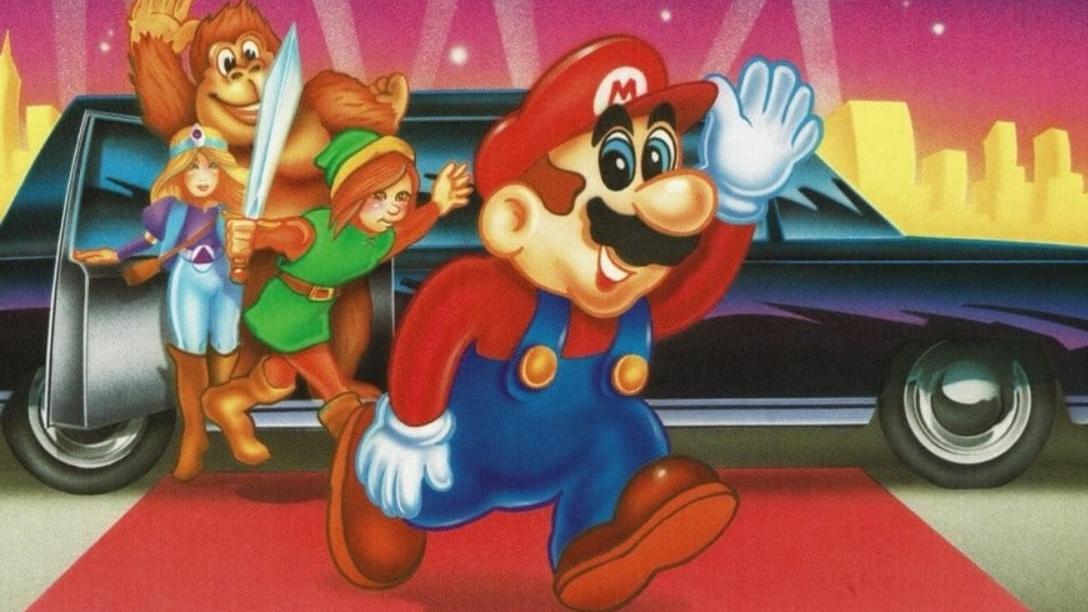
Even the image accompanying the Kotaku article, an old Nintendo CDI, subtly reinforces this point. It reminds us of a time when hardware was less refined, yet groundbreaking games still emerged, proving that ingenuity is key, regardless of the technological canvas. It's about what you do with the canvas, not just how expensive the canvas is.
Conclusion: A Call for Creative Courage
Miyamoto's observation is a powerful and timely reminder for all game developers: the heart of a great game lies in its experience, not just its technical prowess. In an industry often fixated on specs and benchmarks, this is a call for creative courage. It's an invitation to shift our focus from merely rendering worlds with increasing fidelity to truly building engaging, memorable, and fun experiences that resonate deeply with players.
By prioritizing innovative design, compelling narratives, unique artistic visions, and a commitment to player-centric experiences, we can create games that are not just technically impressive, but truly unforgettable. Let's embrace this wisdom and build the next generation of games that prove Miyamoto right, focusing on the joy and wonder that only well-crafted interactive experiences can deliver.