August 9, 2026
10 min read
Leveraging Hyperscale AI Factories: Blackwell, Rubin, and DSX for Game Dev
Key Takeaways
- •The Rise of Hyperscale AI Infrastructure: What is an AI Factory?
- •NVIDIA's Core Technologies Powering the AI Revolution
- •NVIDIA Blackwell Architecture: The Foundation of Modern AI Compute
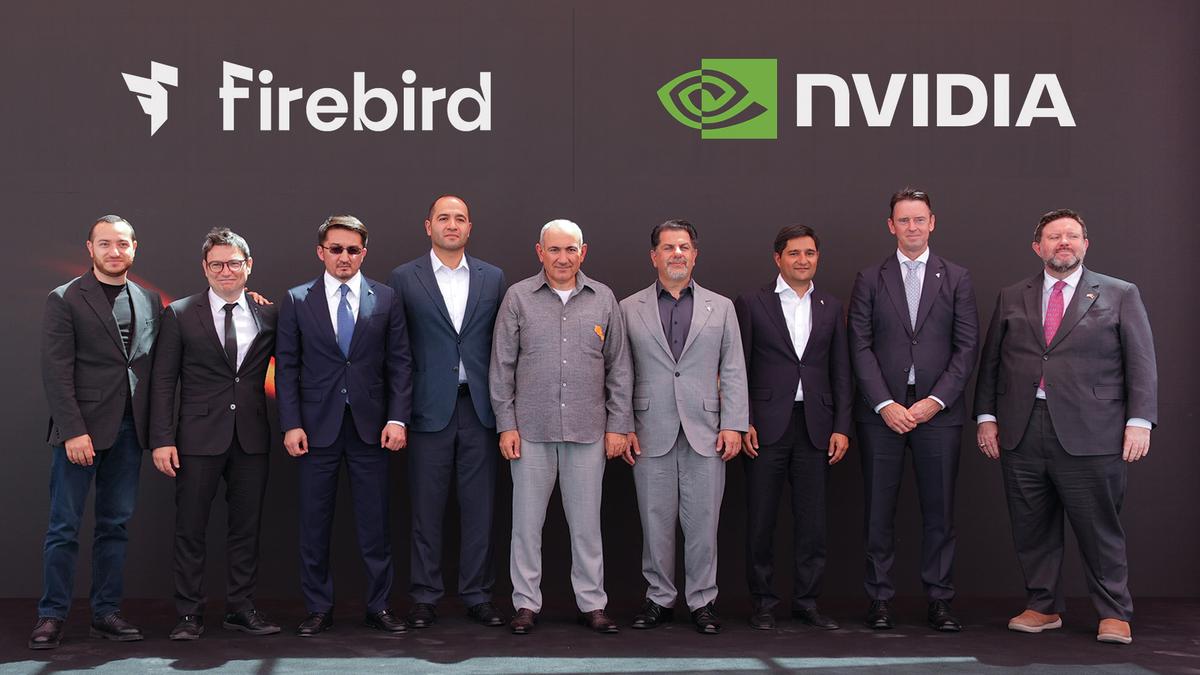
As a technical director in the game industry, I've witnessed firsthand the accelerating pace of technological innovation. The recent launch of Firebird, the CIS region’s largest AI factory in Armenia, represents a significant milestone in the global buildout of AI infrastructure. Powered by NVIDIA accelerated computing and Dell Technologies high-performance AI infrastructure, this facility is not just another data center; it's a blueprint for the future of computational power, with profound implications for game development.
This guide will dissect the core technologies enabling such hyperscale AI factories – namely NVIDIA's Blackwell, Rubin, and DSX platforms – and explore how this unprecedented level of AI computing will fundamentally reshape the way we design, develop, and deliver interactive experiences. From ultra-realistic NPC behavior to dynamic content generation and real-time simulation, the era of the AI factory promises a paradigm shift for our craft.
The Rise of Hyperscale AI Infrastructure: What is an AI Factory?
An "AI factory" is a specialized, high-density computing facility designed from the ground up to train, refine, and deploy large-scale artificial intelligence models. Unlike general-purpose data centers, these factories are optimized for parallel processing, massive data throughput, and energy efficiency crucial for demanding AI workloads. They are characterized by:
1. Massive Parallel Compute: Housing thousands of GPUs, often interconnected with high-bandwidth fabrics.
2. High-Speed Storage: Petabytes of low-latency storage for rapid data ingestion and model checkpointing.
3. Advanced Networking: Ultra-fast interconnects to minimize latency between compute nodes and storage.
4. Optimized Software Stack: Integrated frameworks, libraries, and orchestration tools for efficient AI development and deployment.
The Firebird AI factory, leveraging NVIDIA's ecosystem, exemplifies this architecture. Its establishment signifies a strategic investment in the foundational infrastructure necessary to push the boundaries of AI capabilities across various sectors, including entertainment and interactive media.
NVIDIA's Core Technologies Powering the AI Revolution
At the heart of these AI factories are NVIDIA's purpose-built hardware and software platforms. The mention of Blackwell, Rubin, and DSX provides a roadmap of the cutting-edge technologies being deployed.
NVIDIA Blackwell Architecture: The Foundation of Modern AI Compute
The Blackwell architecture, and its successors like Rubin, are designed to handle the immense computational demands of large language models (LLMs), generative AI, and complex simulations. Key technical features include:
- Next-Generation Tensor Cores: Blackwell GPUs dramatically increase AI inference and training performance. These specialized cores accelerate matrix multiplication operations, which are fundamental to neural network computations. We're talking about orders of magnitude improvement over previous generations, allowing for larger models and faster iteration cycles.
- NVLink Interconnect: Blackwell GPUs utilize advanced NVLink technology, a high-speed, low-latency interconnect that allows multiple GPUs to communicate as a single, powerful unit. This is critical for scaling AI training across hundreds or thousands of GPUs within an AI factory, effectively creating a "superchip" out of many discrete components. For game developers, this means faster training of complex behavioral AI or highly detailed PCG models.
- Transformer Engine: Optimized for transformer architectures, which are prevalent in LLMs and generative AI. This engine dynamically adapts calculations to different data types, maximizing performance without sacrificing accuracy. Imagine training an AI to generate entire game levels or dialogue trees with unprecedented speed and fidelity.
- Secure AI: Integrated hardware-level security features protect AI models and data during training and inference, a crucial aspect for proprietary game IP.
NVIDIA Rubin Platform: Pushing the Frontiers Further
While details about Rubin are still emerging as the successor to Blackwell, its inclusion in the Firebird announcement highlights NVIDIA's continuous innovation cycle. Historically, each new generation brings:
- Increased Transistor Density and Efficiency: Leading to more compute per watt.
- Enhanced Memory Bandwidth and Capacity: Essential for handling ever-larger datasets and model parameters.
- Improved NVLink Bandwidth: Further reducing communication bottlenecks in multi-GPU configurations.
For game developers, Rubin will likely translate into even more ambitious AI capabilities, allowing for real-time, high-fidelity AI simulations and content generation that were previously impossible.
NVIDIA DSX - Data Science Express: The Software-Hardware Synergy
DSX, or Data Science Express, is less about raw hardware and more about a holistic software and hardware platform designed to accelerate data science and AI workflows. It integrates NVIDIA's GPUs with optimized software stacks, including:
- CUDA-X Libraries: A suite of domain-specific libraries for various data science tasks, all optimized for GPU acceleration.
- RAPIDS: An open-source suite of libraries for executing end-to-end data science and analytics pipelines entirely on GPUs. This can significantly speed up data preprocessing, feature engineering, and model training – critical steps in developing robust game AI.
- NGC Catalog: A hub for GPU-optimized software, including AI frameworks (TensorFlow, PyTorch), pre-trained models, and industry-specific SDKs.
This integrated approach ensures that the powerful hardware of Blackwell and Rubin can be fully utilized by developers and researchers, streamlining the entire AI development lifecycle.
Architecting a Hyperscale AI Factory
A typical AI factory architecture can be visualized as a highly interconnected system designed for maximum parallel processing and data flow.
The flow begins with vast datasets, which are then preprocessed at high speed. The core training cluster, comprising thousands of Blackwell or Rubin GPUs connected by NVLink, performs the intensive model training. Post-training, models are evaluated, tuned, and then deployed to inference servers, which can then be integrated into various applications, including game engines and cloud gaming platforms.
Implications for Game Development: A Transformative Future
The availability of hyperscale AI factories like Firebird heralds a new era for game development, enabling capabilities that were once the realm of science fiction.
1. Advanced NPC AI and Character Behavior
Imagine NPCs that learn from player behavior, adapt their strategies in real-time, and exhibit truly emergent intelligence. With the computational power of an AI factory, developers can train:
- Deep Reinforcement Learning Agents: NPCs that learn optimal strategies through trial and error in simulated environments, far beyond scripting.
- Generative Behavioral Models: AI that can create novel, believable actions and reactions based on context, leading to less repetitive gameplay.
- Adaptive Dialogue Systems: NPCs that can hold dynamic, context-aware conversations, powered by fine-tuned LLMs.
This moves us beyond state machines and behavior trees to truly cognitive agents.
2. Hyper-Realistic Procedural Content Generation (PCG)
PCG is already a staple, but AI factories elevate it to an art form.
- Real-time World Generation: Entire planets or vast cityscapes can be generated on the fly with unprecedented detail, incorporating geological, ecological, and architectural realism.
- AI-driven Asset Creation: Generative AI models can produce textures, 3D models, animations, and even sound effects based on high-level artistic direction, dramatically accelerating asset pipelines.
- Dynamic Level Design: Levels that adapt and evolve based on player actions, ensuring fresh experiences in every playthrough.
3. Real-time Simulation and Physics
The sheer compute density allows for highly complex, real-time simulations:
- Destructible Environments: Physics simulations that track millions of particles and interactions, leading to truly dynamic and responsive environments.
- Fluid Dynamics and Weather Systems: Realistic weather patterns, water simulations, and atmospheric effects computed in real-time, influencing gameplay.
- Crowd Simulation: Thousands of individual agents with unique behaviors, reacting realistically to stimuli, enhancing immersion in large-scale scenarios.
4. AI-driven Art and Asset Creation Pipelines
The creative process itself can be augmented:
- Concept Art Generation: AI models can rapidly prototype visual styles, character designs, and environmental concepts from textual prompts or sketches.
- Material and Texture Synthesis: Generating photorealistic materials and textures with intricate details, reducing manual labor.
- Animation Generation: AI can infer and generate complex animations from motion capture data or even static poses, filling gaps and creating variants.
This doesn't replace artists but empowers them with superhuman tools.
5. Personalized Player Experiences
AI factories can power backend services that analyze player data to tailor experiences:
- Dynamic Difficulty Adjustment: AI learns player skill and adjusts game challenges in real-time to maintain optimal engagement.
- Adaptive Storytelling: Narrative branches and questlines can dynamically respond to player choices and performance, creating truly unique playthroughs.
- Curated Content Delivery: Recommending in-game activities, items, or social interactions based on individual player preferences and playstyle.
6. Cloud Gaming and AI Integration
The Firebird AI factory's infrastructure is inherently cloud-native. This means:
- AI as a Service for Games: Game engines could offload complex AI computations to these cloud-based AI factories, running sophisticated models without burdening local client hardware.
- Massive Multiplayer Online Games (MMOs): Persistent worlds with highly intelligent, dynamic ecosystems and economies, all managed by powerful cloud AI.
- Edge AI for Low Latency: While central factories handle training, smaller inference models could be deployed to edge servers closer to players for minimal latency in AI-driven features.
Challenges and Considerations for Game Developers
While the potential is immense, several challenges must be addressed:
- Computational Cost: Training and running these advanced AI models require significant computational resources, translating to high operational costs. Efficient model design and optimization will be paramount.
- Data Acquisition and Curation: High-quality, diverse datasets are crucial for training effective AI. Sourcing and curating this data, especially for game-specific scenarios, is a non-trivial task.
- Talent Gap: The demand for AI engineers and technical artists with expertise in machine learning, deep learning, and MLOps (Machine Learning Operations) will continue to grow. Investing in upskilling existing teams and attracting new talent is essential.
- Ethical AI Development: Ensuring fairness, preventing bias, and maintaining transparency in AI-driven game content and behavior is critical. This includes addressing concerns around AI-generated content ownership and potential misuse.
- Integration Complexity: Integrating sophisticated AI models into existing game engine pipelines and development workflows requires robust tools and standardized interfaces.
Conclusion
The launch of AI factories like Firebird, powered by NVIDIA's Blackwell, Rubin, and DSX platforms, marks a pivotal moment for technology, and by extension, for game development. This hyperscale infrastructure provides the computational bedrock for a new generation of intelligent, dynamic, and immersive interactive experiences.
As technical directors, our role is to understand these foundational shifts and strategically leverage them. The ability to train vast AI models, generate complex content procedurally, and simulate intricate worlds in real-time will move game development beyond its current boundaries. While challenges in cost, talent, and ethical considerations remain, the promise of truly intelligent NPCs, endlessly evolving worlds, and deeply personalized player journeys makes the investment in understanding and harnessing AI factories an imperative for the future of our industry. The next decade of gaming will undoubtedly be defined by the intelligent systems we build, and the AI factory is where these systems will be born.