July 7, 2026
7 min read
LeRobot: Unlocking Open Robotics for Advanced Game AI Agents
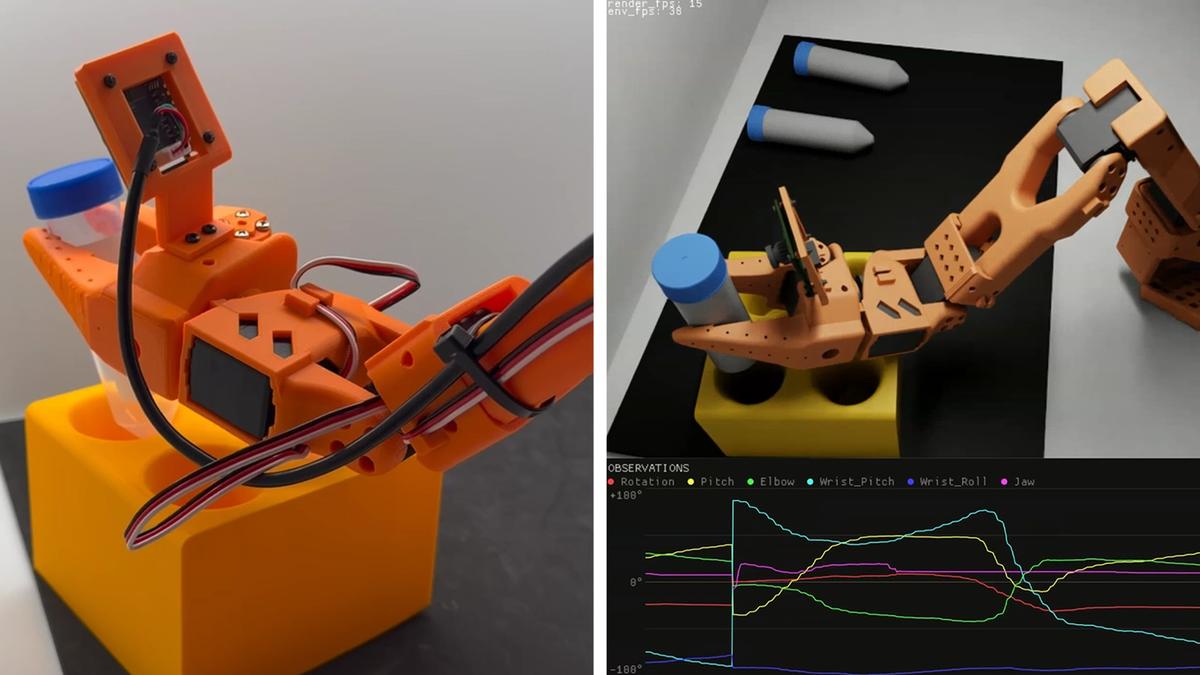
Key Takeaways
- •The Fragmented Landscape of Physical AI Development
- •LeRobot's Vision: Open-Source AI for Rapid Innovation
- •The Role of NVIDIA and Hugging Face
As technical directors and senior game developers, we're constantly on the lookout for paradigm shifts in AI that can fundamentally alter how we approach agent behavior and environmental interaction in our games. The recent collaboration between NVIDIA and Hugging Face on LeRobot presents just such a shift, focusing on an open-source approach to physical AI development for robotics. While seemingly geared towards real-world robots, the principles and frameworks emerging from LeRobot hold immense potential for revolutionizing the complexity, realism, and development efficiency of AI agents within our virtual worlds.
The Fragmented Landscape of Physical AI Development
Historically, advancements in physical AI development—whether for robotics or sophisticated game agents—have been hampered by a fragmented ecosystem. The NVIDIA blog post highlights this challenge, noting that progress can be "gated by costly and fragmented resources, from large datasets and robot foundation models to simulation, compute and validation tools." This resonates deeply within game development, where creating highly intelligent, physically aware NPCs often requires bespoke solutions for animation, pathfinding, interaction, and decision-making, each demanding significant investment in data, specialized models, and robust testing environments.
Consider the effort involved in developing an AI agent that can realistically navigate complex terrain, interact with dynamic objects, or perform nuanced tasks. Each of these capabilities often requires extensive hand-authored rules, custom inverse kinematics, or time-consuming machine learning training on proprietary datasets. This siloed approach stifles innovation and makes it difficult to share and build upon collective knowledge, leading to duplicated efforts and slower progress across the industry.
LeRobot's Vision: Open-Source AI for Rapid Innovation
NVIDIA and Hugging Face are addressing this fragmentation head-on with LeRobot. The core idea, as stated, is that "open source AI has shown how quickly developers can innovate when models, data and tools are shared." By extending this philosophy to robotics, LeRobot aims to create an open ecosystem where resources are readily available, fostering a collaborative environment for physical AI development. This means:
- Shared Models and Frameworks: Providing access to pre-trained robot foundation models and standardized frameworks accelerates development by offering strong starting points.
- Large Datasets: Curating and sharing extensive datasets allows for more robust training and validation of AI agents.
- Simulation, Compute, and Validation Tools: Offering integrated tools for simulation, leveraging powerful compute resources, and providing methods for rigorous validation ensures that developed AI is both effective and reliable.
This open-source ethos, proven in other AI domains, promises to democratize advanced physical AI, making sophisticated capabilities accessible to a wider range of developers, including those in the game industry.
The Role of NVIDIA and Hugging Face
This collaboration brings together two powerhouses, each contributing unique strengths to the LeRobot initiative:
- NVIDIA's Contribution: NVIDIA brings its deep expertise in accelerated computing, simulation technologies, and robotics platforms. Their involvement ensures that the underlying compute infrastructure can handle the demanding requirements of physical AI training and inference. This includes leveraging their robust simulation environments, crucial for generating synthetic data and testing complex robot behaviors in virtual settings before deployment.
- Hugging Face's Contribution: Hugging Face, renowned for its work in open-source AI models and tools, contributes its platform for sharing models, datasets, and frameworks. Their ecosystem facilitates the discovery, use, and iteration of AI models, making it easier for the community to contribute and benefit from shared resources. This includes establishing best practices for model versioning, documentation, and accessibility.
The synergy between NVIDIA's hardware and simulation prowess and Hugging Face's open-source model ecosystem creates a comprehensive platform designed to overcome the traditional barriers to entry in physical AI development.
Architecting an Open Robotics Ecosystem
The LeRobot initiative can be conceptualized as a multi-layered ecosystem designed to facilitate end-to-end physical AI development. At its core, it's about connecting disparate elements into a cohesive, collaborative pipeline.
This diagram illustrates how the LeRobot platform acts as a central hub for the open robotics community. Shared models and frameworks, alongside large datasets, are made accessible through Hugging Face's contributions. NVIDIA provides the critical infrastructure for simulation, validation, and accelerated compute. These components collectively enable rapid innovation and iteration, ultimately leading to more advanced physical AI agents.
The Impact on Game Development: Advanced Game AI Agents
For game developers, the implications of LeRobot's open-source robotics initiative are profound. Imagine a future where developing sophisticated AI agents for games is no longer a bespoke, labor-intensive process, but rather an iterative one leveraging an open repository of "robot foundation models." Here's how LeRobot's principles could translate:
1. Re-usable Foundation Models for NPCs: Instead of building every NPC's core locomotion, object interaction, or navigation system from scratch, game developers could leverage pre-trained "robot foundation models" adapted for virtual environments. These models could provide a baseline for realistic physics-based movement, intelligent object manipulation, or context-aware environmental interaction.
2. Accelerated Agent Training with Synthetic Data: NVIDIA's emphasis on "simulation, compute and validation tools" directly applies to generating high-quality synthetic data for training game AI. Our game engines are, in essence, highly sophisticated simulation environments. By integrating principles from LeRobot, we could streamline the process of generating vast amounts of diverse training data for our agents, leading to more robust and adaptable behaviors without the need for manual data labeling.
3. Standardized Frameworks for AI Behavior: An open framework for defining and implementing robot behaviors could inspire similar standardization in game AI. This would allow developers to share, modify, and integrate complex AI modules more easily, fostering a collaborative ecosystem for game AI development.
4. Complex Physical Interactions: The focus on "physical AI development" means agents could exhibit more nuanced and believable interactions with the game world's physics. From realistically pushing objects to dynamically reacting to environmental changes, game agents could move beyond simple pathfinding to truly intelligent, physics-aware behavior.
5. Faster Iteration and Prototyping: With shared models and tools, the time from concept to playable AI behavior could be drastically reduced. Developers could rapidly prototype new agent types or complex interactions, focusing on game-specific logic and narrative rather than foundational AI systems.
This isn't just about making NPCs smarter; it's about making them more believable, more reactive, and more engaging within the dynamic constraints of a game world. The ability to tap into a collective intelligence of shared models and robust tools could unlock new levels of immersion and gameplay complexity.
Conclusion
NVIDIA and Hugging Face's LeRobot initiative marks a significant step towards democratizing advanced physical AI. By fostering an open-source ecosystem of models, data, and tools, they are dismantling the barriers that have traditionally slowed innovation in robotics. For us in game development, this is a clear signal of the future for sophisticated agent AI. Embracing similar open principles, leveraging shared foundation models, and integrating advanced simulation and compute for training can lead to a new era of highly intelligent, physically aware, and deeply immersive game characters and systems. The lessons from LeRobot challenge us to think beyond isolated development and embrace a more collaborative, open approach to building the next generation of game AI.