August 28, 2026
7 min read
GTA 6: The 30FPS Reality & Console Optimization Challenges

Key Takeaways
- •The 30FPS Reality: A Developer's Perspective
- •Why 60FPS is a Herculean Feat for GTA 6
- •The Optimization Balancing Act
As game developers, we're always pushing boundaries, striving for the next level of visual fidelity and immersive gameplay. So, when Rockstar Games dropped the extended look at Grand Theft Auto 6, the industry collectively held its breath. The sheer ambition, the vibrant world of Leonida, and the incredibly detailed characters like Jason and Lucia were on full display. But amidst the awe, one detail quickly caught the attention of many, especially those of us deep in the trenches of game development: the confirmed 30 frames per second (FPS) target for consoles.
IGN India, reporting on analysis from tech experts like Digital Foundry, highlighted that achieving a stable 60FPS on current-gen consoles for GTA 6 is considered "extremely unlikely" and "genuinely challenging" even on PC. This isn't a criticism; it's a stark reminder of the immense technical hurdles involved in crafting a game of this scale and visual grandeur. For us, it's a crucial lesson in the art of optimization and the inevitable trade-offs we face.
The 30FPS Reality: A Developer's Perspective
Let's be clear: 30FPS isn't inherently "bad." Many beloved, highly cinematic games have successfully delivered incredible experiences at this framerate. For a title like GTA 6, where narrative immersion, world density, and visual spectacle are paramount, a stable 30FPS can be a deliberate and intelligent design choice. It allows developers to push graphical boundaries, render more complex scenes, and pack the world with unparalleled detail without sacrificing consistency.
However, the expectation for 60FPS has become a benchmark for many players, especially in a new console generation. The Digital Foundry analysis underscores that the sheer ambition of GTA 6 makes this a monumental task.
Why 60FPS is a Herculean Feat for GTA 6
From a technical standpoint, doubling the framerate from 30FPS to 60FPS isn't just a matter of flipping a switch. It means cutting the frame budget in half, giving the CPU and GPU literally half the time to process and render each frame. For a game as complex as GTA 6, this has profound implications:
- CPU Bottlenecks: Open-world games are notoriously CPU-bound. Simulating the bustling streets of Leonida – thousands of dynamic NPCs, complex traffic patterns, intricate physics interactions, sophisticated AI behaviors, and a vast streaming world – puts immense strain on the console's CPU. Each frame, the CPU must update the state of the world, handle game logic, and prepare draw calls for the GPU. At 60FPS, this work needs to be done twice as fast.
- GPU Demands: The visual fidelity showcased in the GTA 6 extended look is astounding. High-resolution textures, advanced lighting models (think ray tracing for global illumination or reflections), volumetric effects, complex particle systems, and intricate character models all demand significant GPU power. Pushing these visuals at 60FPS requires either a much more powerful GPU or substantial compromises in visual quality.
- Memory Bandwidth: Streaming a massive, dynamic open world requires constant, rapid data transfer between memory and the CPU/GPU. High-resolution assets, animations, and world data are continuously loaded and unloaded. Achieving this at 60FPS demands extreme memory bandwidth, which can become a bottleneck even on modern consoles.
- Unified Memory Architecture: While modern consoles like the PS5 and Xbox Series X boast unified memory, which simplifies data management for developers, the total amount and speed of this memory are still finite. Every system, from AI to rendering, competes for these resources.
The expert consensus, as reported by IGN India, suggests that even with the most aggressive optimization techniques, maintaining 60FPS on current consoles without significant visual downgrades would be incredibly difficult. This highlights the constant tug-of-war between artistic vision and hardware realities.
The Optimization Balancing Act
For any game developer, the journey to launch is a continuous process of optimization. It's not a single step but an iterative cycle that touches every aspect of development.
Here's a simplified look at the decision-making process:
As developers, we constantly evaluate these trade-offs. Do we sacrifice some visual flair for a higher framerate, or do we deliver the most stunning world possible at a stable 30FPS? For Rockstar, with GTA 6, the choice seems clear: prioritize the fidelity and density that define their titles, even if it means a 30FPS target on consoles.
The "Halo Effect" and PC Hopes
GamesIndustry.biz recently published an opinion piece suggesting GTA 6 will have a "halo effect" for the entire industry. This isn't just about sales; it's about pushing technical boundaries and setting new standards for open-world games. Even at 30FPS, GTA 6 will likely showcase groundbreaking techniques in world simulation, AI, and environmental rendering that other developers will study and aspire to.
For PC gamers, the situation offers a glimmer of hope. While Digital Foundry states 60FPS will be "genuinely challenging" even on PC, the inherent scalability of the platform means that players with cutting-edge hardware will likely be able to push beyond 30FPS, potentially even to 60FPS or higher, albeit possibly requiring hardware that doesn't even exist yet, or at least very high-end configurations. This is where technologies like NVIDIA's DLSS (and possibly future iterations like the experimental DLSS 5 mentioned in other reports, although we'd hope for stable, non-"uncanny valley" results) become crucial, leveraging AI to upscale and generate frames, effectively boosting perceived performance without sacrificing visual quality.
Lessons for Every Game Developer
The GTA 6 performance discussion offers invaluable lessons for studios of all sizes:
1. Set Realistic Performance Targets Early: Don't wait until the end of development to decide on your target framerate. It needs to inform every design and technical decision from day one.
2. Understand Your Hardware: Deeply comprehend the capabilities and limitations of your target platforms. This knowledge is your most powerful tool for optimization.
3. Prioritize Ruthlessly: What is most important for your game's vision? Is it visual fidelity, framerate, world size, or simulation depth? You often can't have everything.
4. Embrace Iterative Optimization: Performance improvements are not a one-time fix. Profile constantly, identify bottlenecks, and optimize throughout the entire development cycle.
5. Communicate Transparently: While Rockstar hasn't explicitly detailed their optimization strategy, confirming 30FPS early manages player expectations and allows the conversation to shift to why that choice was made.
Rockstar is famous for pushing game technology forward, and Grand Theft Auto 6 looks to be no exception. The decision to target 30FPS on consoles isn't a sign of weakness; it's a testament to the sheer ambition of the project and the current limits of console hardware when faced with such an expansive, detailed, and dynamic world. As developers, it reminds us that every game is a series of trade-offs, and the true mastery lies in making those choices wisely to deliver the best possible experience within the available constraints. We'll all be watching closely to see how Rockstar's technical prowess unfolds when GTA 6 finally hits the streets.
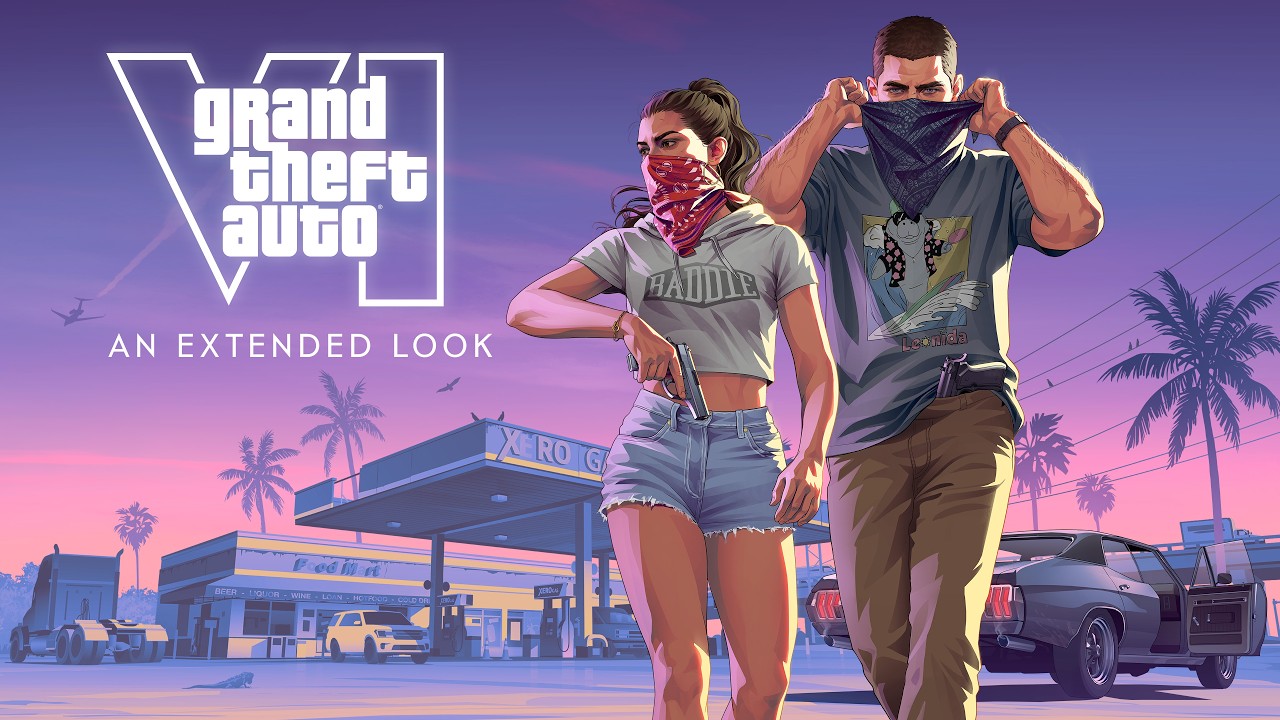
The extended look at GTA 6, as shown on Netflix, which sparked the performance discussion.
NVIDIA's RTX Spark trailer from Gamescom 2026, showcasing graphics technologies that could benefit future PC versions of games like GTA 6.