July 23, 2026
10 min read
GPU-Accelerated Medical Physics Simulation: A Blueprint for Game Dev
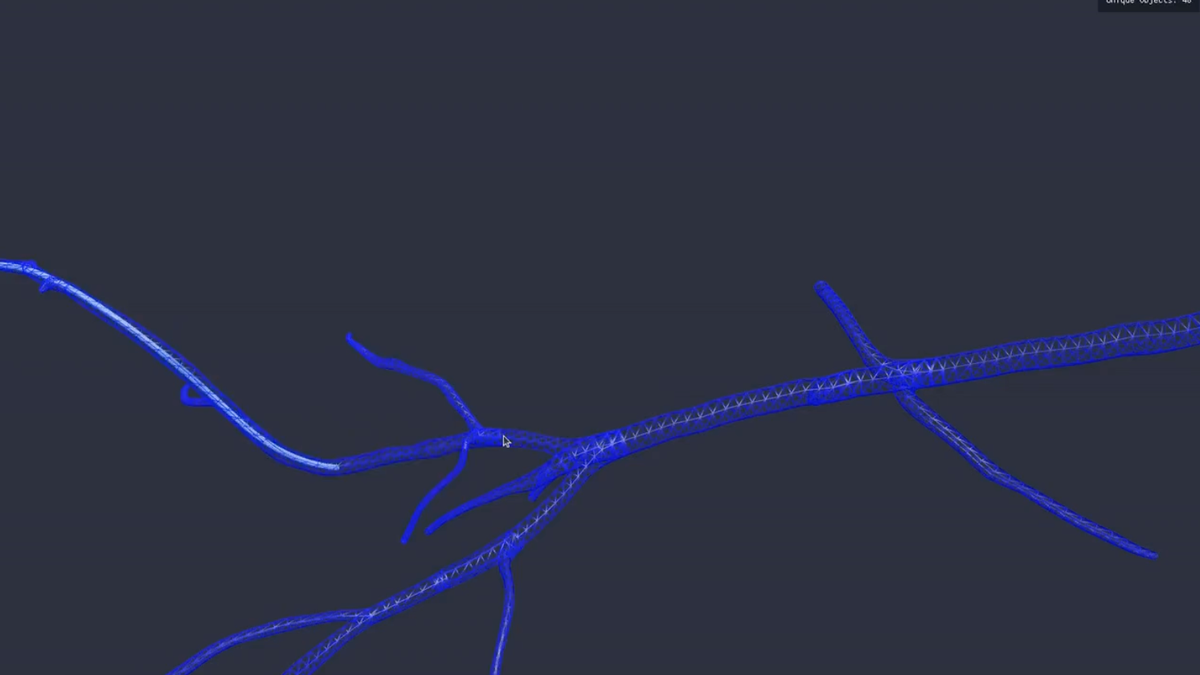
Key Takeaways
- •The Imperative for GPU Acceleration in Complex Simulation
- •Deep Dive into GPU-Accelerated Medical Physics Simulation
- •Architectural Insights: From Research to Real-time
As a technical director, I'm always on the lookout for innovations in adjacent industries that can profoundly impact game development. NVIDIA's recent announcement regarding the open-sourcing of their first GPU-accelerated medical physics simulation framework is precisely one such development. While seemingly niche, the underlying technical principles, architectural choices, and performance optimizations required for such a sophisticated system offer a powerful blueprint for pushing the boundaries of realism, interactivity, and AI in our games.
This guide will dissect the significance of this framework, explore the advantages of GPU acceleration for complex simulations, and draw concrete parallels to how these advanced techniques can be adopted and adapted within the game development ecosystem.
The Imperative for GPU Acceleration in Complex Simulation
Traditional CPU-bound simulations, while robust, often struggle with the sheer scale and parallelism required for real-time, high-fidelity scenarios. When we talk about simulating deformable bodies, intricate fluid dynamics, or the complex interactions of many agents in a detailed environment, the CPU quickly becomes a bottleneck. The medical physics simulation framework, tasked with modeling anatomical variations, instrument bending, tissue interaction, and noisy imaging data, exemplifies a domain where such complexity is paramount.
GPUs, with their massively parallel architectures, high memory bandwidth, and specialized processing units, are uniquely positioned to tackle these challenges. They can execute thousands of threads concurrently, making them ideal for algorithms that can be broken down into many independent, smaller computations. This paradigm shift from sequential to parallel processing is not just an optimization; it's a fundamental enabler for simulations that were previously computationally intractable in real-time.
Consider the demands of simulating how a surgical instrument interacts with soft tissue. This involves continuous collision detection, deformation mechanics (often using finite element methods or mass-spring systems), and real-time rendering of volumetric data. Each of these components can be heavily parallelized:
- Collision Detection: Checking for intersections between many points or primitives.
- Deformation Solvers: Updating the positions and forces of thousands of vertices in a mesh.
- Rendering: Processing large datasets for visualization.
Attempting this on a CPU would quickly exhaust its limited core count and memory bandwidth, leading to unacceptably low frame rates. The GPU, however, can distribute these calculations across its hundreds or thousands of CUDA cores, achieving orders of magnitude acceleration.
Deep Dive into GPU-Accelerated Medical Physics Simulation
The NVIDIA framework tackles a critical need: creating realistic training environments for healthcare robots and medical professionals. The core problem statement is clear: "Before a healthcare robot can be useful in the real world, it has to learn how the physical world pushes back. Anatomy varies. Instruments bend, press, slip and interact with tissue. Imaging can be noisy or incomplete. And the rare, edge scenarios developers most need to understand don’t appear on schedule."
This implies a simulation that must be:
1. Physically Accurate: Incorporating realistic material properties, forces, and deformations.
2. Highly Dynamic: Handling continuous changes in state due to interactions.
3. Robust to Variability: Adapting to different anatomical models and instrument types.
4. Capable of Edge Case Generation: Enabling the exploration of unusual or difficult scenarios.
To achieve this, the framework likely employs sophisticated numerical methods such as:
- Finite Element Method (FEM): For highly accurate deformation of soft tissues.
- Position-Based Dynamics (PBD) or Smoothed Particle Hydrodynamics (SPH): For more real-time, visually plausible soft body or fluid simulations, potentially hybridized with FEM for critical areas.
- Collision Response Algorithms: Handling contact and friction between instruments and tissue.
- Real-time Ray Tracing/Rasterization: For realistic rendering of surgical scenes and instrument visibility, possibly incorporating volumetric rendering for internal anatomy.
The GPU's role is not just to speed up existing algorithms but to enable higher-resolution simulations (more elements, more particles) and more complex interaction models that would be impossible on a CPU. This allows for a deeper level of detail and fidelity, crucial for training systems that operate in the real world.
Architectural Insights: From Research to Real-time
An open-source, GPU-accelerated simulation framework typically follows a modular architecture, allowing different components to be developed and optimized independently.
Here's a conceptual high-level architecture:
Key architectural considerations:
- CPU Host Application: Manages the overall simulation logic, loads initial data, sets up GPU kernels, handles user input, and orchestrates data transfer.
- GPU Device Memory: Stores all simulation data (vertex positions, normals, forces, material properties, collision primitives) directly accessible by GPU kernels. Minimizing CPU-GPU data transfer is paramount for performance.
- GPU Physics Solvers: These are the core computational units, implemented as CUDA kernels (or similar compute shaders). They perform the heavy lifting of physics calculations in parallel.
- Iterative Updates: Most physics simulations are iterative, meaning the solvers run multiple times per frame to achieve stability and accuracy.
- GPU Rendering/Visualization: The simulation results are directly rendered on the GPU, avoiding costly read-backs to the CPU. This includes rendering the deformed meshes, instruments, and any visual feedback.
The open-source nature is crucial here. It allows researchers and developers to inspect, modify, and extend the framework, fostering innovation and adaptation for diverse applications—including potentially game development.
Bridging to Game Development: Applications and Inspirations
The techniques demonstrated in a GPU-accelerated medical physics simulation framework have direct and transformative implications for game development:
Advanced Physics Engines
Imagine games with truly deformable characters, environmental destruction that goes beyond pre-baked animations, or realistic fluid dynamics interacting with game objects.
- Soft-Body Physics: Instead of rigid body approximations, characters could exhibit realistic muscle and fat jiggle, or take damage with believable deformation. Think of character models that dynamically deform based on impacts or environmental forces, requiring real-time FEM or PBD on the GPU.
- Destructible Environments: Buildings collapsing with realistic debris, materials tearing and bending, rather than simply disappearing or breaking into rigid chunks. This requires efficient GPU-based fracture and deformation solvers.
- Fluid and Particle Systems: More complex and interactive water, smoke, or fire simulations that react dynamically to player actions and environmental changes, leveraging SPH or grid-based fluid solvers on the GPU.
AI and Agentic Simulation
Training AI agents in highly dynamic, physically accurate environments is a cornerstone of next-generation AI in games.
- Realistic Agent Behavior: AI characters could learn to navigate and interact with complex, deformable environments more intelligently, understanding the physics of objects and surfaces. This is critical for agentic AI that needs to predict and react to a dynamic world.
- Crowd Simulation: Simulating thousands of individual agents with complex interactions and physical responses, like a stampede or a battle, where each agent's movement and collision is physically resolved on the GPU.
- Environmental AI: AI systems that model and predict environmental changes (e.g., weather, natural disasters) with high fidelity, influencing gameplay and emergent narratives.
Procedural Content Generation (PCG)
GPU-accelerated simulation can drive more organic and realistic PCG.
- Dynamic Terrain Generation: Simulating erosion, geological processes, or even biological growth to create highly realistic and varied landscapes.
- Organic Structure Generation: Procedurally generating natural elements like trees, plants, or even creature anatomies based on simulated growth patterns and physical constraints.
- Dynamic Event Generation: Creating emergent scenarios by simulating complex physical systems, like a spreading fire, a flood, or a collapsing structure, dynamically shaping the game world.
Real-time Visual Effects (VFX)
The realism of VFX can be significantly boosted by integrating advanced simulations.
- Cloth Simulation: Ultra-realistic clothing and fabric dynamics that react to character movement, wind, and collisions with high fidelity.
- Hair and Fur: Simulating individual strands of hair or fur for lifelike character models, reacting to physics and environmental factors.
- Environmental Effects: Highly detailed and interactive smoke, fog, and particle effects that physically interact with the scene, leveraging GPU compute shaders for thousands of particles.
Performance Considerations and Optimization Strategies
While GPUs offer immense power, effective utilization requires careful optimization. Common bottlenecks include:
- CPU-GPU Data Transfer: The PCIe bus, while fast, can still be a bottleneck if large amounts of data are constantly moved between CPU and GPU memory.
- Memory Access Patterns: Inefficient memory access (e.g., non-coalesced reads/writes) can significantly degrade GPU performance.
- Kernel Launch Overhead: Frequent launching of small kernels can introduce overheads that negate parallel processing benefits.
To mitigate these, game developers can adopt strategies learned from high-performance simulation:
- Minimize Data Transfers: Keep as much data as possible on the GPU. Only transfer data that changes infrequently or is absolutely necessary for CPU logic. Utilize techniques like zero-copy memory if supported and appropriate.
- Optimize Memory Access: Design data structures and algorithms to ensure coalesced memory access patterns, allowing the GPU to read/write multiple elements in a single transaction. Utilize shared memory for frequently accessed data within a thread block.
- Combine Kernels: Group smaller, related computations into larger kernels to reduce launch overhead.
- Asynchronous Operations: Overlap computation and data transfer by using asynchronous CUDA streams or compute queues.
- Level of Detail (LOD) for Simulation: Implement LOD systems for physics, similar to rendering. Objects far from the player or with less impact on gameplay can use simpler, less computationally intensive simulation models.
Here's a conceptual diagram illustrating the performance advantage:
The Future of Simulation in Games
The open-sourcing of sophisticated GPU-accelerated simulation frameworks like NVIDIA's medical physics one marks a significant milestone. It democratizes access to advanced computational techniques previously confined to high-end research. For game developers, this means a clearer path to integrating highly accurate, real-time simulations into their engines.
The ability to simulate complex physical interactions, material responses, and dynamic environments with unprecedented fidelity will not only enhance visual realism but also unlock new gameplay mechanics. Imagine puzzles that rely on subtle physical properties, combat systems where environmental destruction is an integral tactical element, or emergent narratives driven by truly dynamic world states.
As hardware continues to evolve and GPU programming paradigms become more accessible, we will see these techniques move from specialized research to mainstream game development. The principles demonstrated by such frameworks provide a solid foundation for the next generation of interactive experiences, pushing the boundaries of what's possible in virtual worlds.
In conclusion, while a medical physics simulator might seem far removed from game development, its technical underpinnings are a treasure trove of knowledge for any technical director or engine programmer looking to build the games of tomorrow. By understanding and adapting these GPU-accelerated simulation principles, we can usher in an era of unparalleled realism and dynamic interactivity in our digital creations.