August 4, 2026
7 min read
Game Freak's Soulslike: Beast of Reincarnation's Cinematic Ambition and Dev Lessons
Key Takeaways
- •The Cinematic Dream vs. Technical Reality
- •Deconstructing the Hybrid Combat System
- •Post-Launch Support and Developer Takeaways
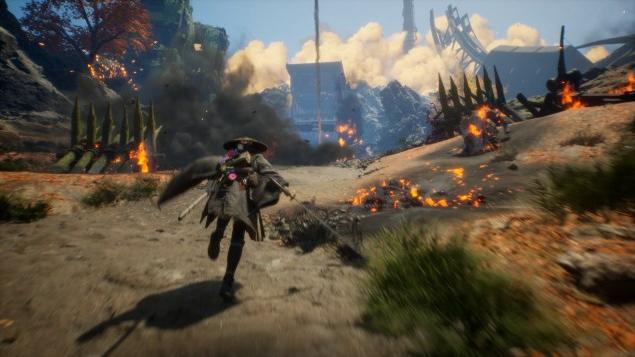
As game developers, we're constantly pushing boundaries, experimenting with new genres, and trying to evolve our craft. It's especially fascinating when a studio known for one thing ventures boldly into uncharted territory. That's precisely what Game Freak, the legendary studio behind Pokémon, has done with their latest title, Beast of Reincarnation. This new third-person action RPG takes a distinct Soulslike approach, and its recent launch has sparked a lot of discussion, particularly around its ambitious "cinematic focus" and hybrid combat.
The critical reception for Beast of Reincarnation has been a mixed bag, as highlighted by a Polygon review roundup which called it a "messy, one-note, derivative mix of Soulslike ideas with some truly excellent combat." GameSpot’s review dives deeper, noting that "Beast of Reincarnation isn't really cinematic, either. Flat performances and robotic animations undermine its fascinating story, bland environments sour its beautiful art direction, and an overall lack of polish hampers its intense combat." As developers, these critiques offer invaluable insights into the challenges of game design, especially when tackling a new genre and aiming for a specific artistic vision.
The Cinematic Dream vs. Technical Reality
One of the most intriguing aspects of Beast of Reincarnation's launch is the developer's stated "cinematic mode" option, which locks cutscene frame rates to 24 frames per second. This immediately signals an artistic intent, a desire to evoke a film-like quality. However, as GameSpot points out, the execution seems to have fallen short.
The disconnect between cinematic ambition and technical reality is a common pitfall in game development. Achieving a truly "cinematic" feel isn't just about frame rates; it involves a confluence of factors:
- Animation Quality: Smooth, expressive character animations are crucial for conveying emotion and realism. "Robotic animations" can quickly break immersion.
- Facial Capture and Performance: Voice acting and facial expressions need to align to deliver compelling character performances. "Flat performances" diminish the impact.
- Environmental Storytelling: Lush, detailed, and reactive environments contribute significantly to atmosphere and world-building. "Bland environments" can make even the most epic narrative feel generic.
- Camera Work: Dynamic and intentional camera angles during gameplay and cutscenes guide the player's eye and amplify dramatic moments.
- Pacing and Flow: The rhythm of cutscenes and gameplay transitions must be seamless to maintain engagement.
For Game Freak, a studio with a long history of stylized, often simpler animations in Pokémon, transitioning to a highly detailed, narrative-driven action RPG with cinematic aspirations would have been a monumental undertaking. It underscores the importance of investing heavily in animation pipelines, motion capture, and dedicated cinematic departments when aiming for such a high bar.
Deconstructing the Hybrid Combat System
Beyond the cinematic elements, Beast of Reincarnation introduces a "fusion of real-time and turn-based combat" with its "one-person, one-dog action RPG" dynamic, starring Emma and her loyal companion, Koo. PC Gamer describes it as a "parry-centric scrapper" with "often excellent combat," while also noting that "projectiles... are ridiculously overpowered if you focus on leveling them up." IGN India provides guides on "Best Skills To Unlock First," highlighting the variety in building out Emma and Koo's skills.
This hybrid combat approach is ambitious. It combines:
- Real-time action: Sekiro-like swordplay, parrying, and movement.
- Turn-based or command-based elements: Issuing commands to Koo from a menu.
Here’s a simplified flow of how such a system might be designed and the challenges involved:
Key Design Challenges for Hybrid Combat:
1. Balance: The primary challenge is balancing two distinct combat styles (Emma's direct action, Koo's commands) so they feel synergistic rather than disparate. If one aspect (like projectiles) becomes "ridiculously overpowered," it can trivialize other mechanics, reducing player engagement with the full system.
2. Clarity and Responsiveness: Players need clear visual and auditory feedback for both Emma's actions and Koo's commands. In a fast-paced Soulslike, delayed or unclear feedback can lead to frustration.
3. Input Management: Managing inputs for two characters in real-time can be complex. The interface for commanding Koo must be intuitive and not interrupt the flow of Emma's combat.
4. Skill Tree Cohesion: As IGN India notes, there's a "big (literal) skill tree" for both characters. Ensuring these skills offer meaningful choices and contribute to diverse, viable playstyles is essential. The interaction between Emma's attributes (like Vitality for hair attacks) and Koo's mods (Healing Energy, Status Effect Amp) needs to be well-thought-out.
The developers aimed for a unique blend, and the reviews suggest that while the core combat might be excellent, the overall balance and polish, particularly with certain projectile builds, still need refinement. This is a crucial lesson for any studio venturing into complex combat systems: playtesting and iterative balancing are paramount.
Post-Launch Support and Developer Takeaways
Despite the mixed reviews, the sheer volume of guide content (shrines, armor, puzzles, skills) surrounding Beast of Reincarnation indicates a dedicated player base interested in delving deep into its systems. This is a testament to Game Freak's ability to create compelling worlds and mechanics that resonate with players, even if the overall package has rough edges.
For game developers, Beast of Reincarnation's journey offers several important takeaways:
- Ambition is Good, Execution is King: Aiming for cinematic quality or innovative hybrid combat is commendable. However, the execution must match the ambition. If resources or expertise aren't sufficient, it might be better to refine a core mechanic than to spread development thin across too many complex features.
- Leverage Studio Strengths: Game Freak's strength lies in character design and world-building. While they bravely ventured into Soulslike mechanics, perhaps a gradual evolution of their animation and cinematic pipelines would have eased the transition.
- Player Feedback is Gold: The community's immediate identification of "overpowered" projectile builds points to areas for post-launch patching and balancing. Listening to players and iterating quickly can turn a mixed reception into a stronger long-term success.
- Technical Polish Matters: "Lack of polish" can undermine even the most fascinating stories and innovative combat. Dedicating sufficient time to bug fixing, performance optimization, and animation refinement is critical, especially for a new IP in a demanding genre.
Game Freak’s Beast of Reincarnation is a fascinating case study. It’s a bold departure for a renowned studio, demonstrating the courage to innovate. While it might not have hit every mark perfectly, it provides a rich source of learning for all of us in the game development community about the intricate dance between design ambition, technical capability, and player experience. It reminds us that every new game, especially one stepping into a new genre, is a journey of discovery, iteration, and continuous improvement.
What are your thoughts on Game Freak's venture into the Soulslike genre? What lessons do you draw from Beast of Reincarnation's reception? Share your insights in the comments below!