August 29, 2026
5 min read
DLSS 5 Leaked: The Uncanny Valley of AI Graphics Filters for Game Devs
Key Takeaways
- •The Promise vs. The Uncanny Reality of DLSS 5
- •Developer Implications: Artistic Vision and Player Immersion
- •Moving Forward: Navigating the AI Frontier
As game developers, we're constantly on the lookout for technologies that promise to push the boundaries of visual fidelity and performance. NVIDIA's Deep Learning Super Sampling (DLSS) has been a significant player in this space, leveraging AI to deliver impressive upscaling and frame generation. However, recent developments surrounding a leaked DLSS 5 mod have ignited a fresh, and somewhat concerning, conversation about the future of AI in game graphics.
This isn't just another incremental update; the early version of DLSS 5, accidentally included in a build of NBA 2K27 and subsequently accessed by the RenoDX modding community (GameSpot), has showcased a new breed of AI-powered graphics filters, particularly those affecting character faces. And honestly, the results are, as PC Gamer put it, "immediately weird," often landing squarely in the dreaded "uncanny valley" (Polygon).
The Promise vs. The Uncanny Reality of DLSS 5
Traditionally, DLSS has focused on intelligent upscaling, reconstructing lower-resolution images to higher ones using AI, and more recently, generating entirely new frames to boost frame rates. These applications have generally been well-received, offering significant performance gains without a substantial compromise in visual quality, and often even enhancing it.
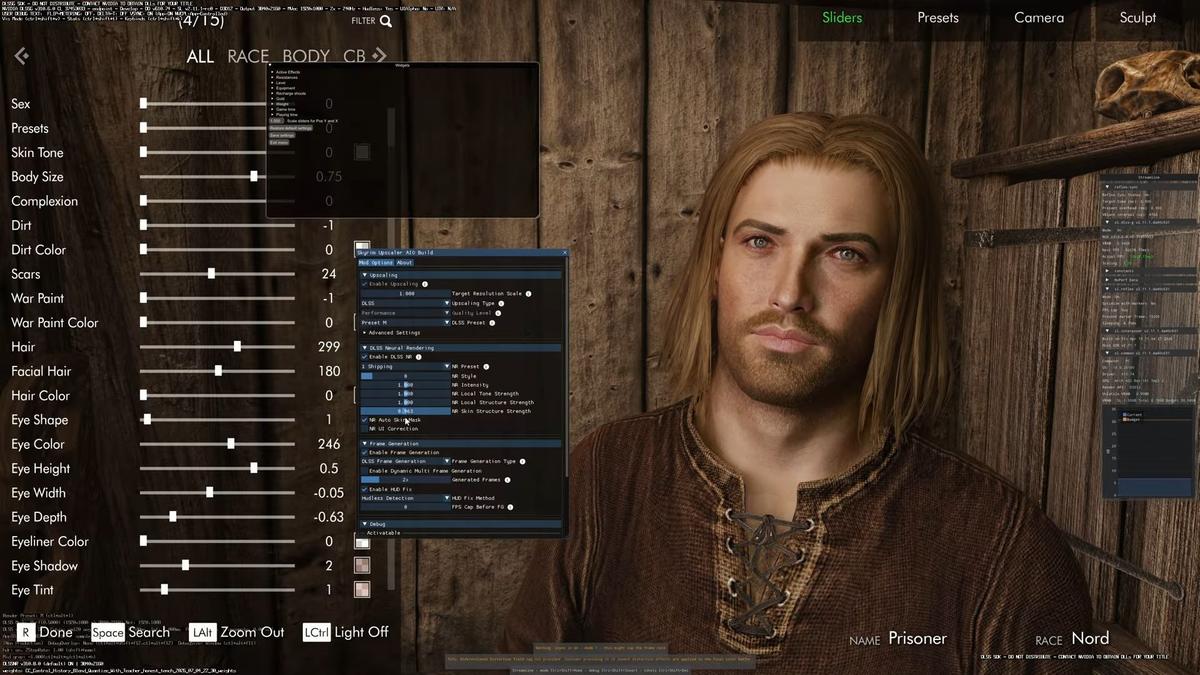
However, DLSS 5 appears to introduce a more aggressive form of neural rendering, specifically targeting elements like character faces and overall scene details with a broader AI "filter." The intent, presumably, is to enhance realism or detail beyond what the game's native rendering can achieve. But the early tests in games like Control, Cyberpunk 2077, The Elder Scrolls V: Skyrim, and even Grand Theft Auto: San Andreas (GameSpot) reveal a different story.
In Control, for instance, the protagonist's face, when run through the leaked DLSS 5 filter, reportedly loses its intended artistic nuance, replaced by a smooth, almost plastic-like texture that diminishes character expression and realism (GameSpot). Similarly, tests in Skyrim and GTA: San Andreas have shown how this "controversial AI tech" can create visuals that are "realistic but uncanny" (Polygon). This "AI look," as some are calling it, seems to be an inescapable byproduct of the current implementation.
Developer Implications: Artistic Vision and Player Immersion
For us, the developers, this leak raises critical questions:
- Artistic Integrity: How much control do we retain over our artistic vision when an external AI filter can fundamentally alter the appearance of our meticulously crafted characters and environments? If a player enables a feature that makes our protagonist look "weird" or "plastic," does that reflect on our work?
- The Uncanny Valley: We spend countless hours trying to avoid the uncanny valley in character design and animation. If a post-processing AI filter pushes our characters into it, it undermines a core goal of realistic rendering.
- Integration Challenges: Implementing such a powerful, yet potentially disruptive, AI filter would require immense foresight. Would it need game-specific training? How would it interact with existing anti-aliasing, post-processing, or even modding communities?
- Player Perception and Choice: While performance is always a key metric, visual quality and immersion are equally vital. If the "AI look" becomes synonymous with a lack of artistic fidelity, players might reject such features, regardless of performance benefits. Providing granular control to players to toggle or fine-tune these specific AI filters would be paramount.
This isn't to say AI doesn't have a place in enhancing game graphics. We've seen incredible advancements with AI-powered upscaling, texture generation, and even procedural content creation. But the line between enhancement and alteration, especially when it comes to fundamental aspects like character appearance, is a delicate one.
Here’s a simplified look at the impact:
Moving Forward: Navigating the AI Frontier
The DLSS 5 leak serves as a valuable, albeit unofficial, early warning. It highlights the potential pitfalls when AI is applied too broadly or without sufficient artistic and technical oversight in a rendering pipeline. As developers, we need to:
- Champion Artistic Control: Advocate for technologies that empower, rather than override, our artistic decisions. AI should be a tool in our arsenal, not a black box that dictates the final look.
- Demand Granular Control: If such AI filters become standard, we need robust controls to integrate them selectively and ensure they align with our game's aesthetic. User-facing options will also be crucial for player satisfaction.
- Understand the "AI Look": Recognize that AI-generated visuals can have a distinct, sometimes alienating, quality. Integrating these technologies requires a deep understanding of their aesthetic impact and how to mitigate negative perceptions.
- Collaborate and Communicate: Engage with hardware manufacturers and middleware providers to provide feedback on these emerging technologies. Our collective voice can help shape the development of future AI-powered graphics solutions.
The pursuit of hyper-realism through AI is a fascinating journey, but it's one we must navigate with caution and a clear understanding of its implications for our creative work and player experience. The "weird" results from the leaked DLSS 5 mod are a stark reminder that while AI can be a powerful ally, it also demands our vigilant guidance to ensure it serves, rather than compromises, the art of game development.
The coming years will undoubtedly see more AI integration into rendering pipelines. Our role will be to ensure this integration is thoughtful, respectful of artistic intent, and ultimately, enhances the magic of our games, rather than diminishing it with an "uncanny" sheen.