August 21, 2026
7 min read
Designing Vast Open Worlds: GTA 6's Scale and Density
Key Takeaways
- •Understanding Scale in Open-World Design
- •Achieving Density for Immersion
- •Balancing Scale and Density: The Core Challenge
As game developers, we constantly strive to push the boundaries of immersion and player experience. Few genres encapsulate this ambition quite like the open world. The recent buzz surrounding leaked footage of Grand Theft Auto 6's Vice City, specifically comments highlighting its "unprecedented scale and density," offers a valuable case study into the evolving demands of this genre. Designing worlds that feel both expansive and richly detailed is a monumental task, requiring a delicate balance of artistic vision, technical prowess, and a deep understanding of player psychology.
This guide will break down the core principles of crafting open-world environments that leverage both scale and density to create truly immersive experiences, drawing inspiration from what we're learning about GTA 6's approach.
Understanding Scale in Open-World Design
"Scale" in an open-world game is often misunderstood as simply the sheer physical size of the map. While a large map is certainly a component, true scale is a multifaceted concept that encompasses not just the geographical footprint, but also the perceived vastness, the diversity of environments, and the time it takes for a player to traverse and experience it. A world can be physically huge but feel small if it's monotonous or lacks meaningful content. Conversely, a moderately sized map can feel immense if it's packed with unique biomes, secrets, and interconnected systems.
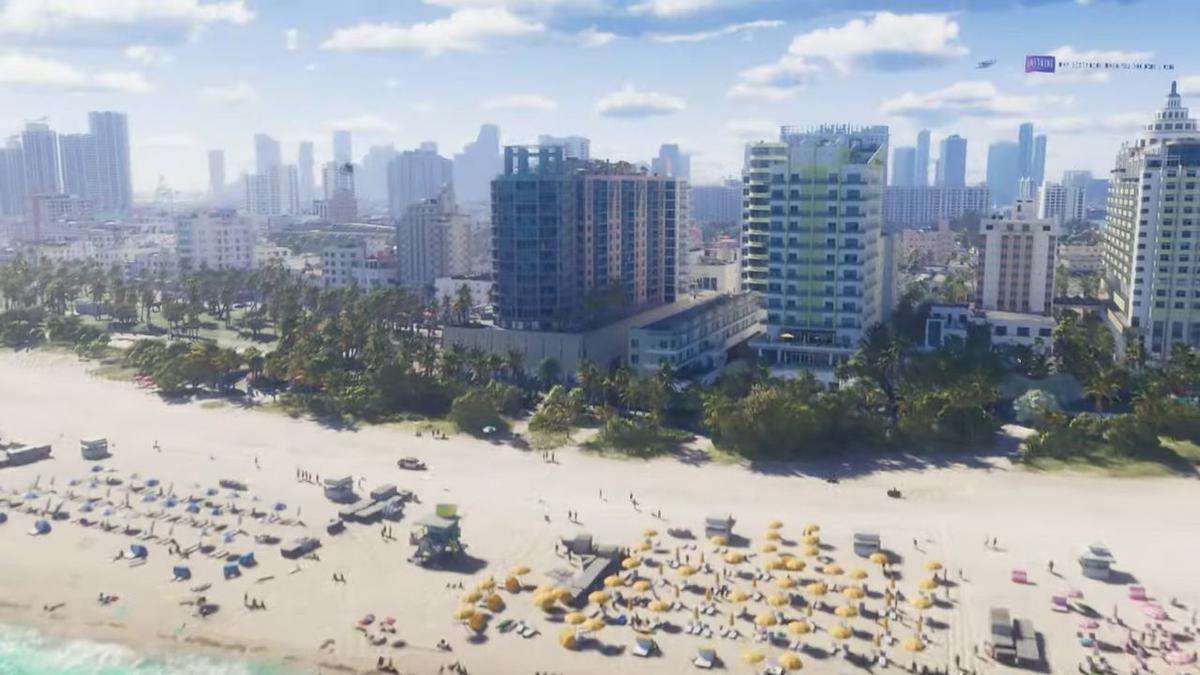
The leaked GTA 6 footage, particularly the aerial views, suggests a world where the sheer expanse of Vice City is immediately apparent. This visual communication of scale from a bird's-eye perspective is crucial. It sets player expectations for exploration and adventure, hinting at distant landmarks and diverse regions waiting to be discovered. Developers must consider how their world's boundaries are presented and how quickly players can grasp the scope of their playground. Is it a sprawling metropolis, a vast wilderness, or a series of interconnected zones? The answer informs every subsequent design decision.
Achieving Density for Immersion
If scale is the canvas, density is the paint. A large world is impressive, but an empty one quickly leads to player boredom and disengagement. Density refers to the concentration of meaningful content, interactive elements, and environmental detail within that expansive space. It's what makes a world feel alive, believable, and worth exploring. The "unprecedented density" attributed to GTA 6's Vice City suggests a world where every corner holds potential for interaction or discovery, moving beyond simply filling space with generic assets.
Here are key elements to consider when designing for high density:
- Points of Interest (POIs): These are the landmarks, shops, mission givers, collectibles, and unique environmental storytelling moments that draw players in. A dense world has a high concentration of varied POIs.
- Dynamic Events and Systems: Beyond static POIs, a dense world features systems that generate emergent gameplay. This could include random encounters, dynamic weather, day/night cycles affecting NPC behavior, or mini-events that pop up as players traverse the map.
- NPC Behavior and Crowds: A city feels dense when its inhabitants behave realistically and populate the environment in believable ways. Advanced AI for pedestrians and vehicle traffic, varied character models, and routines contribute significantly to this.
- Environmental Storytelling: Every building, alleyway, or natural formation can tell a story. Graffiti, discarded items, architectural styles, and even the wear and tear on objects contribute to a world's history and character, making it feel lived-in.
- Verticality and Multi-layered Design: As hinted by the "from the air" perspective, incorporating verticality—skyscrapers, underground tunnels, multi-level highways—dramatically increases perceived density without necessarily expanding the horizontal footprint. It creates more spaces to explore and interact with.
A conceptual breakdown of components contributing to perceived world density.
Balancing Scale and Density: The Core Challenge
The true art of open-world design lies in balancing these two powerful forces. An overly dense world can overwhelm players, make navigation confusing, and significantly strain technical resources. An overly scaled world that lacks density feels barren and uninspired. The "unprecedented" nature of GTA 6's world implies that Rockstar may have found a new equilibrium in this delicate balance.
This balance is not static; it's a continuous iterative process throughout development. It involves constant playtesting, feedback, and optimization.
A simplified development flow illustrating the iterative process of balancing scale and density.
Developers must ask: How much content is enough to keep players engaged without causing fatigue? What is the optimal pacing for discovery? These questions guide the placement of content, the frequency of events, and the overall design of traversal mechanics.
Leveraging Verticality and Multi-layered Design
The observation that Vice City looks "impressive from the air" strongly points to an emphasis on verticality. A city that extends upwards with towering skyscrapers, intricate rooftop access, and perhaps even aerial vehicle mechanics (a GTA staple) inherently feels larger and more complex. This also applies to subterranean environments – sewers, subways, underground bunkers – which add another layer of density and exploration without increasing the surface area.
Designing a multi-layered world means considering how players will navigate not just horizontally, but also vertically. This involves:
- Interconnected Pathways: Ensuring rooftops, bridges, and underground areas are logically connected and offer meaningful traversal options.
- Clear Visual Cues: Guiding players through complex vertical spaces with lighting, environmental markers, and distinct architectural styles.
- Gameplay Opportunities: Integrating verticality into missions, combat encounters, and exploration challenges. Think of sniper nests on rooftops, chase sequences through construction sites, or hidden secrets in basements.
This approach maximizes the utility of every square meter of the game world, making it feel richer and more dynamic.
Technical Considerations for Massive, Dense Worlds
Achieving "unprecedented scale and density" is not just a design challenge; it's a massive technical undertaking. The computational demands of rendering vast distances while simultaneously populating them with high-detail assets and complex AI are immense. Modern game engines and development pipelines must be optimized to handle these requirements.
Key technical considerations include:
- Level of Detail (LOD) Systems: Dynamically swapping out higher-resolution models and textures for lower-resolution ones based on distance from the player. This is fundamental for rendering large environments efficiently.
- Occlusion Culling: Preventing objects that are hidden from the camera by other objects from being rendered, saving significant processing power.
- Asset Streaming: Loading and unloading assets (geometry, textures, audio) in the background as the player moves through the world, rather than loading the entire world at once. This ensures smooth transitions and reduces memory footprint.
- Advanced AI Pathfinding and Optimization: Efficiently managing hundreds or thousands of NPCs and vehicles, ensuring their AI routines and pathfinding don't cripple performance.
- Memory Management: Carefully optimizing how game assets are stored and accessed to avoid bottlenecks and crashes, especially on console hardware.
These technical pillars are what allow ambitious design visions, like an "unprecedented" Vice City, to become a playable reality.
Conclusion
The leaked glimpses of Grand Theft Auto 6's Vice City serve as a powerful reminder of the ongoing evolution in open-world game design. Creating worlds that impress from "the air" and feel "unprecedented in scale and density" requires a holistic approach that integrates ambitious design with cutting-edge technical solutions. For aspiring and seasoned game developers alike, the lessons are clear: think beyond mere size. Focus on enriching every corner of your world with meaningful content, dynamic systems, and thoughtful environmental storytelling. Embrace verticality and multi-layered design to maximize perceived space, and always remember that technical optimization is the bedrock upon which grand visions are built. The future of open-world gaming is about making vast spaces feel truly alive and endlessly engaging.