June 30, 2026
6 min read
Dawn of War 2's The Last Stand: Deconstructing the Best Co-op MOBA That Never Was
Key Takeaways
- •The Core Loop: Minimalist Arena, Maximum Density
- •The Wargear System: Pre-Game Modular Build Customization
- •Commander Archetypes and Synergistic System Design
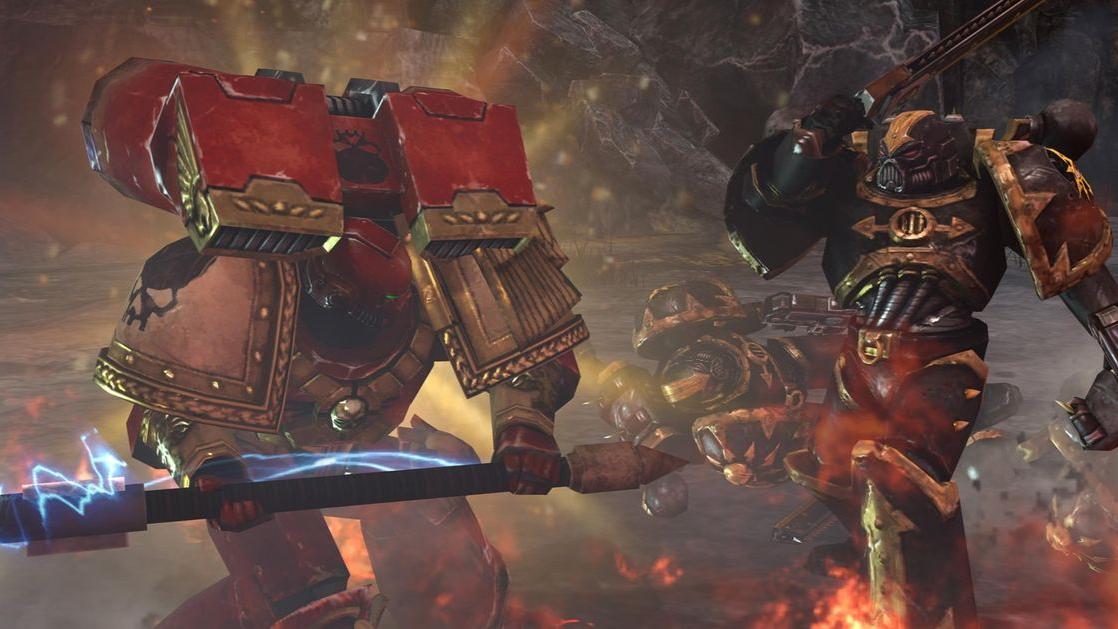
For over 17 years, the Warhammer 40,000: Dawn of War II community has kept a quiet secret: while standard competitive RTS queues have slowed, the cooperative horde mode, "The Last Stand," remains incredibly active. A recent retrospective highlight on PC Gamer has brought this masterpiece back into the spotlight, reminding developers and players alike why it stands as one of the best co-op PvE MOBA experiences ever designed.
And the timing couldn't be better. With the officially announced release of Warhammer 40,000: Dawn of War IV scheduled for September 17, 2026, promotional materials have officially confirmed that "The Last Stand" is making a grand return. As we prepare for its next-generation iteration, it is the perfect moment to deconstruct the brilliant design choices that gave this mode its legendary longevity.
The Core Loop: Minimalist Arena, Maximum Density
At its core, The Last Stand is simple: three players control a single hero unit (Commander) and fight against 20 waves of increasingly difficult enemies in a single arena.
Unlike typical RTS games that demand macro-management, base building, and resource gathering, The Last Stand strips away everything except micro-tactical execution. It borrows the controls of an RTS but inherits the mechanical focus of a MOBA. The choice of a three-player limit is mathematically precise: it is large enough to allow for distinct team roles (e.g., Tank, Support, DPS) but small enough that every player's mistakes or brilliant plays are immediately impactful.
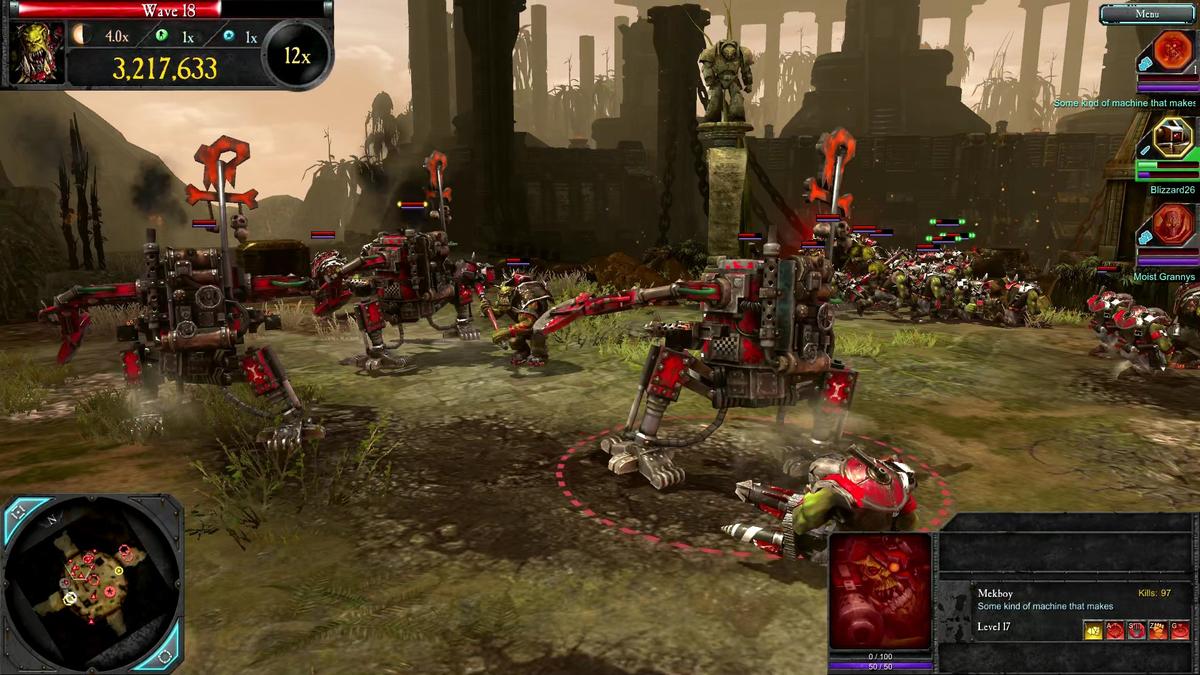
The arena itself (classically the Coliseum) is designed to minimize dead space. Spawns occur from all corners, forcing players to dynamically rotate, establish choke points, and coordinate area-of-effect abilities.
Here is a screenshot of the intense action inside the arena:
The Wargear System: Pre-Game Modular Build Customization
In modern MOBAs like League of Legends or Dota 2, players level up and buy items dynamically during a match. The Last Stand flips this design on its head by moving all build definition to the pre-game lobby using the Wargear System.
As players play games, their Commander earns experience points and levels up, unlocking weapons, armor, and accessories (wargear). Players can equip up to six wargear items. Critically, these items do not just provide stat boosts; they define the commander's active and passive abilities.
For example, equipping a Farseer with a Singularity Sword gives her a powerful crowd-control ability, while swapping it for a Staff of Prescience turns her into a defensive support unit. This modular system creates an engaging horizontal progression loop:
- Stat vs. Utility Tradeoffs: Heavy armor might grant high health but reduce movement speed or energy regeneration.
- No Talent Trees: All complexity is represented tangibly in the inventory. A player can completely redesign their commander's role in three clicks.
- Build Discovery: The synergy between items encourages experimentation, keeping players engaged for dozens of hours per commander.
Commander Archetypes and Synergistic System Design
The mode succeeds because of its diverse cast of commanders, each representing a distinct tactical philosophy:
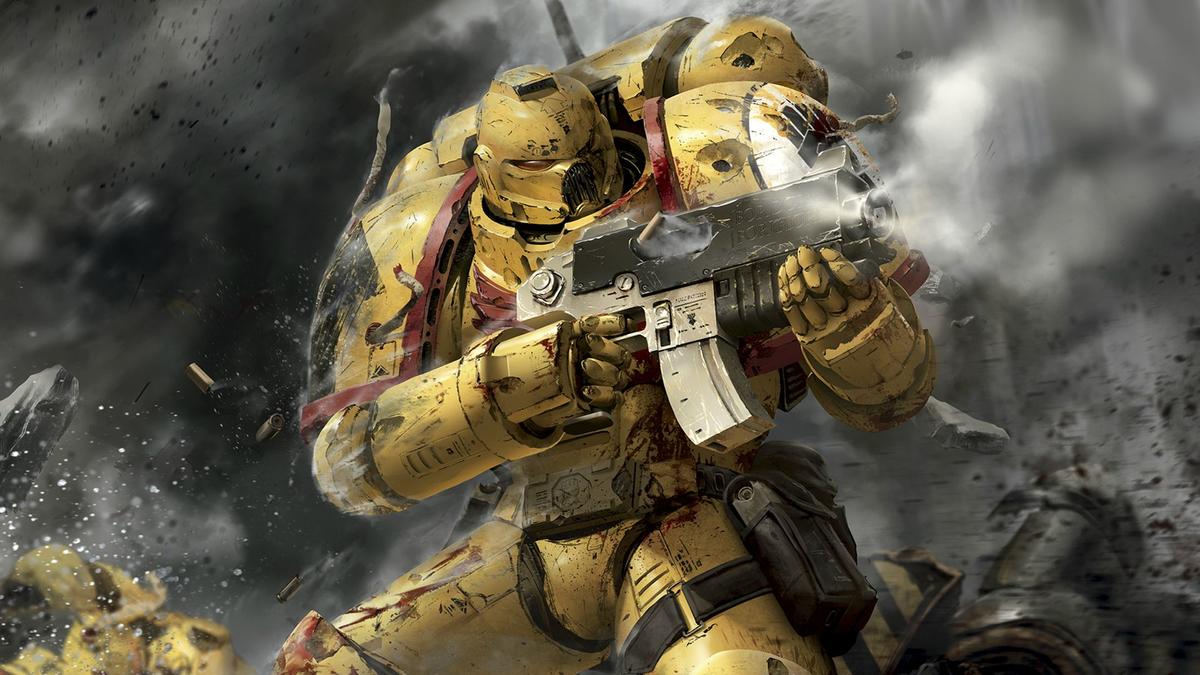
- Space Marine Captain: The quintessential frontline tank or team-wide support anchor.
- Eldar Farseer: A high-skill support and utility caster capable of manipulating time, shielding allies, or creating illusions.
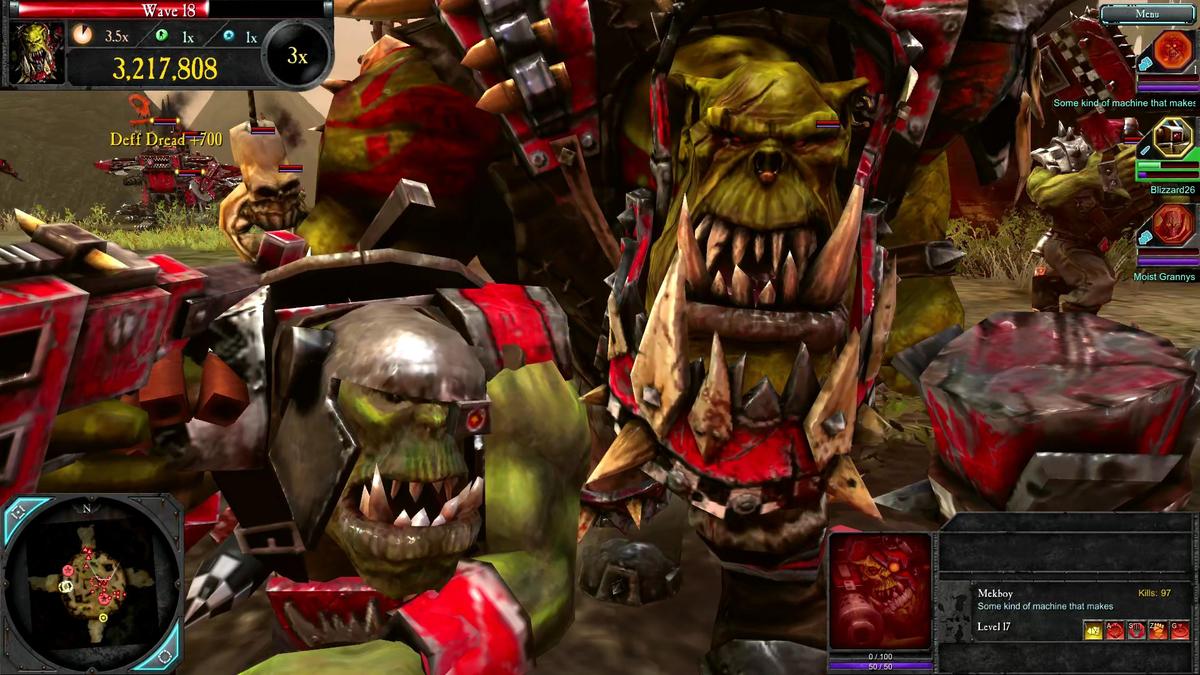
- Ork Mekboy: A defensive builder and crowd-controller who places turrets, teleports, and uses mines to shape the battlefield.
- Tyranid Hive Tyrant: A summoner who overwhelms the arena with bio-construct minions, distracting enemies.
- Chaos Sorcerer: A high-risk glass cannon who can duplicate enemy units or unleash devastating destructive spells.
- Lord General: A tactical commander who summons squads of Imperial Guardsmen, transforming the hero-focused gameplay into mini-squad tactics.
Here is a look at the different tactical roles in action:
To survive the final waves—such as Wave 16 (where clones of the players' own heroes spawn) and Wave 20 (where a massive swarm of elite bosses arrives)—players cannot rely on brute force. They must draft synergistic builds. An Ork Mekboy's teleports can rescue a cornered Farseer, who in turn can cast Doom on a boss to increase the Space Marine Captain's melee damage.
Dynamic Tension: The Risk-Reward of Multipliers
Wave survival games often suffer from "turtling"—players finding a corner and staying there. The Last Stand combats this with a brilliant score multiplier design.
Scattered across the arena are two capture points (frequently called Shrines or Gates). Capturing these points increases the team's score multiplier. However, leaving them captured by the enemy drops the multiplier to zero. Because your final score and XP gain are tied directly to this multiplier, players are forced to make high-risk rotations:
- The Split-Team Dilemma: Do you send one player to capture a distant point while two hold the line, risking a sudden swarm spawning on the lone runner?
- Defensive Sacrifice: Is it worth sacrificing a defensive choke point to chase a higher multiplier, or is survival the only metric that matters right now?
This simple mechanic introduces constant movement, preventing the gameplay from becoming static or repetitive.
Lessons for Modern Developers
As modern developers look to build cooperative PvE modes, The Last Stand offers invaluable architectural lessons:
1. Modular Progression beats Static Trees: Giving players the ability to completely reconfigure their character's mechanics via gear rather than rigid level-up menus creates a more engaging, sandbox-like experience.
2. Enforce Micro-Synergies: Standardizing hero roles is fine, but the magic happens when abilities interact in unexpected ways (e.g., duplicating a teammate's summon).
3. Break Up Turtling with Active Objectives: Introduce score or resource multipliers that require physical positioning to maintain, forcing players out of their comfort zones.
With Dawn of War IV on the horizon, we can only hope that Sega and Relic Entertainment preserve the core modularity and tactical elegance that made the original The Last Stand an immortal classic of cooperative game design.