July 30, 2026
9 min read
BeamNG.drive Graphics Overhaul: Dynamic Lighting & UI Update
Key Takeaways
- •The Significance of a Visual Overhaul
- •Dynamic Ambient Lighting: A Deep Dive into Realism
- •What is Dynamic Ambient Lighting?
As game developers, we constantly strive to push the boundaries of realism and player immersion. While groundbreaking physics engines often grab headlines, visual fidelity and user experience are equally critical in delivering a compelling game. The recent graphics overhaul in BeamNG.drive, a title renowned for its incredibly detailed soft-body physics simulation, serves as an excellent case study in how targeted visual and UI updates can significantly refresh a game and deepen its appeal. This guide will break down the impact of these changes, focusing on dynamic ambient lighting and UI enhancements, offering insights for fellow developers.
The Significance of a Visual Overhaul
BeamNG.drive has always been about the raw, visceral experience of vehicular destruction and precise simulation. Its core appeal lies in how a car deforms and reacts to every impact, every speedbump, and every obstacle. However, even the most robust physics engine can benefit from a visual facelift. A graphics overhaul isn't just about making things "prettier"; it's about enhancing the player's perception of realism, improving environmental immersion, and ensuring the game remains competitive in a visually demanding market.
A significant visual update can re-engage existing players, attract new audiences, and provide a fresh context for the game's core mechanics. For BeamNG.drive, this means that the spectacular crashes and intricate vehicle dynamics are now presented with a heightened sense of atmosphere and detail, making every high-speed collision or dramatic tumble even more impactful. It proves that even for simulation-heavy games, visual presentation is a crucial component of the overall experience.
Dynamic Ambient Lighting: A Deep Dive into Realism
One of the standout features of BeamNG.drive's overhaul is the introduction of dynamic ambient lighting. This isn't just a minor tweak; it's a fundamental change in how the game's environments are illuminated, leading to a much more believable and immersive world.
What is Dynamic Ambient Lighting?
Ambient lighting, in its simplest form, refers to the general, non-directional light that illuminates a scene, preventing areas from being completely black. Traditional ambient lighting often uses a static, uniform color or a skybox texture. Dynamic ambient lighting, however, calculates and adapts the ambient light based on the surrounding environment, time of day, weather conditions, and even the objects within the scene.
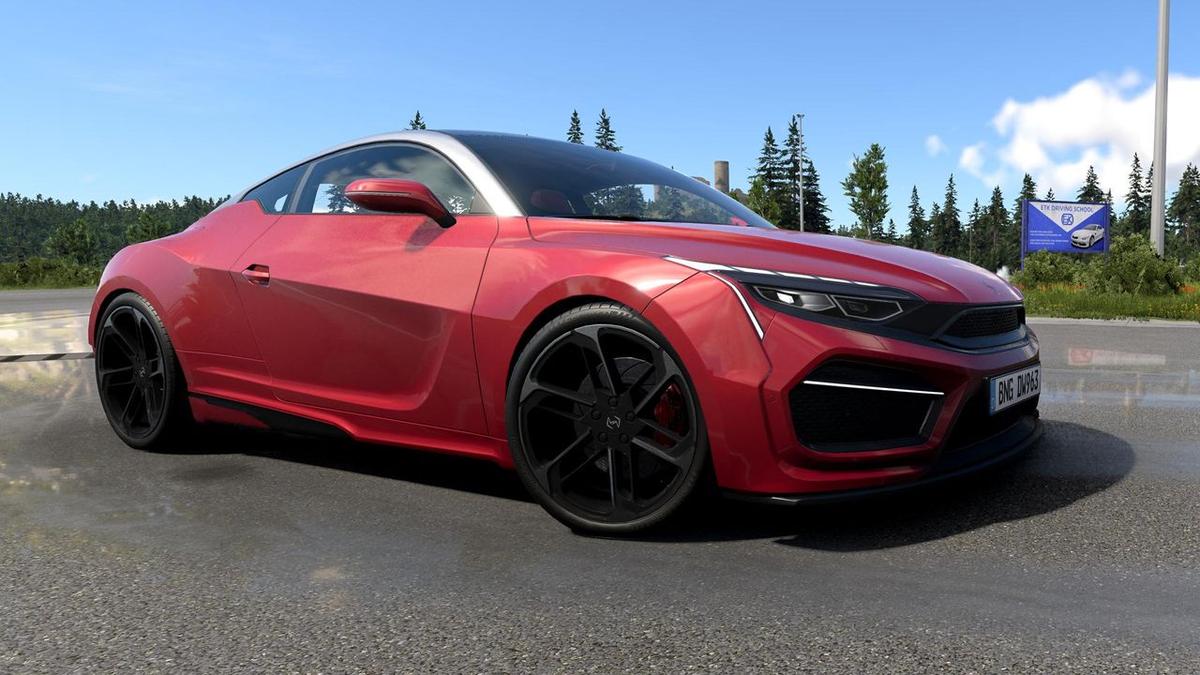
For BeamNG.drive, this means that as your family hatchback navigates a speedbump at 100mph, the lighting around it will realistically reflect the sky, nearby foliage, buildings, and ground textures. Shadows will soften or sharpen appropriately, and colors will blend more naturally, creating a cohesive visual experience. The light isn't just "there"; it interacts with the environment in a way that mimics real-world physics, adding depth and dimension.
Enhancing Player Immersion
The immediate benefit of dynamic ambient lighting is a dramatic increase in visual fidelity and immersion. Consider these points:
- Realistic Shadows and Highlights: Light bounces off surfaces, contributing to the overall illumination. Dynamic ambient lighting simulates this, making shaded areas feel more integrated into the scene rather than simply dark.
- Environmental Context: Driving through a forest will feel distinctly different from driving through a desert or an urban environment, not just because of textures but because the ambient light will be tinted and diffused by the specific surroundings.
- Time of Day and Weather Impact: The subtle shifts in light during dawn, dusk, or a cloudy day become far more pronounced and believable. This adds significant atmosphere and variety to gameplay.
The ability to "watch a family hatchback navigate a speedbump at 100mph with dynamic ambient lighting" isn't just a technical achievement; it's a testament to how these systems elevate the mundane into a visually engaging spectacle. The way light plays across the car's deforming body, reflecting off the asphalt, and filtering through trees makes the physics simulation feel even more grounded in a real-world context.
Technical Considerations for Implementation
Implementing dynamic ambient lighting is complex. It typically involves advanced rendering techniques such as:
- Global Illumination (GI) Solutions: These systems simulate how light bounces off surfaces. Real-time GI is computationally intensive but crucial for truly dynamic ambient light. Techniques like Voxel Cone Tracing, Screen Space Global Illumination (SSGI), or precomputed radiance transfer (PRT) can be used.
- Probe-based Lighting: Placing light probes throughout the environment to capture surrounding light information and interpolate it for dynamic objects.
- Skybox Integration: Ensuring the ambient light accurately reflects the colors and intensity of the skybox or sky dome, which changes with the time of day and weather.
- Optimized Shaders: Developing shaders that can efficiently calculate and apply these complex lighting models to all surfaces without significantly impacting performance.
Here's a simplified view of the impact of such an overhaul:
The Crucial Role of a UI Refresh
Beyond the visual splendor, BeamNG.drive also received a UI refresh. While often overlooked, a well-designed User Interface (UI) and User Experience (UX) are paramount for player satisfaction and accessibility.
Why UI Matters as Much as Graphics
A clunky, outdated, or unintuitive UI can quickly detract from even the most graphically impressive game. For BeamNG.drive, where players might be tweaking vehicle parameters, selecting maps, or managing complex scenarios, a streamlined UI is essential.
Key benefits of a UI refresh include:
- Improved Navigation: Making it easier for players to find what they need, reducing frustration.
- Enhanced Aesthetics: A modern UI often aligns better with updated graphics, creating a cohesive visual style.
- Better Readability: Clearer fonts, better contrast, and thoughtful layout improve information delivery.
- Accessibility: A well-designed UI can incorporate accessibility features, making the game enjoyable for a wider audience.
- Streamlined Workflows: For a simulation game with many options, an efficient UI allows players to get into the action faster and manage their experience more smoothly.
The "UI's had a refresh too" might sound like a small detail in the patch notes, but from a developer's perspective, it represents a significant investment in improving the player's interaction with the game. It’s about reducing friction and ensuring that the player's focus remains on the core gameplay, not on struggling with menus.
The Development Effort Behind a UI Refresh
Undertaking a UI refresh involves:
- User Research: Understanding player pain points with the existing UI.
- Wireframing and Prototyping: Designing new layouts and interaction flows.
- Visual Design: Creating new assets, icons, and typography that fit the game's aesthetic.
- Implementation: Coding the new UI elements, ensuring responsiveness and performance.
- Testing: Rigorous testing across various resolutions and input methods to ensure a smooth experience.
Here's a breakdown of typical effort distribution in a comprehensive game update, including visual and UI elements:
Development Challenges and Rewards
Undertaking a graphics and UI overhaul for an established title like BeamNG.drive is no small feat. It requires significant development resources, careful planning, and a deep understanding of the existing codebase. Challenges include:
- Performance Optimization: Ensuring new, more demanding graphics features run smoothly across a range of hardware.
- Backward Compatibility: Maintaining compatibility with older content, mods, and player saves.
- Art Pipeline Integration: Updating assets and tools to support new rendering features.
- Player Expectations: Balancing new features with the existing identity of the game.
However, the rewards are substantial. A successful overhaul can:
- Extend Game Lifespan: Keep the game relevant and appealing for many years.
- Boost Player Retention: Re-engage dormant players and keep current ones invested.
- Attract New Players: Modern visuals are a key factor for new players considering a purchase.
- Generate Positive Buzz: Fresh updates create news and positive community sentiment.
- Provide a Strong Foundation: A modernized engine and UI can serve as a better base for future content.
The BeamNG.drive update is a prime example of how continuous improvement in both visual fidelity and user experience is vital for a game's long-term success, even when its core mechanics are already exceptional.
Key Takeaways for Game Developers
For developers considering similar overhauls or planning new projects, BeamNG.drive's update offers valuable lessons:
1. Prioritize Core Mechanics, but Don't Neglect Presentation: Even if your game's strength is its innovative gameplay or physics, modern graphics and a polished UI are essential for broad appeal and player retention.
2. Dynamic Lighting is a Game-Changer: Investing in advanced lighting solutions like dynamic ambient lighting can drastically improve immersion and visual realism, making environments feel alive.
3. UI is Not an Afterthought: A well-designed UI/UX is fundamental to player satisfaction. A refresh can make a game feel new again, improving accessibility and ease of use.
4. Phased Updates Can Work: Large overhauls can be broken down into manageable phases, allowing the community to experience improvements incrementally and provide feedback.
5. Community Matters: Updates that genuinely enhance the player experience, like those in BeamNG.drive, resonate strongly with the community and can lead to renewed interest and positive word-of-mouth.
The BeamNG.drive graphics overhaul stands as a testament to the power of continuous development and the impact that focused improvements in visual and user experience design can have on even the most established and beloved games. It's a clear reminder that a holistic approach to game development, balancing technical prowess with aesthetic polish, is key to creating lasting experiences.