July 20, 2026
10 min read
Architecting Trustworthy AI: Open Models for Game Development
Key Takeaways
- •The Promise and Pitfalls of Open AI Models in Games
- •Architecting for Trust: Ensuring Reliability and Predictability
- •1. Robust Data Pipelines for Fine-Tuning
As technical directors, we are constantly evaluating emerging technologies to push the boundaries of game development. The advent of open AI models presents a compelling opportunity, but also introduces complex challenges around trust, control, and customization. NVIDIA's Nemotron Labs highlights that while powerful models are abundant, the true test lies in building AI that uniquely addresses business needs, improves workflows, taps into domain knowledge, and exceeds standards for accuracy and trust. This guide will deep dive into the technical considerations for integrating and managing open AI models in game development, ensuring they become robust, reliable, and truly beneficial assets.
The Promise and Pitfalls of Open AI Models in Games
Open AI models offer several advantages for game developers:
- Accessibility: Lower barriers to entry, often available with permissive licenses.
- Flexibility: Can be fine-tuned and adapted for specific game contexts.
- Transparency: Greater insight into model architecture and behavior compared to black-box proprietary solutions.
- Community Support: Access to a broad ecosystem of tools, research, and collaborative development.
However, integrating these models into a production game pipeline requires a rigorous technical approach to mitigate inherent risks:
- Lack of Domain Specificity: General-purpose models may not perform optimally without extensive customization for game logic, narrative, or asset generation.
- Performance Overhead: Running complex models, especially large language models (LLMs), can be computationally intensive, impacting real-time game performance.
- Trust and Reliability: Ensuring AI agents behave predictably, don't generate offensive content, or break game mechanics is paramount.
- Control and Interpretability: Understanding why an AI makes certain decisions is crucial for debugging, balancing, and design iteration.
- Data Management: The quality and quantity of data used for fine-tuning directly impact model performance and ethical behavior.
Our goal as technical leaders is to establish architectural patterns and development practices that harness the power of open models while maintaining the integrity and quality of our games.
Architecting for Trust: Ensuring Reliability and Predictability
Trust in AI, especially in agentic AI within games, means the system behaves as expected, consistently, and without introducing unintended consequences. This is a multi-layered technical challenge.
1. Robust Data Pipelines for Fine-Tuning
The foundation of a trustworthy AI is its training data. For open models, this often means fine-tuning on game-specific datasets.
- Curated Datasets: Develop meticulous pipelines for collecting, cleaning, and annotating game-specific data (e.g., player dialogue, NPC behavior logs, level design parameters, asset descriptions). This data must be representative and free from bias that could lead to undesirable AI behavior.
- Synthetic Data Generation: Leverage game engines and procedural tools to generate synthetic data, especially for scenarios that are rare or difficult to capture naturally. This can be critical for training agents in edge cases or for rapid prototyping.
- Version Control and Provenance: Implement robust version control for datasets, tracking their origin, transformations, and the models trained on them. This allows for reproducibility and auditing of AI behavior.
2. Continuous Evaluation and Validation
Trust is built through continuous testing.
- Automated Testing Frameworks: Integrate AI model evaluation into CI/CD pipelines. This includes:
- Unit Tests: For individual AI components and their interactions.
- Integration Tests: Assessing how AI models interact with the game engine, physics, and other systems.
- Behavioral Tests: Designing specific test cases to probe for undesirable or unexpected AI behaviors (e.g., "AI agent should never attack friendly NPCs," "AI should not generate profanity").
- Human-in-the-Loop Validation: For generative AI, human review is indispensable. Develop tools for designers and QA to easily review AI-generated content (dialogue, quests, assets) and provide feedback for model retraining.
- Performance Monitoring: Beyond functional correctness, monitor AI inference performance (latency, throughput, memory usage) in real-time game scenarios to ensure it meets framerate targets.
3. Explainable AI (XAI) for Debugging
While full interpretability of complex deep learning models is an ongoing research area, implementing XAI techniques can significantly aid debugging and building trust.
- Feature Importance: Techniques like SHAP or LIME can highlight which input features most influenced an AI's decision, helping developers understand its reasoning.
- Attention Mechanisms: For transformer-based models, visualizing attention maps can show which parts of the input (e.g., words in a prompt, pixels in an image) the model focused on.
- Decision Logging: Implement comprehensive logging for AI agents, capturing their internal states, inputs, and outputs at critical decision points. This creates a traceable "thought process" for post-mortem analysis.
Implementing Control: Steering AI Behavior and Outputs
Control refers to our ability to guide AI behavior and ensure its outputs align with game design intentions and ethical guidelines.
1. Prompt Engineering and Guardrails
For LLMs and generative AI, prompt engineering is the first line of control.
- Structured Prompts: Develop internal libraries of well-crafted prompts, including clear instructions, context, examples, and constraints.
- System Prompts: Utilize system-level instructions to define the AI's persona, role, and overarching rules of engagement within the game world.
- Safety Filters and Content Moderation: Implement post-processing filters on AI outputs to detect and redact unwanted content (e.g., hate speech, inappropriate language). This can involve keyword filtering, sentiment analysis, or even secondary, smaller AI models trained specifically for content moderation.
2. Reinforcement Learning from Human Feedback (RLHF)
For more complex agent behaviors, RLHF can be a powerful control mechanism.
- Feedback Loops: Design systems where human designers or players can provide explicit feedback on AI actions or generated content. This feedback is then used to fine-tune the model, guiding it towards desired behaviors.
- Preference Learning: Instead of direct reward signals, humans can rank different AI outputs or behaviors, and the model learns preferences.
3. Hybrid AI Architectures
Often, the best approach is to combine open AI models with traditional game AI techniques.
- Behavior Trees/State Machines: Use symbolic AI systems for high-level decision-making and critical game logic, while leveraging open models for emergent behaviors, dialogue generation, or complex pattern recognition.
- Parameterization: Expose key parameters of the AI model to designers through engine tools, allowing them to adjust "personality," "aggression," or "creativity" without requiring direct model retraining.
Architecture for Controlled Open AI Integration
Figure 1: Conceptual Architecture for Controlled Open AI Model Integration in Game Development
Maximizing Customization: Tapping into Domain Knowledge
To truly address the needs of a game, open models must be customized to understand and operate within its unique domain.
1. Fine-Tuning with Domain-Specific Data
This is the most direct way to customize an open model.
- Instruction Tuning: For LLMs, this involves training on pairs of instructions and desired responses, teaching the model to follow game-specific directives (e.g., "Generate a quest for a level 5 rogue in a swamp biome").
- Reinforcement Learning: Training agents directly within the game environment using rewards defined by game mechanics. This allows the AI to learn optimal strategies and behaviors specific to the game's rules and physics.
- Multi-modal Fine-tuning: For models that handle more than text, fine-tuning can involve game assets (3D models, textures, animations) paired with descriptions or gameplay data.
2. Retrieval Augmented Generation (RAG)
RAG is a powerful technique for grounding generative AI models in specific game lore, mechanics, and character information without retraining the entire model.
- Knowledge Base Integration: Build a comprehensive, searchable knowledge base of game data (lore documents, character profiles, item databases, dialogue trees, game state variables).
- Contextual Retrieval: When an AI needs to generate a response or perform an action, relevant information is retrieved from this knowledge base and provided as context to the open model's prompt. This ensures the AI's outputs are consistent with the game's established facts and rules.
3. Model Compression and Optimization
Customization also extends to making models runnable within the performance constraints of a game.
- Quantization: Reducing the precision of model weights (e.g., from float32 to int8) can significantly decrease model size and inference time with minimal impact on accuracy.
- Pruning: Removing redundant connections or neurons from the neural network to simplify the model.
- Knowledge Distillation: Training a smaller "student" model to mimic the behavior of a larger, more complex "teacher" model. This creates a lightweight, game-ready version of a powerful open model.
- Hardware Acceleration: Leveraging NVIDIA GPUs and frameworks like TensorRT for optimized inference on target platforms (PC, console, edge devices with Jetson Thor).
Improving Workflows with Open AI Models
The ultimate goal of integrating open AI models is to improve game development workflows, allowing teams to be more creative and efficient.
1. Procedural Content Generation (PCG)
Open generative models can revolutionize PCG.
- Narrative & Dialogue: Generating dynamic dialogue, branching storylines, or even entire quest lines based on player actions and game state.
- Asset Generation: Creating variations of environmental assets, textures, or character designs based on stylistic prompts.
- Level Design Assistance: Suggesting layouts, object placements, or even generating entire levels that adhere to design constraints.
2. Intelligent Development Tools
AI can assist developers directly.
- Code Autocompletion & Generation: Specialized models can suggest code snippets for game logic, shader code, or scripting.
- Automated QA: AI agents can playtest the game, identify bugs, and provide reports, simulating diverse player behaviors.
- Concept Art & Prototyping: Rapidly generating visual concepts for art direction or gameplay prototypes.
3. Dynamic In-Game AI
Beyond traditional scripted behaviors, open models enable more adaptive and emergent AI.
- Adaptive NPCs: NPCs that learn from player behavior, adapt their strategies, and engage in more natural, context-aware dialogue.
- Dynamic Difficulty Scaling: AI that subtly adjusts game challenges based on real-time player performance and engagement.
- Personalized Experiences: Crafting unique narratives or gameplay events tailored to individual players' choices and playstyles.
The Path Forward for Technical Directors
Integrating open AI models like those explored by Nemotron Labs into game development is not merely about adopting new technology; it's about fundamentally rethinking how we design, build, and test games. For technical directors, this means:
1. Strategic Planning: Identify specific areas where open AI can provide tangible value and prioritize use cases based on technical feasibility and game impact.
2. Infrastructure Investment: Develop robust data infrastructure, MLOps pipelines, and evaluation frameworks to support the lifecycle of AI models.
3. Cross-Disciplinary Collaboration: Foster tight collaboration between AI engineers, game designers, writers, and artists to define AI goals, provide feedback, and integrate AI outputs seamlessly.
4. Continuous Learning: The AI landscape is evolving rapidly. Stay abreast of new open models, research advancements, and ethical guidelines.
By embracing these principles, game studios can leverage open AI models to create more dynamic, intelligent, and engaging experiences, securing a competitive edge in the agentic era of game development. The journey is complex, but the potential rewards for pushing the boundaries of interactive entertainment are immense.
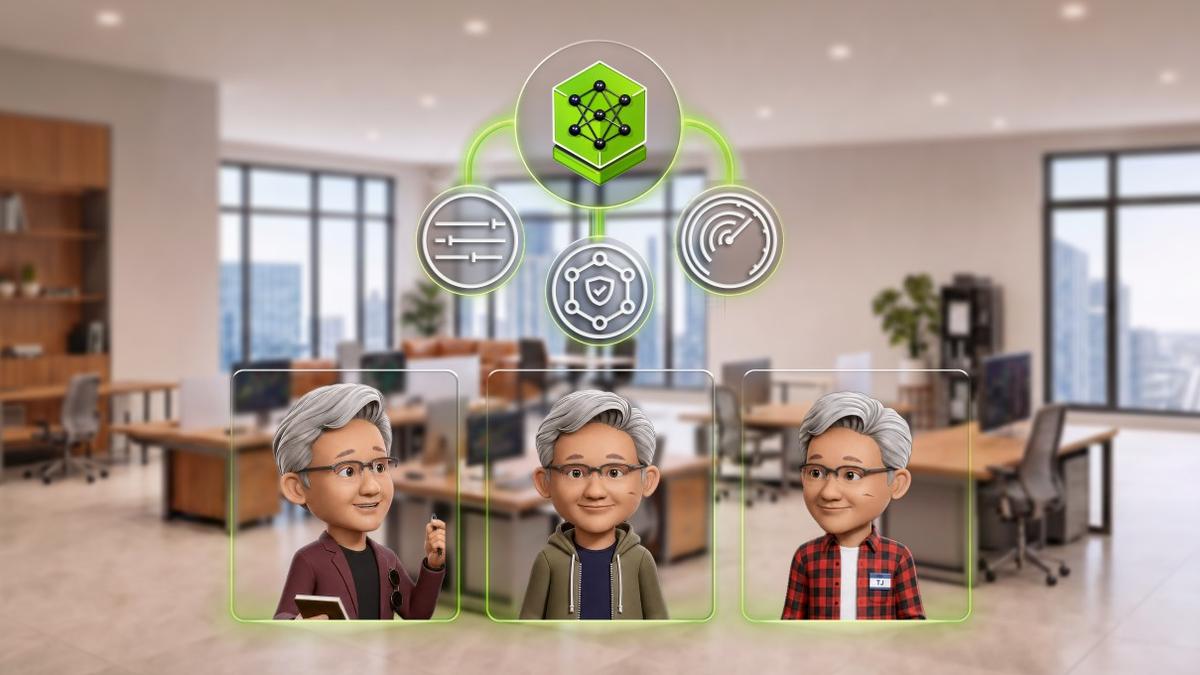
Figure 2: Nemotron Labs exploring open models for enterprises.