July 29, 2026
10 min read
Architecting Mobile Game Webshops: Technical Integration for D2C Success
Key Takeaways
- •The D2C Imperative: Technical Drivers
- •Navigating Platform Policy Shifts
- •Optimizing Fee Structures
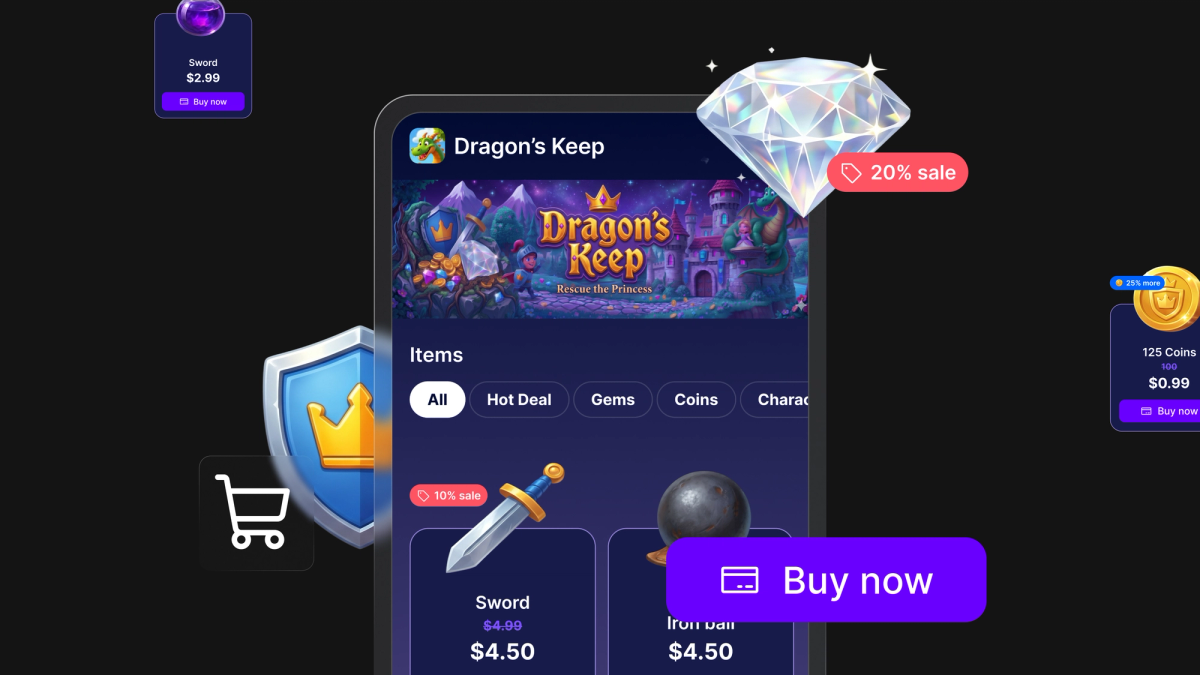
In the ever-evolving landscape of mobile game monetization, a significant shift is underway: the move towards Direct-to-Consumer (D2C) webshops. This strategic pivot, driven by changing platform policies, evolving fee structures, and the desire for greater control over player relationships and economics, presents a compelling technical challenge and opportunity for game developers. Recent data indicates the power of this trend, with top mobile titles experiencing a remarkable 38% growth in D2C earnings in 2025. This guide delves into the technical considerations, architectural components, and tooling essential for successfully implementing a mobile game webshop.
The D2C Imperative: Technical Drivers
The primary impetus behind the D2C movement is a combination of platform policy shifts and the optimization of fee structures. From a technical perspective, these drivers necessitate a fundamental re-evaluation of how monetization systems are designed and integrated into mobile games.
Navigating Platform Policy Shifts
Operating a D2C webshop means moving outside the traditional in-app purchase (IAP) mechanisms dictated by major mobile app stores. Technically, this implies:
- Independent Payment Processing: Developers must implement and manage their own payment gateways, rather than relying on platform-provided solutions. This involves integrating with third-party payment providers (e.g., Stripe, PayPal, regional payment systems) and handling the entire transaction lifecycle, from initiation to confirmation and potential refunds.
- Custom User Authentication: While games typically integrate with platform-specific authentication (Google Play, Apple Game Center), a D2C webshop requires a robust, independent authentication system. This often involves building custom user accounts, supporting Single Sign-On (SSO) if integrating with existing game accounts, and ensuring secure credential management.
- Direct Content Delivery & Entitlement: The game client must be able to securely communicate with the webshop's backend to verify purchases and grant in-game entitlements. This bypasses platform-level receipt validation and places the onus on the developer to ensure content is delivered accurately and securely.
Optimizing Fee Structures
The economic advantage of D2C, primarily reducing platform commission fees, directly translates to technical requirements for efficiency and security.
- Cost-Effective Payment Infrastructure: Selecting payment providers with competitive transaction fees and minimizing operational overhead for payment processing is crucial. This often involves evaluating various providers for regional coverage, supported payment methods, and API robustness.
- Enhanced Fraud Detection and Prevention: With direct control over transactions, developers also inherit the responsibility for fraud detection. Implementing advanced anti-fraud measures, such as velocity checks, IP analysis, and machine learning models, becomes a technical priority to protect revenue.
- Scalable Infrastructure: A successful D2C webshop must be able to handle fluctuating traffic and sales volumes, especially during promotions or new content launches, without incurring exorbitant infrastructure costs. Cloud-native architectures and efficient resource scaling are key.
Core Architectural Components of a Mobile Webshop
Building a D2C webshop requires a well-defined architecture that integrates seamlessly with the existing game ecosystem. This typically involves a secure web frontend, robust backend services, and a reliable game client integration.
Secure Web Frontend
The webshop's user interface is the primary point of interaction for players.
- Technology Stack: Modern web frameworks like React, Vue.js, or Angular are commonly used to build dynamic, responsive web frontends. These allow for rich user experiences, complex product displays, and smooth navigation.
- Responsive Design: Given the mobile-first nature of the target audience, the frontend must be fully responsive, adapting gracefully to various screen sizes and orientations across smartphones and tablets.
- Security Best Practices: Implementing HTTPS, Content Security Policy (CSP), and protection against common web vulnerabilities (XSS, CSRF) is paramount to safeguard user data and maintain trust.
Robust Backend Services
The backend is the engine of the D2C webshop, handling all critical business logic and data management. This often takes the form of a microservices architecture for scalability and maintainability.
User Authentication & Authorization
- Identity Management: A dedicated service for player accounts, managing registration, login, password resets, and profile information. This may integrate with existing game identity providers or offer a standalone solution.
- Session Management: Securely managing user sessions across the webshop and potentially linking them to in-game sessions. OAuth 2.0 and JWT (JSON Web Tokens) are common patterns.
Payment Gateway Integration
- API Wrappers: Developing robust API wrappers for various payment providers to standardize interactions, handle errors, and manage payment specific logic.
- Transaction Management: A system to record all transactions, track their status (pending, completed, failed, refunded), and ensure atomic operations to prevent data inconsistencies.
- Webhook Handling: Implementing secure webhook endpoints to receive real-time payment status updates from payment gateways.
Inventory & Entitlement Management
- Product Catalog Service: Manages all purchasable items, their pricing, descriptions, and metadata. This service must be highly available and consistent.
- Entitlement Service: The most critical component for game integration. Upon successful payment, this service grants the purchased items to the player's account. It must be idempotent to prevent duplicate grants and robust enough to handle potential network issues or retries. This service often interacts directly with the game's core player data.
Order Processing & Fulfillment
- Order Service: Manages the lifecycle of an order, from creation to successful fulfillment.
- Asynchronous Processing: Utilizing message queues (e.g., Kafka, RabbitMQ) for asynchronous processing of orders and entitlements to ensure high throughput and resilience, decoupling payment confirmation from item delivery.
Data Analytics & Reporting
- Telemetry & Logging: Implementing comprehensive logging and telemetry across all backend services to track user behavior, transaction funnels, and system performance.
- Data Warehouse/Lake: Storing and processing large volumes of D2C data for business intelligence, fraud analysis, and personalized marketing efforts. This requires robust ETL (Extract, Transform, Load) pipelines.
Game Client Integration
The game client needs to seamlessly interact with the D2C webshop.
- Secure API Communication: The game client must communicate with the webshop's backend using secure, authenticated APIs. This typically involves using RESTful APIs or GraphQL, secured with API keys, tokens, or OAuth.
- Deep Linking & WebViews: For a smooth user experience, deep linking can guide players directly from specific in-game prompts to relevant product pages in the webshop. Alternatively, embedding a WebView within the game can offer an in-app browser experience for the webshop, maintaining context.
- Client-Side Purchase Verification: While the backend is the source of truth, the client should have mechanisms to query entitlement status and refresh in-game inventory, ensuring purchases are reflected promptly.
- Error Handling & Fallbacks: Robust error handling is critical for network issues, failed transactions, or backend service unavailability, providing clear feedback to players and enabling graceful recovery.
Tooling for Mobile Game Webshops
The tooling landscape for D2C webshops is broad, encompassing development, deployment, and operational aspects.
- Game Engine Integration SDKs: While not always explicitly provided for D2C webshops, developers often build custom SDKs or integration layers within game engines like Unity or Unreal Engine. These custom tools encapsulate API calls to the webshop backend, handle data serialization/deserialization, and manage UI elements for displaying webshop content or deep linking.
- Content Management Systems (CMS): A headless CMS (e.g., Strapi, Contentful) can manage product catalogs, promotional banners, localized content, and editorial updates for the webshop, allowing content creators to update the shop without developer intervention.
- DevOps & CI/CD Pipelines: Automated Continuous Integration/Continuous Deployment (CI/CD) pipelines are essential for rapid iteration, testing, and deployment of webshop updates. Tools like GitHub Actions, GitLab CI/CD, or Jenkins streamline the development workflow and ensure consistent deployments.
- Cloud Infrastructure: Leveraging cloud providers (AWS, Azure, GCP) offers scalable and reliable infrastructure for hosting webshop frontends and backend services. Services like serverless functions (AWS Lambda, Azure Functions) and managed databases (RDS, DynamoDB) can significantly reduce operational burden.
- Security Tools: Web Application Firewalls (WAFs) protect against common web attacks, DDoS protection services ensure availability, and regular penetration testing and vulnerability scanning are crucial for maintaining a secure environment.
Technical Challenges and Best Practices
Implementing a D2C webshop is not without its technical hurdles. Addressing these proactively is key to success.
Security
This is paramount. Protecting sensitive user data (payment info, personal details) and preventing fraud requires a multi-layered approach:
- PCI DSS Compliance: If handling credit card data directly, adherence to Payment Card Industry Data Security Standard (PCI DSS) is mandatory. Often, leveraging payment gateways that handle this complexity is preferred.
- Encryption & Tokenization: All data in transit and at rest should be encrypted. Payment information should be tokenized or handled directly by the payment gateway to minimize exposure.
- Anti-Fraud Systems: Implement real-time fraud detection, leveraging machine learning and behavioral analytics to identify and block suspicious transactions.
Scalability
The webshop must scale to meet demand, especially during peak promotional periods.
- Microservices Architecture: Decomposing the backend into independent services allows for individual scaling of components based on their load.
- Cloud-Native Design: Utilizing auto-scaling groups, load balancers, and container orchestration (Kubernetes) to dynamically adjust resources.
- Caching: Implementing caching layers (Redis, Memcached) for frequently accessed data (e.g., product catalog) to reduce database load and improve response times.
Data Consistency
Ensuring that a player's purchases on the webshop are accurately and immediately reflected in their in-game inventory is critical for player trust.
- Eventual Consistency: While immediate consistency is ideal, distributed systems often rely on eventual consistency. Designing robust retry mechanisms and reconciliation processes helps ensure that all data eventually synchronizes.
- Transactional Integrity: Using database transactions for critical operations (e.g., deducting payment, granting entitlement) to ensure atomicity.
Cross-Platform Compatibility
The webshop needs to function flawlessly across a multitude of devices, browsers, and operating systems.
- Extensive Testing: Rigorous testing across various mobile devices, operating systems, and browser versions is essential.
- Progressive Web Apps (PWAs): Consider PWA features to offer an app-like experience directly from the web, including offline capabilities and push notifications.
Regulatory Compliance
Operating internationally means navigating diverse legal and regulatory landscapes.
- GDPR, CCPA, etc.: Ensuring compliance with data privacy regulations is crucial. This impacts data storage, user consent mechanisms, and data access policies.
- Tax & Payment Regulations: Adhering to local tax laws and payment regulations for each region where the webshop operates.
Architectural Flow of a Mobile Game Webshop
Understanding the interaction between different components is vital for a coherent D2C strategy. The following diagram illustrates a typical transaction flow:
This diagram outlines the sequential flow from a player initiating a purchase in the game client, through the webshop's frontend and backend, to the external payment gateway, and finally back to updating the player's in-game inventory and logging analytics. Each step represents a critical technical interaction that must be robustly designed and implemented.
Conclusion
The shift to D2C webshops for mobile games is not merely a business decision; it's a profound technical undertaking. While the promise of greater revenue share and direct player relationships is compelling, realizing these benefits demands a significant investment in secure, scalable, and resilient technical architecture. By understanding the implications of platform policy shifts, meticulously designing core backend services, and leveraging appropriate tooling, game developers can successfully navigate this complex landscape and unlock new avenues for monetization and player engagement. The 38% growth in D2C earnings observed in 2025 highlights that the technical effort, when executed correctly, yields substantial rewards.
_The rise of D2C webshops represents a significant shift in mobile game monetization strategies, driven by evolving platform policies and the pursuit of optimized fee structures._