Architecting High-Bandwidth Systems

Key Takeaways
- •The Data Bottleneck: A Growing Challenge for Game Developers
- •Unpacking NVLink Fusion: Beyond PCIe Limitations
- •The Power of NVHBM Custom High-Bandwidth Memory
As a technical director, I've seen firsthand how the relentless pursuit of visual fidelity, complex simulations, and increasingly intelligent AI agents pushes the boundaries of our underlying hardware infrastructure. The demands of modern game development are no longer solely about raw computational power; they are fundamentally about efficient data movement and access. This is where NVIDIA's recent advancements with NVLink Fusion and NVHBM Custom High-Bandwidth Memory present a significant leap forward, offering solutions that will profoundly impact how we design and build the next generation of interactive experiences.
The Data Bottleneck: A Growing Challenge for Game Developers
For decades, the Von Neumann bottleneck, the inherent limitation of data transfer between the CPU and memory, has been a persistent challenge. In game development, this bottleneck manifests as performance hitches, slower loading times, and constraints on the complexity of our virtual worlds. As we move towards larger, more dynamic open worlds, higher resolution textures, more intricate physics simulations, and sophisticated AI, the traditional PCIe bus and standard memory architectures are becoming increasingly insufficient.
The "next wave of AI," as NVIDIA describes it, with "AI agents and trillion-parameter workloads becoming mainstream," highlights a critical shift. While this often refers to large-scale data center AI, the implications for in-game AI are direct. Imagine NPCs with truly dynamic, context-aware behaviors, or procedural content generation that adapts in real-time based on player actions. These scenarios demand not just more compute, but an unprecedented level of data bandwidth and low-latency communication between compute units and memory.
Traditionally, we've relied on optimizing cache hierarchies, streaming assets, and clever culling techniques to mitigate these issues. However, these are often reactive measures. What's needed is a fundamental architectural shift that treats compute, memory, storage, networking, and software as a cohesive, unified system. This is precisely the vision NVLink Fusion and NVHBM aim to achieve.
Unpacking NVLink Fusion: Beyond PCIe Limitations
At its core, NVLink is a high-speed, direct interconnect developed by NVIDIA, designed to overcome the limitations of the conventional PCIe bus. Where PCIe offers a general-purpose connection, NVLink provides a dedicated, high-bandwidth, low-latency pathway primarily for GPU-to-GPU and CPU-to-GPU communication.
NVLink Fusion represents an evolution of this technology. It's not just about connecting more GPUs; it's about creating a tightly integrated fabric where multiple GPUs and potentially CPUs (XPUs) can share data at speeds far exceeding what PCIe can deliver. This is crucial for:
- Massive Data Sets: For game engines dealing with vast open-world assets, high-resolution textures, complex geometry, and large animation graphs, NVLink Fusion ensures that these data sets can be accessed and processed by multiple computational units concurrently without becoming a bottleneck.
- Distributed Compute: Imagine a scenario where physics simulations, AI pathfinding, and rendering tasks are intelligently distributed across an array of GPUs. NVLink Fusion enables these units to share intermediate results and synchronize states with minimal overhead, leading to more realistic and interactive environments.
- Unified Memory Access: While not a true shared memory in the traditional sense, NVLink Fusion facilitates a high-speed data fabric that allows compute units to access each other's memory spaces more efficiently. This can simplify programming models for developers, allowing them to think less about explicit data transfers and more about the overall computational problem.
This approach transforms the traditional system architecture from a collection of discrete components communicating over a relatively slow bus into a powerful, unified processing complex.
The Power of NVHBM Custom High-Bandwidth Memory
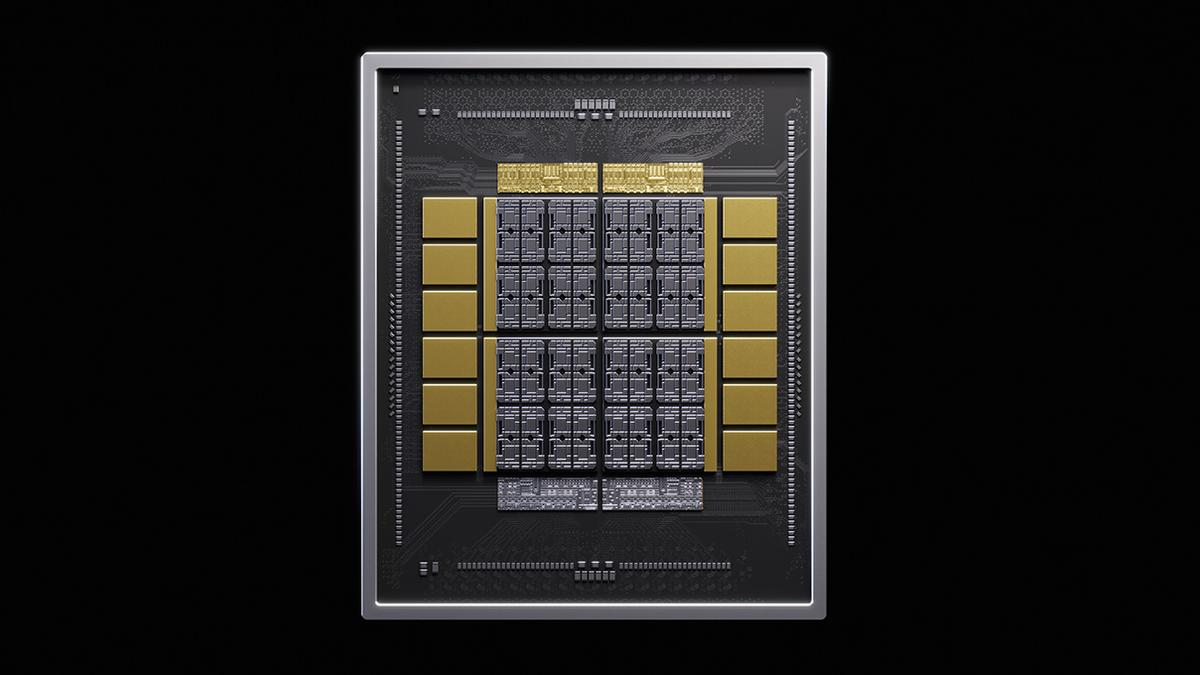
High-Bandwidth Memory (HBM) is a type of RAM that is vertically stacked and connected to the GPU via an interposer, allowing for significantly higher bandwidth and lower power consumption compared to traditional GDDR memory (like GDDR6X). HBM modules are designed to sit physically close to the GPU, minimizing signal travel distance and maximizing data throughput.
NVHBM Custom High-Bandwidth Memory takes this a step further. The "custom" aspect implies that this HBM is not merely off-the-shelf, but specifically engineered and optimized by NVIDIA for their particular architecture and target workloads – in this case, the demanding requirements of AI and high-performance computing. This customization can involve:
- Optimized Controllers: Memory controllers designed to handle specific data access patterns common in AI training/inference or complex simulations.
- Increased Density and Bandwidth: Pushing the limits of HBM technology to achieve even higher capacities and throughputs per stack.
- Enhanced Reliability and Error Correction: Critical for maintaining data integrity in large-scale, continuous operations.
For game development, NVHBM translates directly into the ability to manage incredibly large and complex datasets in real-time.
- Real-time Ray Tracing and Path Tracing: These rendering techniques require immense memory bandwidth to sample and process vast numbers of rays, interact with complex scene data structures (like BVHs), and store intermediate shading results. NVHBM's capabilities are a major breakthrough here, enabling more intricate lighting and reflections without performance compromises.
- High-Resolution Assets: Streaming and managing hundreds of gigabytes of unique textures, meshes, and animation data for expansive open worlds becomes more feasible. NVHBM can buffer and provide quick access to these assets, reducing pop-in and stuttering.
- Complex Simulations: Whether it's fluid dynamics, cloth simulation, or soft-body physics, these often involve large grids or particle systems that demand continuous, high-bandwidth access to memory. NVHBM allows for more granular and detailed simulations to run efficiently.
The Synergy: NVLink Fusion and NVHBM in the Game Development Pipeline
The true power emerges when NVLink Fusion and NVHBM are combined. The article highlights the focus on "how compute, memory, storage, networking and software are designed together as a unified system." This isn't just about faster components; it's about a holistic architectural philosophy.
Consider a modern game engine leveraging this infrastructure:
In this conceptual system:
1. Massive Game World Data (F) and High-Fidelity Assets (H) can be loaded and streamed efficiently into the NVHBM pools of the GPU arrays via NVLink Fusion, allowing for rapid access by rendering units.
2. Real-time AI Agents (G) and their "trillion-parameter workloads" can be processed across dedicated GPU arrays (D), leveraging NVHBM for their large model weights and activation data, and communicating results or state changes to other GPUs (C, E) via the high-speed NVLink Fusion fabric.
3. Complex Physics Simulations (I) can run on another GPU array (E), utilizing NVHBM for grid data, particle states, or collision volumes, and seamlessly sharing results with the rendering or AI systems through NVLink Fusion.
4. The XPU/CPU Complex (B) acts as the orchestrator, managing overall game logic and feeding data into this highly interconnected fabric, benefiting from the rapid data exchange.
This integrated approach directly addresses the "memory wall" problem by providing unparalleled bandwidth and reducing latency for data exchange between critical components. It enables developers to design systems where data locality is less of a constant battle, and complex operations can be distributed and synchronized with greater ease.
Architectural Implications for Game Engine Development
From an engine developer's perspective, this level of hardware integration offers several exciting possibilities:
- Simplified Data Management: While still requiring careful design, the ability to move vast amounts of data quickly between compute units can reduce the complexity of memory management and streaming systems. Developers might be able to allocate larger, more persistent data structures across GPU memory, knowing that they can be accessed efficiently by various shaders and compute kernels.
- Advanced AI Integration: The capacity for "trillion-parameter workloads" suggests that much larger and more sophisticated AI models can be integrated directly into games, moving beyond simple state machines to truly emergent and adaptable behaviors. This could enable more believable NPCs, dynamic world generation, and even real-time content adaptation.
- Unconstrained Visual Fidelity: With NVHBM providing the raw bandwidth and NVLink Fusion ensuring rapid data delivery, the constraints on texture resolution, geometric detail, and real-time lighting complexity are significantly loosened. This paves the way for truly photorealistic rendering at interactive frame rates.
- New Programming Paradigms: The existence of such a tightly coupled, high-bandwidth system could encourage new programming approaches. Imagine a single compute shader that operates on data spread across multiple GPU memory banks, with NVLink Fusion abstracting away the physical boundaries. This could lead to more efficient GPGPU programming and distributed compute models within game engines.
The NVIDIA blog post highlights that "hyperscalers and AI innovators building custom XPUs must consider..." the full factory design. This mentality is increasingly relevant to game studios. Building a game engine is akin to building a specialized factory for interactive experiences. The more integrated and performant the underlying hardware, the more robust and capable our "factory" becomes.
The Future Landscape of Interactive Entertainment
The convergence of high-bandwidth interconnects like NVLink Fusion and specialized memory like NVHBM is not just an incremental upgrade; it's a foundational shift in how high-performance systems are built. For game development, this means:
- Greater Realism: More detailed worlds, more accurate physics, and more sophisticated rendering techniques become feasible.
At White Cube Studios, we translate technical architecture into shipping systems across our specialized development pillars: