AI Remakes: James Pond Co-Creator's 'Soulless' Verdict

Key Takeaways
- •The Heart of the Matter: A Creator's Outrage
- •Why This Matters to Every Developer
- •The Spectrum of AI in Game Development
As a game developer, I've been watching the conversation around AI in our industry with a mix of excitement and apprehension. AI offers incredible tools for efficiency and innovation, but it also raises profound questions about creative integrity, IP, and the very soul of our craft. Recently, these questions were brought into sharp focus by a veteran developer's scathing critique of an AI-rife remake.
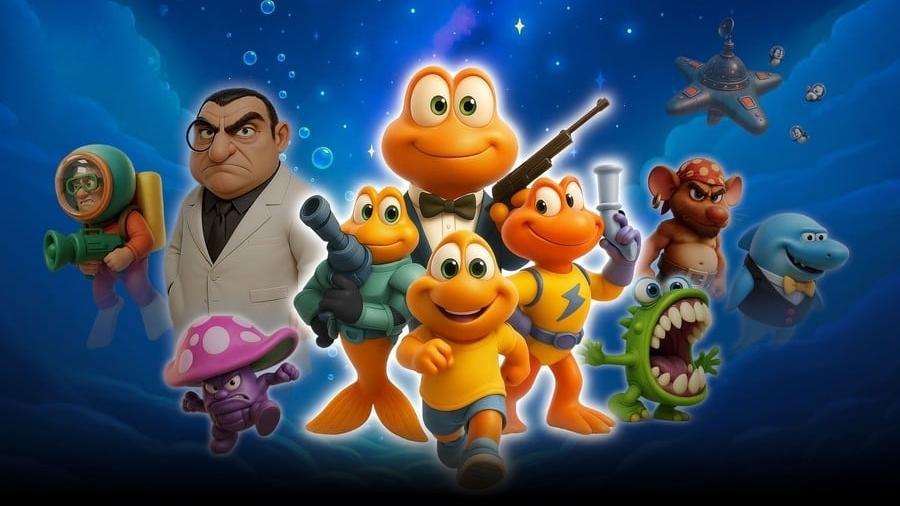
Chris Sorrell, co-creator of the beloved 90s platformer James Pond, didn't mince words when reacting to news of a remake heavily featuring AI-generated content. His statement, as reported by Kotaku, was stark: he called the project "disrespectful and soulless" and went as far as to say, "I hope they choke on an AI-generated fishbone." This isn't just a casual dismissal; it's a passionate, visceral rejection from someone who poured their creative energy into the original work.
The Heart of the Matter: A Creator's Outrage
Sorrell's reaction cuts to the core of a debate that has been simmering for years: when does AI assistance cross the line into creative dilution or even theft? For many developers, especially those from an era where every pixel and line of code was meticulously crafted by human hands, seeing their legacy reinterpreted by algorithms can feel like a profound betrayal.
His choice of words — "disrespectful and soulless" — is particularly telling. "Disrespectful" implies a disregard for the original creators' efforts and the intellectual property they built. It suggests a lack of understanding or appreciation for the human artistry that made James Pond memorable. But "soulless" is even more impactful. It speaks to the perceived absence of human intent, passion, and artistic vision that defines truly great games.
Why This Matters to Every Developer
Sorrell's comments aren't just about James Pond; they're a warning shot for the entire industry. As AI tools become more sophisticated and accessible, the temptation to leverage them for quick, cost-effective content generation will only grow. But at what cost?
1. Creative Integrity: For many, game development is an art form. It's about expressing ideas, telling stories, and crafting unique experiences. If AI becomes the primary engine for content, does it dilute this artistic pursuit? Does it reduce games to mere products of data processing, lacking the unique fingerprint of human creativity?
2. IP and Legacy: Original creators hold a deep connection to their work. Remakes and reboots are often seen as opportunities to introduce classics to new generations, ideally with a reverence for the source material. When AI is perceived to strip away that reverence, it creates tension and distrust.
3. Player Perception: Players are increasingly aware of AI's role in content creation. While some might not care about the origin of assets, a vocal segment of the community values human artistry and authenticity. A "soulless" game could translate to a game that simply doesn't resonate with players on an emotional level, regardless of its technical polish.
4. The "Effort" Debate: There's a prevailing sentiment among some players and developers that AI-generated content represents a shortcut, an avoidance of the "hard work" that defines quality. While AI can certainly assist in hard work, fully generative approaches can be seen as undermining the value of human effort.
The Spectrum of AI in Game Development
It's crucial to distinguish between different applications of AI. AI isn't a monolithic evil. Many developers are already using AI effectively as a tool to enhance their workflow, not replace human creativity:
- Procedural Generation (AI-assisted): Generating landscapes, dungeons, or quests with human oversight and artistic direction.
- Asset Creation (AI-assisted): Speeding up concept art, generating texture variations, or creating placeholder models that artists then refine.
- Code Generation/Refinement: Assisting programmers with boilerplate code, debugging, or optimization.
- Testing and QA: AI-driven tools for automated testing, bug detection, and balancing.
The controversy, as highlighted by Sorrell, arises when AI is used not as an assistant, but as the primary engine for generating core artistic or narrative elements, especially when it reinterprets existing IP without significant human creative input.
Ethical Considerations for AI in Game Development
Let's visualize the ethical decision-making process:
The "Soulless" Debate: What Are We Losing?
When a creator calls something "soulless," they're often pointing to an intangible quality that AI, in its current form, struggles to replicate:
- Intent and Subtext: Human artists imbue their work with personal experiences, cultural context, and deliberate choices that create layers of meaning. Can an algorithm, no matter how advanced, truly understand and convey subtext?
- Passion and Empathy: The journey of creating a game is often one of passion, struggle, and empathy for the player experience. This emotional investment shapes the final product. Is it possible for AI to simulate this emotional resonance?
- Unpredictable Genius: Sometimes, the most memorable moments in games come from unexpected creative leaps, happy accidents, or a designer's unique quirk. AI, by its nature, is often designed for predictability and optimization, which might suppress such emergent genius.
- Cultural Significance: Games often reflect the time and culture in which they were made. A remake that simply generates content based on existing data might strip away these layers of cultural significance, making it feel generic.
Navigating the Future: Responsible AI Integration
Sorrell's strong words should serve as a wake-up call, not a blanket rejection of AI. The future of game development will undoubtedly involve AI, but how we integrate it will define the quality and reception of our creations.
1. Prioritize Human Creativity: AI should augment, not replace, human artists, designers, and writers. The final creative vision and quality control must remain firmly in human hands.
2. Transparency is Key: Be upfront with your audience about how AI is used in your games. Honesty fosters trust, especially when dealing with remakes of beloved classics.
3. Respect IP: When working with existing intellectual property, especially for remakes, engage with original creators if possible. Understand and respect their vision, and ensure AI tools serve that vision, rather than overwrite it.
4. Develop Ethical Guidelines: Studios need clear, internal policies on AI usage, covering everything from data sourcing to attribution and creative control.
5. Focus on Value-Add: Use AI where it genuinely adds value, speeds up tedious tasks, or enables new forms of gameplay that would be impossible otherwise. Avoid using it simply to cut corners on creative output.
The Broader Industry Impact
This incident underscores a growing divide between those who see AI as a purely utilitarian tool for efficiency and those who view it as a threat to artistic integrity. The industry needs to bridge this gap. If major publishers push AI-generated remakes that are widely perceived as "soulless," it could erode player trust and devalue the very IP they're trying to monetize.
Conversely, developers who thoughtfully integrate AI, using it to empower their teams and enhance their games while preserving human creative input, will likely be the ones who thrive. The "James Pond" incident is a potent reminder that while technology evolves, the human desire for authentic, heartfelt experiences in games remains constant. As developers, it's our responsibility to ensure that our tools, including AI, serve that fundamental need.

While not directly related to the James Pond remake, this video (from a different article in the feed about Skyrim mods) shows how community-driven creative efforts can transform and enhance classic games, a stark contrast to the 'soulless' criticism of AI-generated content.
Ultimately, the goal isn't to ban AI, but to wield it wisely. We must ensure that the "soul" of our games—the unique blend of art, passion, and storytelling—remains a distinctly human endeavor.
At White Cube Studios, we translate technical architecture into shipping systems across our specialized development pillars: