June 16, 2026
5 min read
NBA The Run: Analyzing the Dichotomy Between Arcade Joy and Competitive Sweat
Key Takeaways
- •The Core Gameplay: Above-the-Rim Arcade Action
- •The Design Dichotomy: Arcade Joy vs. Competitive Sweat
- •Surviving the Sweat: A Guide for Players
On June 9, 2026, Play by Play Studios released NBA The Run for PC, PlayStation 5, and Xbox Series X|S. On its face, the game presents itself as a nostalgic, culture-forward homage to the golden era of 3v3 arcade basketball. Boasting a stylized aesthetic, physical above-the-rim action, and the legendary play-by-play commentary of Bobbito Garcia (of NBA Street Vol. 2 fame), the title instantly appeals to fans of casual, high-flying streetball.
However, beneath this vibrant, accessible exterior lies a gameplay loop designed around intense competitive matchmaking and online knockout tournaments. This design choice creates a stark dichotomy: a game that looks and sounds like a casual throwback, but plays with the high-stakes intensity of a modern esport. In this game design breakdown, we will examine the mechanics of NBA The Run, analyze why its lack of casual onboarding creates a "sweaty" player environment, and extract key takeaways for developers building hybrid sports titles.
The Core Gameplay: Above-the-Rim Arcade Action
At its mechanical foundation, NBA The Run delivers a highly responsive and physically satisfying basketball experience. The game focuses on fast-paced 3v3 half-court matches where flashy execution is rewarded. Players can execute high-flying dunks, alley-oops, physical blocks, and ankle-breaking crossover dribbles.
To ensure that inputs are responsive during intense online matches, the developers implemented rollback netcode. This makes the execution of signature jump shots and defensive contests feel crisp, even in high-latency scenarios.
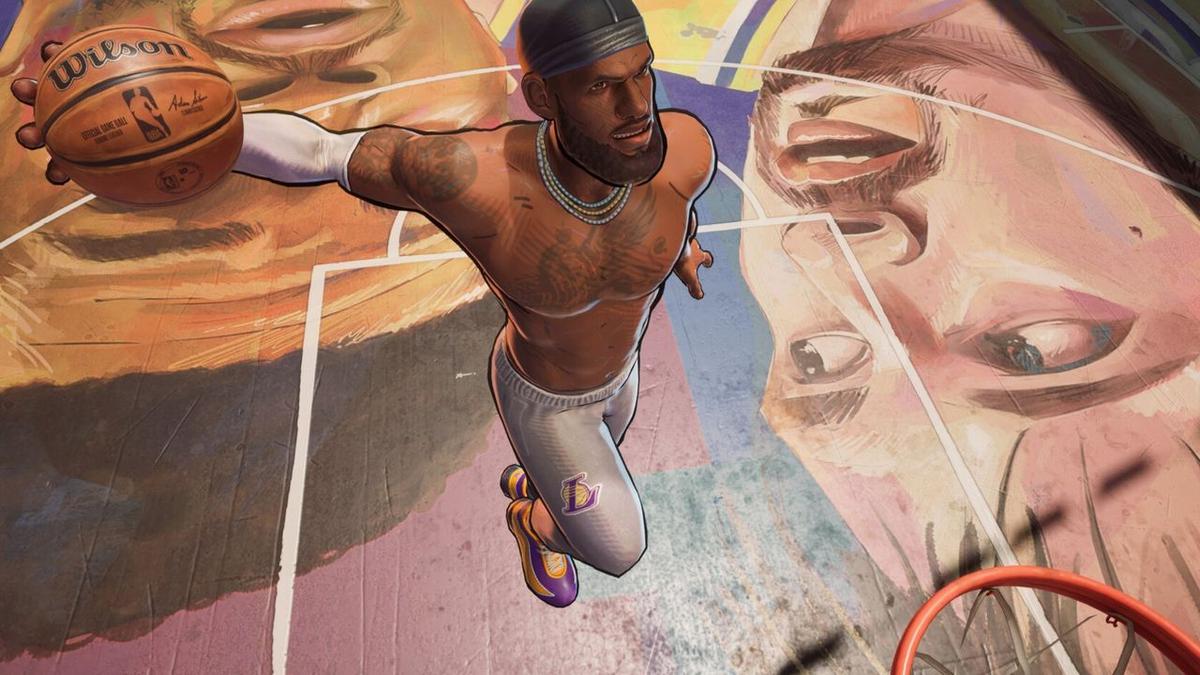
Here is an action shot highlighting the game's stylized, high-flying streetball aesthetic:

The gameplay loop is built around earning "Cred," the in-game currency. By competing in matches and tournaments, players gain Cred to spend in the shop, unlocking stylized jerseys, taunts, and advanced dunk animations.
The Design Dichotomy: Arcade Joy vs. Competitive Sweat
The central tension in NBA The Run lies in the contrast between its presentation and its matchmaking structure. Historically, arcade sports games like NBA Jam or NBA Street succeeded because they offered low-barrier entry points, deep offline modes (such as conquering local courts), and cooperative local play. They were built for couch multiplayer and casual, "all-in-good-fun" sessions.
NBA The Run, conversely, focuses heavily on online multiplayer. The primary mode of play consists of matchmade "Knockout Tournaments" in both Solo and Squad configurations. Because the game lacks substantial offline single-player content (like a franchise mode or street campaign) and offers no tutorial to ease new players into its mechanics, beginners are immediately thrown into the online matchmaking pool.
This setup fosters a highly optimized, competitive environment—referred to by the community and critics like PC Gamer's Justin Wagner as "sweaty." Without offline spaces to practice dribble states or shot timing, casual players must learn under fire, often facing seasoned opponents who exploit optimized meta strategies.
This structural focus changes the psychological player experience:
1. The Casual Expectation: Players enter expecting a laid-back streetball experience, complete with Bobbito Garcia shouting "Ice cream, ice cream!" after a trick.
2. The Competitive Reality: Players are met with intense full-court presses, perfect block timing, and highly coordinated squad play.
Below is an illustration of the street court environments where these intense matchups take place:

Surviving the Sweat: A Guide for Players
Because NBA The Run bypasses traditional tutorial onboarding, players must adapt quickly to survive online matchmaking. Here are key strategies for navigating the competitive landscape:
1. Master Dribble-to-Dunk Transitions
Unlike simulation games where crossovers are used to create space for jump shots, in NBA The Run, dribble moves are primarily used to trigger animations that bypass defender collision. Learning the frames of your signature crossover allows you to slide into a high-flying dunk attempt with minimal window for defensive blocks.
2. Coordinate Squad Roles
In Squad tournaments, playing with random teammates (solo queuing) is highly risky due to the coordinate-heavy defense. Successful squads assign roles:
- The Playmaker: Focused on ankle-breakers and feeding alley-oops.
- The Anchor: Staying near the rim to contest dunks and secure rebounds.
- The Spacer: Positioning for signature jump shots to punish collapsed defenses.
3. Maximize Cred Gains
Spend your early Cred on high-probability animations. Some advanced dunk packages in the shop have shorter contest windups, making them objectively harder to block than default animations.
To see the game's fast-paced execution in action, you can view the official promotional trailer:

Game Design Lessons for Developers
For game developers, NBA The Run serves as a fascinating case study in genre blending. It demonstrates that presentation alone cannot dictate player behavior; systems design will always shape the community culture.
Lesson 1: Onboarding is Critical for Arcade Hybridization
If a game features stylized, casual aesthetics, it will attract casual players. If those players are immediately punished in online-only environments without tutorials, player retention will drop. Developers must include offline tutorial sandboxes or single-player progression campaigns to let players develop mastery before entering competitive matchmaking.
Lesson 2: Matchmaking Filters Must Align with Presentation
When mixing arcade mechanics with esports-level matchmaking, consider implementing tiered match filters. An "Arcade/Casual" queue with modified rules (e.g., relaxed defensive collision, higher shot success margins) alongside a "Ranked/Tournament" queue can help preserve the casual, fun-forward identity of street sports.
In conclusion, while NBA The Run features strong, responsive core gameplay that successfully captures the spirit of classic streetball, its systems push it into an intensely competitive arena. For developers, balancing these two worlds is the ultimate challenge in modern sports game design.