June 15, 2026
6 min read
The Level Design Case for Loading Screens: Why Seamless Isn't Always Better
Key Takeaways
- •Introduction: The Cult of the Seamless World
- •The Psychological Divider: Pacing and Purity
- •World-Building and Narrative Downtime
Introduction: The Cult of the Seamless World
In the current generation of game development, "seamlessness" is treated as the ultimate benchmark of immersion. The transition from the PlayStation 4/Xbox One era to the current generation was heavily defined by the marketing of high-speed NVMe SSDs, promising to eradicate loading screens forever. We were told that breaks in play were the enemy of immersion, a technical relic of the past that we should be glad to leave behind.
However, is seamlessness always a net positive for the player's experience?
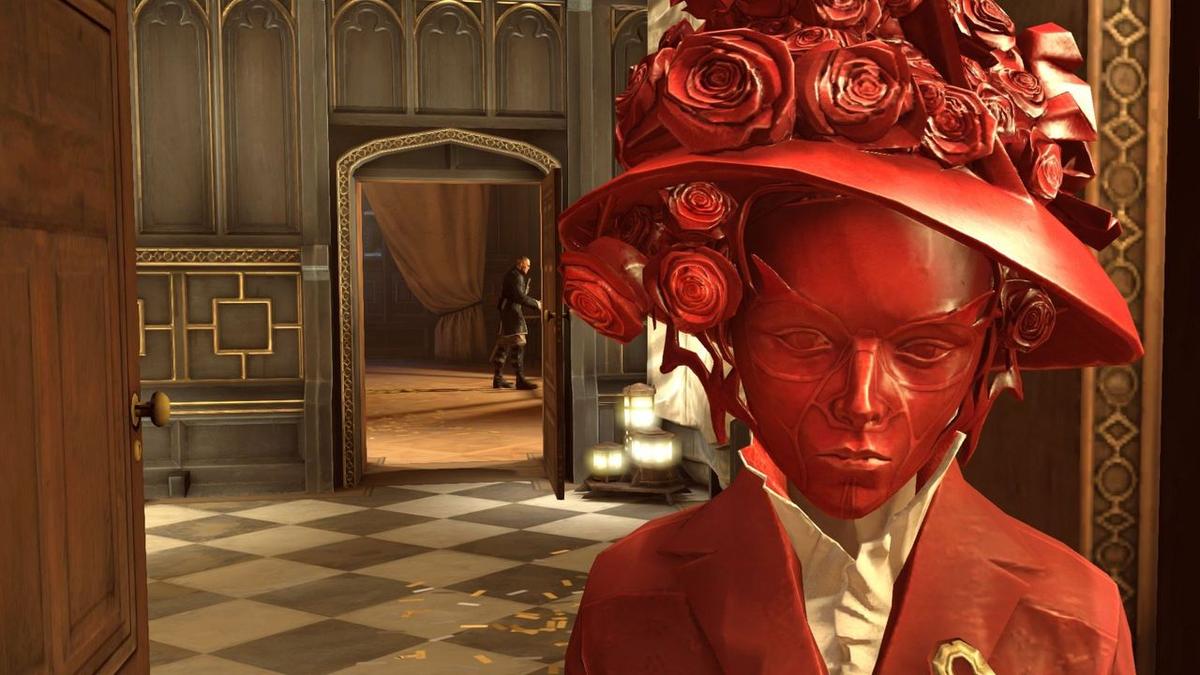
During a recent retrospective stream of Dishonored, co-creative directors Harvey Smith and Raphaël Colantonio revisited the dark, rat-infested streets of Dunwall. As they guided Corvo through the iconic level "Lady Boyle's Last Party," they hit a transition screen. Rather than apologizing for the break in play, Harvey Smith made a surprising defense: "I actually have a soft spot for all that."
Let’s break down the level design, psychology, and technical realities behind why loading screens are not just a technical compromise, but a powerful design tool.
The Psychological Divider: Pacing and Purity
One of Harvey Smith's primary arguments for loading screens is the concept of the "psychological break."
In game design, pacing is everything. An immersive sim like Dishonored relies on high cognitive load. Players are constantly scanning environments for guards, tracking patrol routes, managing mana and health resources, and hunting for collectibles like runes and bonecharms.
When a level is contiguous and endless, the player remains in a constant state of mild tension. There is no natural endpoint to release that tension.
A loading screen acts as a firm, clean punctuation mark. Smith notes that loading screens allow players to feel that one area is finished and they are entering a "new pristine area." It establishes a clear boundary: what happened in the Dunwall streets stays in the Dunwall streets. You survived that segment, your alert levels are reset, and you now step into the opulent, high-society trap of the Boyle estate with a fresh mind and a clean slate.
World-Building and Narrative Downtime
Immersion isn't just about uninterrupted visual stimulus; it's also about cognitive engagement with the setting. Loading screens historically served as key narrative delivery systems.
When the screen fades to black, the game presents:
- High-fidelity concept art that evokes the mood of the upcoming zone.
- Gameplay tips that introduce subtle mechanics the player might have overlooked.
- In-fiction lore notes, diary entries, or quotes from historical figures within the world.

Without these brief moments of downtime, players are rarely willing to stop playing to read menus. The loading screen provides a natural, forced pause where the player's brain is highly receptive to passive world-building. In Dishonored, reading a short lore entry about the Abbey of the Everyman or the whaling industry during a transition does more to paint the picture of Dunwall's society than finding yet another audio log in the middle of a stealth sequence.
Technical Segmentation: State Density vs. Streaming
From a technical standpoint, dividing a game into discrete levels separated by loading screens has massive benefits for game state density.
In Dishonored, the level of simulation is incredibly high. The game tracks the physics state of thrown glasses, the alert level of dozens of guards, the open/closed state of doors, and the location of key items.
If Arkane had built Dunwall as a seamless, streamed open world, the engine would have had to constantly load and unload assets in the background. To keep performance stable, developers of seamless games often have to simplify the simulation state. Objects outside the player's immediate bubble are despawned or reset, guard alert states are cleared, and environments become less interactive.
By enforcing a loading screen, Arkane was able to load the entire level state into memory all at once. This allowed the "Lady Boyle's Last Party" estate to be a dense, highly simulated sandbox where every individual NPC, guard, cup of wine, and chandelier reacted precisely to player actions without the engine chugging or losing track of the world's state.
The Mermaid Flow: Seamless vs. Segmented Gameplay Loop
Let's look at how player tension and cognitive load compare between these two design methodologies:
As illustrated above, a segmented loop allows for a hard reset of tension (the loading screen), returning the player's cognitive state to baseline so the next encounter can feel punchy and fresh.
Trivia: The Cut Evil Dead Scene
In the same retrospective discussion, Smith and Colantonio revealed a fascinating piece of cut content that highlights Arkane’s experimental design philosophy.
During development, the team prototyped an Evil Dead-inspired sequence featuring a scurrying, possessed severed hand. In the horror movie franchise, Ash Williams' severed hand takes on a mischievous, deadly life of its own. Arkane experimented with a similar creepy mechanic in Dishonored.
While it was ultimately cut from the final game to keep the tone aligned with Corvo's supernatural assassin toolkit, it is a testament to the wild, prototyping phase that immersive sims go through. Interestingly, the concept of a powerful severed hand eventually made its way into the lore of Dishonored 2, where the leader of the Howlers, Paolo, carries the severed hand of Vera Moray (Granny Rags) as a talisman to gain supernatural protection.
Here is a look at the game's actual retrospective stream where these details were discussed:

Designing the Future of Transitions
As designers, we must resist the urge to view every technical advancement as a mandatory design upgrade. While seamless worlds are beautiful and technically impressive, the humble loading screen remains a powerful tool for pacing, world-building, and maintaining a dense, high-fidelity simulation.
Sometimes, giving the player a few seconds to look at concept art, read a tip, and take a deep breath is the best thing you can do for their immersion.