Epic Games' "AI-First" Mandate: A New Era for Game Dev

Key Takeaways
- •The "AI-First" Imperative: What Does It Really Mean?
- •Shifting Paradigms: Traditional vs. AI-First Development
- •The Broader Industry Context: A Growing Trend
As game developers, we’re always looking for the next frontier, the tool or technique that will redefine how we create. This week, a significant piece of news from GamesIndustry.biz caught my eye, and it’s a clear signal of the direction a major player is heading: Epic Games has delayed its upcoming Disney collaboration and, more importantly, told its developers to move to an "AI-first" production model.
This isn't just about integrating a new AI tool; it’s a strategic mandate from one of the industry’s titans, the company behind Unreal Engine. For us, this isn't just news; it's a call to action, a signpost for the future of game development.
The "AI-First" Imperative: What Does It Really Mean?
When a company like Epic Games, with its vast resources and influence, declares an "AI-first" approach, it's not a suggestion – it's a fundamental shift in philosophy. It means AI isn't just a supplementary feature; it's being positioned at the core of their development pipeline, from concept to creation.
For developers, this implies:
- Re-evaluating Workflows: Traditional linear workflows are likely to be augmented, or even replaced, by iterative, AI-assisted processes.
- Upskilling and Tool Adoption: Mastering AI tools for asset generation, procedural content, animation, and even code assistance will become paramount.
- Creative Redefinition: The role of the artist, designer, and programmer will evolve, focusing more on guiding AI, refining its output, and maintaining overall artistic vision.
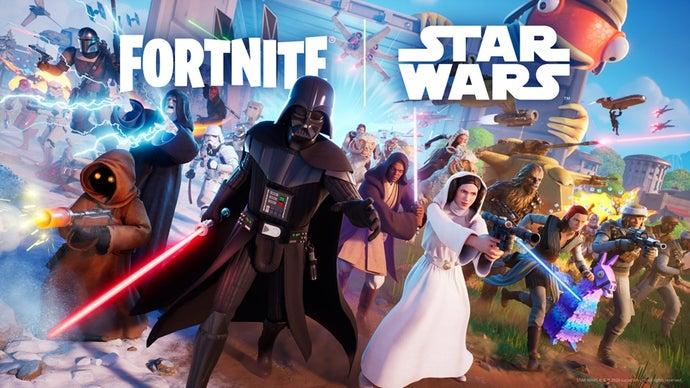
The GamesIndustry.biz article specifically mentions a delayed Disney shooter featuring Marvel and Star Wars characters. While the delay itself is notable, the context of an "AI-first" shift suggests that Epic might be re-evaluating how such a massive IP-driven project can leverage AI to accelerate production, enhance quality, or introduce novel gameplay elements. Imagine AI-generated planets, character variations, or dynamic narrative elements tailored to player choices within these beloved universes.
Shifting Paradigms: Traditional vs. AI-First Development
To truly grasp the magnitude of this shift, let's visualize the difference between a traditional game development workflow and an "AI-first" one:
In the "AI-First" model, human creativity remains paramount in the "Concept and Design" phase, but AI then becomes a powerful force multiplier, automating repetitive tasks, generating variations, and providing iterative feedback loops. This doesn't necessarily mean fewer jobs, but rather a reallocation of effort towards higher-level creative direction and specialized AI expertise.
The Broader Industry Context: A Growing Trend
Epic's directive isn't happening in a vacuum. We've seen a steady drumbeat of AI integration across the industry:
- NVIDIA's RTX Spark: The recent announcement of NVIDIA RTX Spark, combining gaming, creative, and personal AI supercomputing, highlights the hardware capabilities enabling this "AI-first" vision. Their focus on agentic computing and Omniverse for simulations points to powerful tools for developers to leverage.
- Rapid Prototyping: Dragon Quest creator Yuji Horii's claim of making a game with AI in 30 minutes, as reported by GamesIndustry.biz, showcases the speed benefits for ideation and prototyping.
- Xbox Labs: Microsoft's new Xbox Labs initiative, while not explicitly mentioning AI in its initial announcement (as noted by Kotaku), is tasked with exploring "emerging ideas and new technology," which almost certainly includes AI as a central pillar.
These developments collectively paint a picture of an industry rapidly embracing AI not just as a novelty, but as a fundamental component of future development.
Developer's Perspective: Navigating the AI Wave
For individual developers and studios, Epic's stance presents both challenges and immense opportunities.
Challenges:
- Learning Curve: Adopting new AI tools and understanding their optimal integration requires significant investment in learning and training.
- Workflow Integration: Seamlessly weaving AI into existing pipelines without disrupting current momentum will be tricky.
- Quality Control: Ensuring AI-generated content meets artistic standards and maintains consistency with the game's vision will require new oversight mechanisms.
- Ethical and Legal Concerns: Questions around data sourcing, IP ownership of AI-generated assets, and potential biases need careful consideration.
Opportunities:
- Accelerated Production: AI can drastically reduce the time spent on mundane tasks, freeing up developers for more creative problem-solving.
- Unprecedented Scale: Procedural generation powered by AI can create vast, detailed worlds and content that would be impossible to hand-craft.
- Enhanced Iteration: Rapid prototyping and AI-driven testing can lead to faster iteration cycles and more polished experiences.
- New Creative Horizons: AI can enable entirely new forms of gameplay, dynamic narratives, and personalized experiences previously unimaginable.
- Democratization of Content Creation: Powerful AI tools could lower the barrier to entry for smaller teams, allowing them to achieve high production values.
What Should Developers Do Next?
The message is clear: AI is not coming; it's here, and it's becoming foundational. For those of us building games, ignoring this trend is no longer an option.
1. Educate Yourself: Start understanding the core concepts of generative AI, machine learning, and prompt engineering. Resources are abundant.
2. Experiment with Tools: Explore existing AI tools for asset creation (e.g., Midjourney, Stable Diffusion), code assistance (e.g., GitHub Copilot), and even early game generation platforms.
3. Adapt Your Skills: Focus on developing skills that complement AI, such as critical evaluation of AI output, ethical guidelines, and creative direction.
4. Stay Agile: The AI landscape is evolving rapidly. Be prepared to adapt your workflows and toolsets continually.
5. Collaborate and Share: Engage with the developer community, share learnings, and discuss best practices for integrating AI responsibly and effectively.
Epic Games' "AI-first" mandate is a bold declaration, one that will undoubtedly shape the future of game development. It's a challenging but exciting time to be a game creator, and those who embrace this new era with open minds and a willingness to learn will be the ones leading the charge. Let's get to work.
Vikas Singh is a veteran game developer with over 15 years of experience in programming and technical leadership, passionate about leveraging new technologies to create immersive gaming experiences.
At White Cube Studios, we translate technical architecture into shipping systems across our specialized development pillars: