June 16, 2026
6 min read
Designing for Sony's New Hardening Controller Buttons
Key Takeaways
- •Understanding the Tech: Elastomers vs. Fluids
- •1. Magneto-Viscoelastic Elastomers
- •2. Fluid-Filled Membranes
The sensation of pull and push in modern gaming has largely been defined by the Sony DualSense controller. With its adaptive triggers and high-fidelity haptic feedback, developers have been able to communicate tension, friction, and impact in ways that rumble motors never could. But what if that same dynamic tactile response could be applied to the face buttons—or even the thumbsticks?
A new patent application filed by Sony with the World Intellectual Property Organization (WIPO) in November 2024 and published in May 2026 suggests the platform holder is actively researching exactly that. First reported by Cheat Happens and covered by GameSpot, the patent details a controller featuring buttons that can dynamically harden, soften, or change their physical properties based on real-time game states.
As a game developer, this is an incredibly exciting prospect. It moves input design from a one-way street (player presses button, game responds) to a bidirectional tactile loop. Below, I want to explore how this technology works, how we might design games around it, and the programming architectures required to support it.
Understanding the Tech: Elastomers vs. Fluids
According to the details published by GameSpot, Sony's patent outlines a couple of distinct methods for achieving variable button rigidity:
1. Magneto-Viscoelastic Elastomers
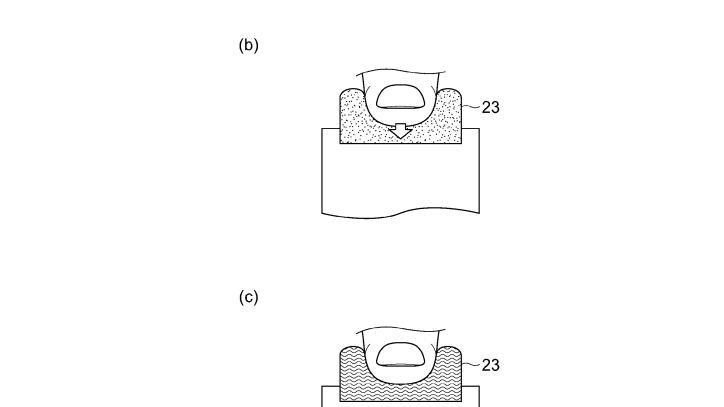
This is the most technically promising and durable approach. The button assembly incorporates a magneto-viscoelastic elastomer—a smart material containing micro-sized magnetic particles embedded in a polymer matrix. When an electromagnetic coil near the button is energized, the magnetic field aligns these particles, instantly increasing the material's shear modulus (stiffness). By modulating the electrical current sent to the electromagnets, developers can precisely dial in the force required to depress the button.
2. Fluid-Filled Membranes
The second approach utilizes fluid-filled chambers beneath the buttons. By controlling the pressure of the fluid inside these membranes, the controller can make a button feel softer or firmer. However, as noted in the source reports, fluid-filled membranes raise serious questions regarding mechanical longevity. Over millions of button presses, micro-leaks or seal failures could render the hardware useless.
For commercial production, the electromagnetic elastomer system is the far more robust choice, offering solid-state durability with negligible wear and tear.
Designing the Haptic Curve: The Game Developer's Sandbox
From a game design perspective, the ability to harden face buttons opens up a new dimension of physical storytelling. We are no longer limited to visual and auditory cues to communicate game state. Here are some of the most compelling gameplay mechanics we could implement:
- Simulating Mechanical Resistance: In a survival horror game, a rusted lever or jammed door could physically resist the player's finger. Pressing the interaction button would require actual physical effort, mirroring the character's struggle.
- Weapon Malfunctions: If a gun jams in a shooter, the firing button could lock completely, refusing to depress. The player would feel the mechanical failure instantly, prompting them to initiate a jam-clearing minigame.
- Fatigue and Stamina Constraints: In a sports or climbing game, as a player's stamina depletes, the sprint button could get stiffer. This physically communicates exhaustion, encouraging the player to rest and pace themselves.
- Dynamic Spell Charging: For magic systems, a cast button could resist initial pressure, slowly softening as the spell charges up, giving a tactile "pop" when the spell is fully primed and ready for release.
The Dynamic Feedback Loop
To make this feel natural rather than jarring, the game engine must constantly update the controller's magnetic field strength in sync with the physics engine and animation states. The communication path flows in a continuous loop:
Engine and API Integration
How would we actually program for this? While the official APIs do not exist yet, we can extrapolate from how Sony's DualSense triggers are managed in modern game engines.
In Unity's Input System or Unreal's Enhanced Input, dynamic button resistance would likely be handled via a custom device command or haptic effect class. Let's look at how a conceptual API implementation might look in C# for Unity:
In a production scenario, we would want to thread these calls carefully. Since haptic updates are physics-dependent, sending high-frequency changes directly from the main game thread could introduce micro-stuttering. Developers will need to utilize asynchronous job systems or dedicated input threads to update the controller's electromagnets at a stable, high frequency (e.g., 200Hz) to ensure smooth transitions between rigidity states.
The Accessibility Mandate: Inclusive Design
While dynamic button resistance is a fantastic tool for immersion, it presents a significant accessibility hurdle. For players with motor function impairments, arthritis, or muscle weakness, a button that physically resists depression could make a game entirely unplayable.
As developers, we must treat this feature as an enhancement, never a hard requirement. If this technology goes mainstream, our design pipelines must include:
1. Global Toggle Options: Players must be able to disable button hardening entirely, reverting the controller to a standard linear resistance profile.
2. Rigidity Scaling: Include a slider in the options menu allowing players to scale the maximum resistance force (e.g., from 0% to 100%) to match their physical comfort levels.
3. Redundant Visual Cues: Ensure that any state communicated via button resistance (like a jammed gun or a charged spell) is also clearly represented on the screen or through audio cues.
Conclusion
Sony’s patent highlights a fascinating trajectory for input hardware. By manipulating the shear modulus of magneto-viscoelastic elastomers, console manufacturers are close to giving developers direct control over the physical tactile state of a controller. As we design for future hardware, we must start thinking about input not just as a set of digital coordinates, but as a dynamic, physical feedback channel.
If you are interested in exploring how to design custom game-feel systems or want to discuss integration patterns for next-gen haptic inputs, feel free to reach out via my contact page.