June 12, 2026
7 min read
Crimson Desert & The Triumph of Custom Engines in 2026
Key Takeaways
- •The Financial Math of Custom Engines
- •Tailoring Tech to Design
- •Single-Player Resiliency in the Modern Market
For the past few years, the game development industry has felt like it is undergoing a process of rapid, monocultural consolidation. One by one, major studios have announced that they are retiring their proprietary game engines. From CD Projekt Red setting aside REDengine to Crystal Dynamics retiring foundation technology, the consensus seemed clear: maintaining custom engine tech in the modern era is too expensive, too talent-limiting, and ultimately a losing battle against the juggernaut that is Unreal Engine 5.
But then comes Pearl Abyss.
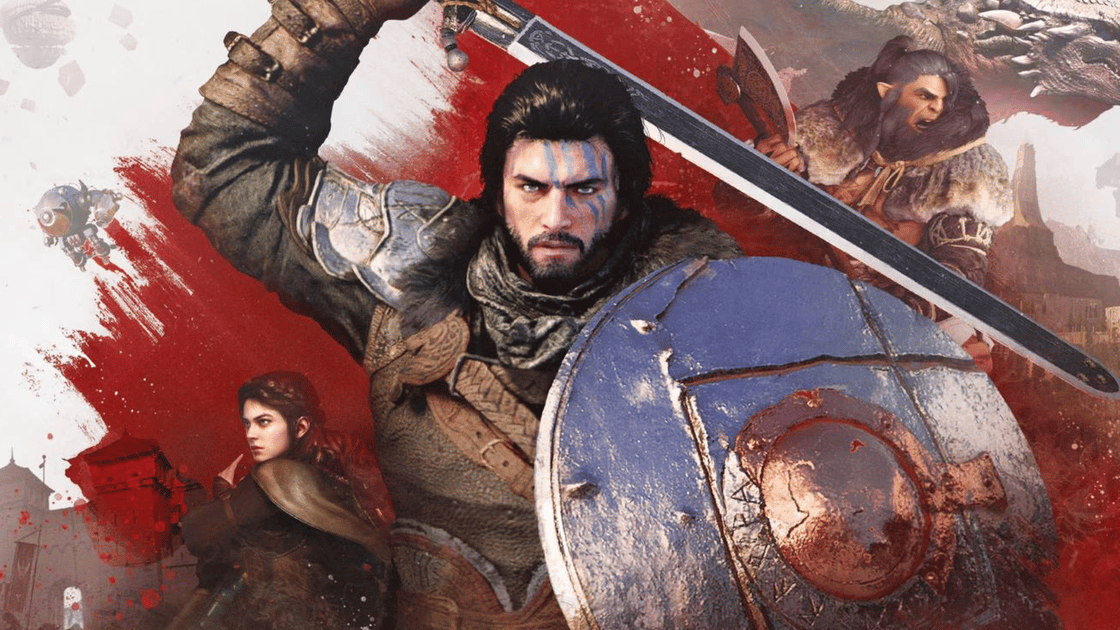
According to recent data published by Game Developer and market analysts Circana, Pearl Abyss's open-world action-RPG, Crimson Desert, has officially surpassed 6 million copies sold worldwide as of June 2026. Reaching this milestone in just 83 days after its March 19, 2026 launch—with 2 million copies sold on day one and 5 million in its first month—Crimson Desert has become the number two best-selling game in the United States year-to-date.
This isn't just an incredible commercial success story for South Korean game development. For engine programmers and technical directors, this is a monumental proof-of-concept. Crimson Desert was built entirely on the BlackSpace Engine, Pearl Abyss's proprietary, in-house game engine. In an era where off-the-shelf software is the default, Pearl Abyss has proved that custom technology can still deliver massive commercial and technological triumphs.
The Financial Math of Custom Engines
The decision to build and maintain a proprietary engine is often discussed in purely technical terms, but the business case is equally compelling. When a studio licenses Unreal Engine, they agree to pay a 5% royalty to Epic Games on gross revenue after the first $1 million.
Let’s look at the math for Crimson Desert. At 6 million copies sold, assuming a standard AAA pricing model averaging $70 USD, the game has generated approximately $420 million in gross revenue. Under Epic's standard licensing terms, Pearl Abyss would owe Epic Games roughly $21 million in royalties.
For a mid-to-large studio, $21 million is not pocket change. That is enough to fund a significant portion of a pre-production cycle for a new IP, hire dozens of high-caliber engineers, or fully cover the research and development costs of the proprietary engine itself. By keeping their engine in-house, Pearl Abyss keeps that capital within their own walls, directly raising their margins and funding their upcoming DLC and expansion plans scheduled between June and September 2026.
Tailoring Tech to Design
The technical argument for off-the-shelf engines is that they allow designers to start building games immediately rather than writing rendering pipelines from scratch. However, general-purpose engines must support everything from mobile puzzle games to next-gen shooters. This generality introduces overhead.
A custom engine, by contrast, is a hyper-specialized tool. The BlackSpace Engine was architected with a singular focus: rendering vast, seamless open worlds with dense foliage, high-speed physics-based combat, and dynamic destruction.
When you play Crimson Desert, the engine's benefits are immediately apparent:
- Zero-Stutter Streaming: General-purpose engines frequently struggle with asset streaming and shader compilation stutter (a persistent issue in many UE5 releases). Because Pearl Abyss controls the low-level memory layout and resource loading systems, they can optimize streaming pipelines specifically for Crimson Desert's rapid traversal mechanics.
- Bespoke Animation Pipelines: The game's fluid combat, which blends martial arts, environmental interaction, and grapple mechanics, requires extremely low-latency animation blending and physics calculations. A custom physics and animation wrapper allows for precise tick-level adjustments that would be difficult to implement inside a sealed commercial engine.
- Targeted Optimization: Instead of struggling to optimize a massive, general-purpose codebase, Pearl Abyss's rendering team can optimize directly for their target platforms, stripping out unused systems to maximize CPU and GPU occupancy.
By building their own engine, the team didn't have to bend their design to fit the engine; they built the engine to elevate their design.
Single-Player Resiliency in the Modern Market
Beyond the technical achievements, Crimson Desert's success reflects a broader industry trend. Data from S&P Global Market Intelligence indicates that global game content revenue grew by 3.6% to $54.14 billion in Q1 2026, marking the seventh consecutive quarter of year-over-year growth. Analysts highlight that this growth is heavily bolstered by a persistent, strong demand for high-quality, premium single-player games.
While many Western publishers spent the last decade chasing the highly volatile live-service market—often resulting in catastrophic studio closures and project cancellations—studios in South Korea and China have realized that there is a massive, underserved audience hungry for rich, single-player experiences.
Pearl Abyss is capitalizing on this by planning continuous post-launch support. Rather than shifting to a live-service grind, they have announced a roadmap of story refinements, combat updates, cross-save functionality, and new DLC releasing throughout the summer of 2026. This approach respects the player's time and money while maintaining a healthy, long-tail sales curve.
The Geopolitical Shift in AAA Engineering
For decades, the peak of AAA game technology was concentrated in North America and Western Europe. However, the success of Crimson Desert, alongside other East Asian blockbusters, indicates a major shift in where the industry's technical leadership resides.
Studios in South Korea and China are demonstrating a willingness to tackle high-risk, high-reward engineering challenges that Western studios are increasingly avoiding. While many Western teams are bogged down by legacy technical debt, management reorganizations, and engine migrations, teams like Pearl Abyss are showing the benefits of long-term technical stability. They have been refining their engine tech for years, and that deep, institutional knowledge is visible in the sheer polish and scale of their games.
Finding the Right Path for Your Studio
This doesn't mean that every indie team or mid-sized studio should immediately start writing a custom engine. Unreal Engine 5 and Unity are phenomenal tools that democratize game creation, allowing small teams to achieve visual fidelity that was impossible a decade ago.
But for studios scaling up to AAA, Crimson Desert's success is a reminder that we shouldn't view engine monoculture as an inevitability. Maintaining a proprietary engine requires a massive commitment to R&D, a dedicated tools team, and a willingness to solve hard math problems. But when executed with precision, it offers creative independence, significant financial savings, and a technical competitive advantage that no off-the-shelf engine can replicate.
As we look toward the future of game platforms and hardware, keeping engine diversity alive is critical for the health of our industry. It pushes technology forward and prevents a single vendor from dictating the terms of game creation.
If you are evaluating your studio's tech stack, building custom tools in Unity/Unreal, or want to discuss the architecture of proprietary rendering pipelines, let’s connect on my contact page.