June 26, 2026
7 min read
Beyond the Dodge Roll: Combat in Sword Sage: Awakening
Key Takeaways
- •The Combat Flow: Decoupled State Architecture
- •Standard Input Buffering vs. Performance-Tuned Ring Buffer
- •Naive Implementation (Allocation Heavy)
Beyond the Dodge Roll: Combat in Sword Sage: Awakening
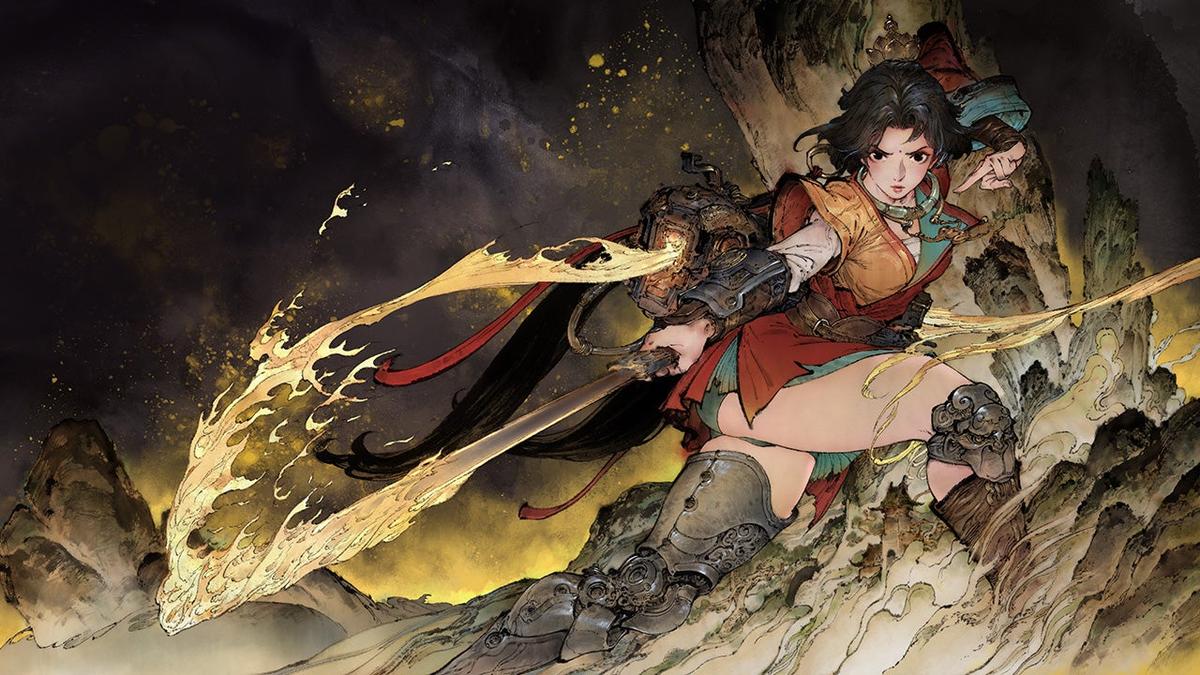
The recently released hands-on previews for Sword Sage: Awakening—an upcoming amber-punk action-RPG developed using Unreal Engine 5—have ignited a fascinating discussion among combat designers. Set in a fantastical version of the Shu region where ancient Chinese mythology clashes with advanced mechanical prosthetics, the game centers on San Niang, a novice disciple of the Yuangong Sect.
While the aesthetic is striking, what really sets the game apart is its mechanical approach to defense. Unlike typical Souls-likes that rely on invincibility frames (i-frames) during a standard dodge roll, Sword Sage: Awakening abandons the dodge roll and parry entirely in favor of a rhythmic, direction-based side-step evade and counter system.
From a systems engineering perspective, implementing a system like the game's core "Evade Cyan, Strike Red" loop requires a highly responsive, low-latency, and zero-allocation input buffering system. When a player side-steps a sweeping slash and counters within a 150ms window, garbage collection spikes are unacceptable. Let's break down how we can design and program this combat state machine and input buffer in Unity C# to achieve absolute frame rate stability.
The Combat Flow: Decoupled State Architecture
To keep our codebase scalable and maintainable, we must decouple raw input processing from the actual combat execution state. We achieve this by combining the Observer Pattern (using C# Events and Delegates) with a State Pattern for the combat behavior.
Here is the flow of the combat state transition during a typical evade-and-strike exchange:
By separating the input detection from the state transition, we can swap out the input buffer logic entirely (e.g., for different platforms or AI agents) without touching the core combat states.
Standard Input Buffering vs. Performance-Tuned Ring Buffer
A naive approach to input buffering usually involves allocating objects dynamically inside a list or queue every frame. This allocation-heavy code creates significant heap churn, leading to Garbage Collector (GC) latency spikes that ruin the tight responsiveness required for precise combat.
Naive Implementation (Allocation Heavy)
Below is a typical, non-optimized implementation of an input buffer using dynamic lists and heap allocations:
Big O Analysis (Standard):
- Time Complexity: $O(N)$ for cleanup where $N$ is the number of inputs in the list.
- Space Complexity: $O(N)$ with continuous heap allocations causing garbage collector overhead.
Performance-Tuned Circular Ring Buffer (Zero Heap Allocation)
To eliminate GC spikes, we must use value types (`struct`) and a fixed-size circular buffer. This ensures that memory is pre-allocated on the stack or inline within a single array allocation, resulting in absolute zero heap allocations during combat gameplay loop execution.
Here is the high-performance Unity C# combat input buffer:
Big O Analysis (Optimized):
- Time Complexity: $O(1)$ for insertion, $O(K)$ for lookup where $K$ is the fixed buffer size (typically constant, $K \le 8$).
- Space Complexity: $O(1)$ stack/pre-allocated memory. Absolutely zero GC garbage generation during runtime.
Unit Testing & Error Handling Strategy
When engineering a combat engine for 3D game development services, robustness is as important as speed. To maintain codebase integrity, we use unit testing to validate our buffer state transitions.
Here is the unit testing suite for the input buffer:
Delivering Elite Game Development Services
Designing mechanics like the side-step evade system in Sword Sage: Awakening is what elevates a project from a generic action-RPG to an immersive, responsive masterpiece. However, translating beautiful animations into seamless, low-latency combat requires deep technical engineering.
If you are looking to build a high-performance 3D action title or optimize your existing combat state systems, partnering with a specialized game development services company is critical. As the best game developer in India, I specialize in custom mobile game development services, Unity game development services, and game performance optimization. From designing tight player mechanics to engineering zero-allocation backend and gameplay systems, I ensure your game is optimized for both desktop and mobile platforms.
Whether you need to outsource mobile game development or require game design and development services to audit your rendering and physics pipelines, let's connect. I work closely with studios globally to deliver premium, production-ready systems that scale.