June 17, 2026
7 min read
Architecting Audacious Worlds: Narrative Integration and Spatial Mechanics in Boomer Shooters
Key Takeaways
- •1. The Monochromatic Rubber-Hose Rendering Pipeline
- •2. Implementing Non-Euclidean Space: 'The Unknown'
- •3. Architecting an Unobtrusive Narrative Engine
Architecting Audacious Worlds: Narrative Integration and Spatial Mechanics in Boomer Shooters
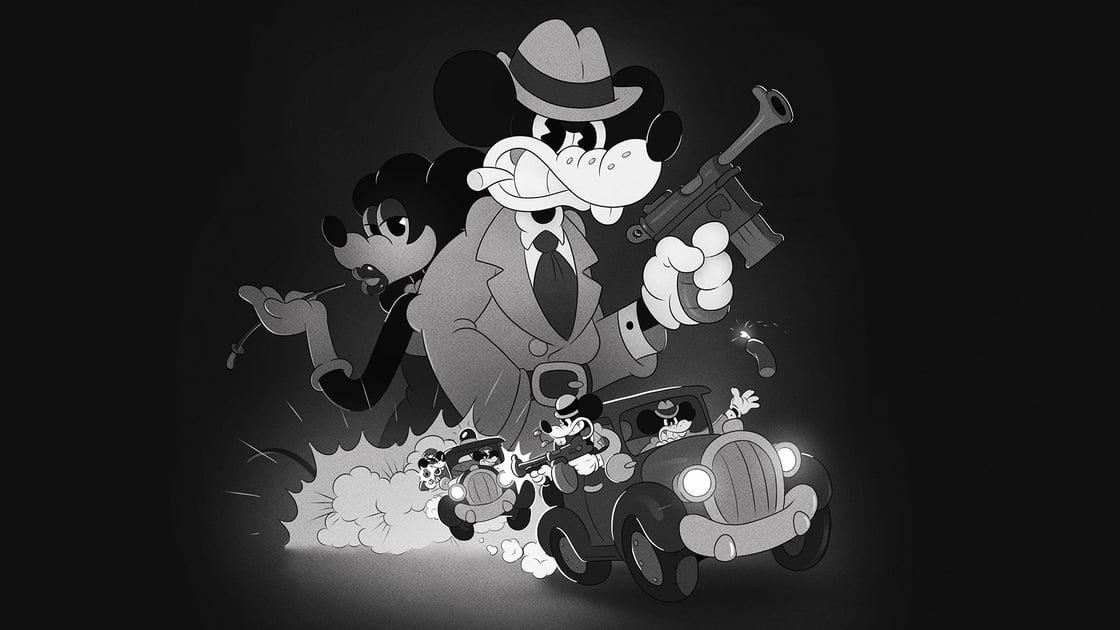
Traditional first-person "boomer shooters" of the 1990s prioritized speed and gunplay over storytelling, often reducing narratives to a simple text screen between levels. However, Fumi Games' debut title Mouse: P.I. For Hire challenges this paradigm. Under the leadership of CEO Mateusz Michalak and lead narrative designer Mateusz Lechowski, the studio has built a pastiche that fuses a classic 1930s Film Noir detective story with high-octane shooting action. By placing players in the shoes of "Jack," a mouse detective investigating a deep conspiracy in the metropolis of Mouseburg, Fumi Games demonstrates that robust worldbuilding and character-driven investigations can elevate shooter design. In this guide, we analyze the technical architecture required to integrate complex worldbuilding, rubber-hose art pipelines, and cosmic horror mechanics into a high-speed FPS without disrupting player flow.
1. The Monochromatic Rubber-Hose Rendering Pipeline
Achieving the look of 1930s rubber-hose animation in a real-time 3D environment requires a specialized rendering pipeline. Inspired by the classic shorts of Fleischer Studios (such as Swing You Sinners!, Minnie the Moocher, and Shiver Me Timbers), the aesthetic combines 2D hand-drawn character billboards (flipbook sprites) with stylized 3D environments.
To implement this rendering pipeline, developers can employ:
- Screen-Space Cel Shading: Custom shader passes that calculate lambertian lighting and step the values to restrict the grayscale range. This process creates the distinct high-contrast, black-and-white look of vintage cartoons.
- Dynamic Film Grain and Flicker: A post-processing shader that offsets texture coordinates randomly to simulate vintage film gate noise, dust scratches, and camera shake, creating an authentic 1930s cinematic atmosphere.
- Billboard Sprite Animation Controller: To synchronize 2D animations (with lower framerates like 12 or 24 FPS) with the game's physics loop running at 60+ FPS. This ensures smooth player movement while preserving the traditional feel of hand-drawn animation.
- Depth-Based Edge Detection: A Sobel filter filter in screen space to draw the bold black outlines characteristic of classic ink-and-paint cartoons. This visual separation helps clarify character models against complex 3D backdrops.
By optimizing these rendering passes, developers can maintain the high framerates required for boomer shooters while delivering a striking, cohesive visual pastiche.
2. Implementing Non-Euclidean Space: 'The Unknown'
In Mouse: P.I. For Hire, the investigation moves from the mundane corruption of Mouseburg into a supernatural dimension called "The Unknown." Inspired by Remedy Entertainment's surreal worlds, David Lynch's cinematic dreamspaces (like Twin Peaks), and the cosmic horror of True Detective, the level design employs non-Euclidean geometry and seamless space transitions to convey cosmic horror.
To implement portal-based non-Euclidean transitions, developers must architect a portal camera rendering subsystem:
1. Trigger Zones: Set up trigger colliders around the portal boundary.
2. Camera Projection Matrix Alignment: Place a virtual camera at the destination portal. Update its projection matrix and view matrix relative to the player's position from the source portal.
3. Render Target Projection: Render the destination camera to a temporary Render Texture. Project this texture onto a screen-space aligned mesh inside the portal frame.
4. Teleportation State Machine: When the player crosses the portal plane, execute a coordinate transform to smoothly update the player's position, rotation, and velocity vector.
This portal architecture allows designers to create impossible spaces and transitions that disorient the player, reinforcing the cosmic horror narrative theme.
3. Architecting an Unobtrusive Narrative Engine
A core challenge Lechowski noted was "to make a noir story that fits a boomer shooter... and doesn't interfere with running and gunning." Doing "cheese bumps" with corrupted politicians or tracking down missing stage magician Steve Bandel requires a flexible narrative system.
A "no-interruption" narrative architecture relies on the following design patterns:
- Environmental Storytelling Triggers: Placing dynamic audio logs, radio broadcasts, and character dialogs (featuring characters like Tammy Tumbler or Cornelius Stilton) that play directly in the game HUD without freezing player movement.
- Dynamic Clue Database: Clues gathered during levels are stored in a serialized data container. Collecting clues unlocks new dialogue choices and triggers level events automatically.
- Dialogue Graph System: Utilizing node-based state graphs (e.g., customized XNode or Behavior Trees) to manage conversation flow. NPC dialogues can branch dynamically based on the state of the Clue Database.
- Decoupled Event Listeners: Implementing an event-driven system where narrative progression fires events (e.g., `OnBettyLynchClueFound`) that local level systems listen to, spawning specific enemy waves or unlocking locked security doors.
This event-driven dialogue flow ensures that narrative progression does not stall the momentum of fast-paced FPS gameplay loops.
4. Systemizing Faction Systems and Political Metaphors
The narrative backdrop of Mouse: P.I. For Hire touches on heavy themes: worker strikes, asylum abuses, and the fascist Big Mouse Party (BMP) cooperating with local police to oppress the marginalized Shrew population (inspired by real-world events like the Tulsa race massacre of 1921). While the game uses "Fantastic Racism" (mice vs. shrews), systemizing these relationships in-engine requires a robust Faction System.
Developers can implement a Faction System with the following architecture:
- Reputation Matrices: A 2D lookup table of float values indicating the affinity between the player and various factions (Mice, Shrews, Police/BMP).
- Influence Triggers: Code that adjusts faction values based on player choices or key narrative completions (e.g., defending the "Shrew Thicket").
- Spawn Managers: A system that reads the player's affinity and dynamically swaps enemy archetypes or spawns helper NPCs in the levels.
By encoding narrative relationships into faction variables, technical directors can construct game worlds where player decisions have measurable gameplay consequences.
5. Case Study: Faction Allegiance and Spatial Control
To understand the interaction of these systems, let us review the workflow of a typical level design blockout in Mouseburg. As Jack investigates the abduction of shrews, the player must navigate the Shrew Thicket district, which is under police blockade.
The level design incorporates:
1. Infiltration Phase: The player navigates stealthily or aggressively through police lines. The faction system tracks player hostility, shifting police aggro states from "Suspicious" to "Lethal."
2. Investigation Phase: Jack interacts with NPC Wanda Fuller to gather intelligence. The dialogue engine query verifies that the player has collected the required clue files, unlocking the next progression node.
3. Climax Phase: The player defends a Shrew stronghold from a BMP raid. Level triggers listen for the raid completion event, updating the global Faction Matrix to grant the player access to the next district.
6. Narrative Design Guidelines for Action-Heavy Games
To ensure that worldbuilding enhances rather than detracts from the gaming experience, developers should follow these core guidelines:
- Prioritize Gameplay Continuity: Never lock user controls for exposition unless absolutely necessary for a cinematic climax. Show, don't tell, through environmental details.
- Isolate Narrative State: Keep the narrative database fully decoupled from visual presentation to facilitate easier debugging.
- Maintain Stylistic Rigor: Ensure rendering shaders are optimized; complex edge-detection and custom post-processing can quickly consume performance budgets.
By adhering to these architectural guidelines, developers can create compelling, complex worlds like Mouseburg that respect the player's agency and maintain the high-octane fun of the boomer shooter genre.