June 12, 2026
6 min read
Why Traditional Game Publishing Deals Are Becoming Obsolete
Key Takeaways
- •The Legacy Recoupment Trap
- •The Developer-Led Alternative
- •Mitigating Litigation in the Indie Space
For decades, the video game publishing model has operated under a rigid set of rules: a developer provides the code and creative vision, while a publisher provides the capital, handles marketing, and in exchange, takes a massive cut of the revenue, claims intellectual property (IP) ownership, and dictates the release timeline. For a long time, this was simply the cost of doing business. But in 2026, the cracks in this legacy foundation are widening into a chasm.
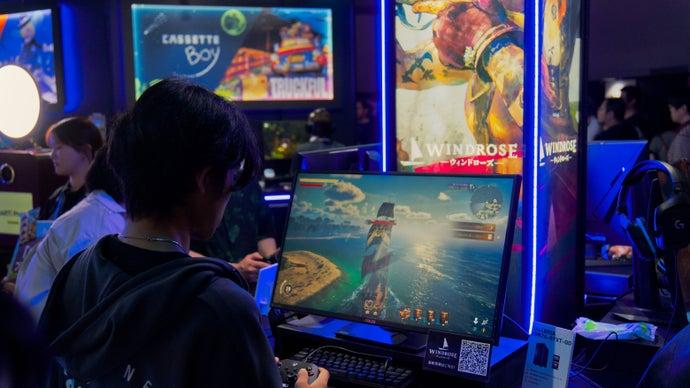
At BitSummit 2026, John Buckley, the head of publishing and communications at Pocketpair (the studio behind Palworld), laid out a damning critique of this traditional system. He argued that the rigid terms and deal structures offered by legacy publishers have "increasingly become irrelevant to what the industry is today."
As a game developer, Buckley's words resonate deeply. We are witnessing the rise of an indie publishing revolution. Successful independent studios are no longer just self-publishing; they are establishing their own publishing arms—like Outersloth, Landfall, Ghost Ship Publishing, and Pocketpair Publishing—to offer developers a fairer, more sustainable path to market. It is time to analyze the engineering and business realities of why traditional deals are obsolete, and what the developer-led future looks like.
The Legacy Recoupment Trap
To understand why the traditional model is failing, we have to look at how publishing contracts have historically been structured. The most predatory element of traditional publishing deals is the recoupment structure.
In a standard contract, a publisher advances a development budget. Once the game launches, the publisher recoups 100% of that budget from the game's initial sales before the developer sees a single cent. Because the publisher also takes a distribution fee and platform holders (like Steam, Sony, or Microsoft) take their 30% cut, the developer’s actual share of early sales is effectively zero. If a game underperforms or barely breaks even, the developer earns nothing, often forcing the studio to shut down despite launching a functional project.
This structure starves developers of cash flow during the critical early lifecycle of their game. It also shifts all the financial risk onto the developer’s longevity while the publisher mitigates risk across a wider portfolio.
The Developer-Led Alternative
Developer-led publishers are turning this model on its head. Pocketpair Publishing, established in early 2025, is a prime example of this shift. During his BitSummit address, Buckley highlighted how they are structuring deals to prioritize developer sustainability.
Instead of a 100% recoupment rate, Pocketpair's deals typically involve a 30–40% recoup rate. This means that from the very first copy sold, the developer receives 60–70% of the revenue split, allowing them to fund ongoing patches, community management, and live-ops immediately. You do not have to wait for the entire development budget to be paid back to start keeping your studio afloat.
Furthermore, developer-led publishers are offering clauses that would have been unthinkable to legacy giants:
- No IP Grabs: The developer retains 100% ownership of their intellectual property. The publisher has no claim on sequels or merchandise.
- Amicable Exits: Contracts include provisions that allow developers to end the publishing partnership if the relationship is no longer working, preventing developers from being locked in legal limbo.
- Support, Not Control: The publisher acts primarily as a marketing and platform-support agency, leaving all creative control in the hands of the developers.
This model treats the publisher not as a gatekeeper or owner, but as a specialized service provider.
Mitigating Litigation in the Indie Space
Transitioning to this independent, developer-led model does not mean escaping the realities of industry conflict. Pocketpair's own journey illustrates the immense pressure that indie studios face when challenging legacy giants.
Since September 2024, Pocketpair has been locked in a high-profile patent infringement lawsuit with Nintendo. At BitSummit, Buckley admitted that the ongoing legal battle has been difficult and has "impacted morale" within the studio. However, their response to this pressure offers a masterclass in agile development and litigation mitigation.
Rather than folding, Pocketpair has executed proactive gameplay updates to distance Palworld from Nintendo’s patent claims:
1. Sphere-Throwing Mechanics: In December 2024, the team modified the core mechanic of throwing capture spheres to catch creatures, replacing or altering the specific patented actions.
2. Pal-Gliding Mechanics: In May 2025, they eliminated the specific glider mechanics that Nintendo asserted infringed on their patent portfolio.
By implementing these preventive changes, Pocketpair has significantly weakened Nintendo’s position. As of June 2026, Nintendo has narrowed the lawsuit to focus only on older, unpatched versions of the game. With the court hearing scheduled for October 1, 2026, legal experts suggest that Nintendo faces a steep uphill battle due to Pocketpair’s swift, technical adaptability. For indie devs, this proves that maintaining control of your game’s codebase and design allows you to navigate legal threats that would sink a developer bound by a legacy publisher's rigid production schedule.
The Borderless Future of Funding
Buckley’s vision culminates in what he describes as a "borderless future" for game development. In this future, the traditional lines between regional markets and publishing tiers are dissolved.
Indie developers are no longer forced to pitch to a handful of Western or Japanese legacy publishers. Instead, they are leveraging a decentralized web of incubators, public cultural grants, creator-led networks, and developer-led publishers. By bypassing traditional gatekeepers, games are funded more ethically, developed more freely, and brought to global audiences without sacrificing the studio's independence.
The future of game publishing is not about control; it is about service. Publishers who refuse to adapt their recoupment terms and IP demands will find themselves shut out by a generation of developers who know their worth.
If you're an indie developer exploring new publishing models, or want to share your thoughts on the shifting publisher landscape, I'd love to hear from you—let's chat on my contact page.