July 28, 2026
9 min read
Architecting Secure AI: Leveraging Open Source Principles for Game Development
Key Takeaways
- •The Foundational Role of Open Source in Game AI Security
- •Cybersecurity as a Direct Beneficiary of Open Source
- •Architecting for Observable AI Systems
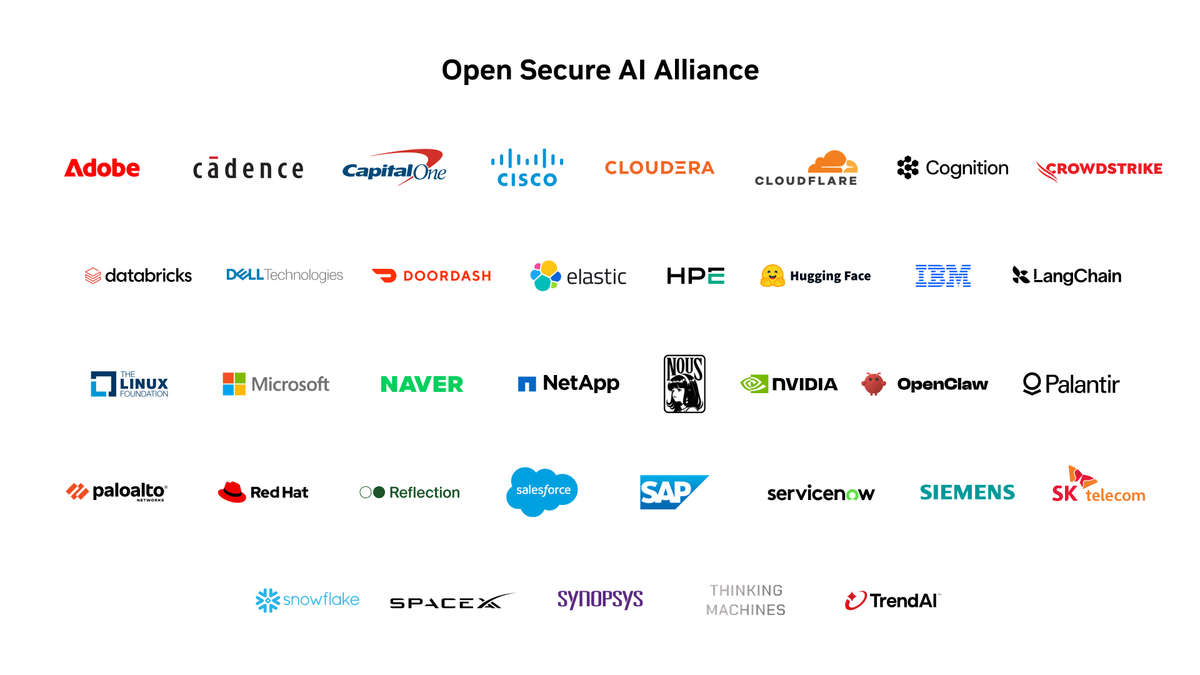
As the integration of Artificial Intelligence into game development becomes increasingly sophisticated, ensuring the safety and security of these AI systems is paramount. The recent formation of the Open Secure AI Alliance, bringing together industry leaders, underscores a critical industry-wide recognition of this need. This alliance champions open source software as a fundamental pillar for establishing robust AI safety and security, emphasizing that open source makes technology "accessible and observable to communities of experts," thereby significantly benefiting cybersecurity.
For technical directors and senior game developers, understanding and applying these principles is no longer optional. This guide will delve into how the foundational tenets advocated by the Open Secure AI Alliance—namely, the power of open source software, enhanced observability, and community-driven cybersecurity—can be strategically integrated into game development pipelines to create more secure, transparent, and resilient AI-powered experiences.
The Foundational Role of Open Source in Game AI Security
The Open Secure AI Alliance's core premise is that open source software is a "critical pillar of the global economy," underpinning vital sectors like cloud computing, financial services, and telecommunications. This is largely due to its inherent ability to make technology "accessible and observable to communities of experts." In the context of game development, this translates directly to how we approach AI.
When AI models, frameworks, or even specific algorithms are developed with open-source principles, they become transparent. This transparency is a double-edged sword that, when managed correctly, heavily favors security. It allows for:
- Peer Review and Scrutiny: Unlike black-box proprietary systems, open-source AI components can be examined by a broad community of developers, researchers, and security experts. This collective scrutiny is invaluable for identifying subtle bugs, vulnerabilities, and potential biases that might otherwise go unnoticed.
- Rapid Vulnerability Identification and Patching: An active open-source community can quickly discover security flaws and collaborate on fixes, often leading to faster patch cycles than closed-source alternatives. This agility is crucial in an environment where new adversarial AI techniques are constantly emerging.
- Knowledge Sharing and Best Practices: Open-source projects naturally foster a culture of shared knowledge. Developers can learn from each other's implementations, contribute to common libraries, and collectively elevate the standard of AI security practices across the industry.
Consider the complexity of modern game AI, from sophisticated NPC behaviors driven by machine learning to dynamic content generation and adaptive difficulty systems. An opaque AI system can harbor unknown vulnerabilities, leading to exploits, unpredictable behavior, or even unintended negative player experiences. By embracing open-source methodologies, game developers can democratize the security audit process, enhancing trust and reliability.
Figure 1: The virtuous cycle of open source principles contributing to robust game AI systems.
Cybersecurity as a Direct Beneficiary of Open Source
The scraped source explicitly states that "Cybersecurity is among the top three beneficiaries of open source software." This is not merely an observation but a directive for how we should approach AI security in games. The mechanisms through which open source bolsters cybersecurity are directly applicable to AI systems.
For game AI, cybersecurity concerns extend beyond traditional network exploits. They include:
- Adversarial Attacks on AI Models: Malicious actors might attempt to manipulate AI inputs to force unintended outputs, such as making an enemy AI ignore a player or granting an unfair advantage. Open-source models, when properly reviewed and hardened, can be more resilient to these attacks because their internal workings are understood and secured by a community.
- Data Poisoning: AI models trained on compromised or maliciously altered data can lead to skewed behaviors or security flaws. Open-source data pipelines and validation tools can help ensure the integrity of training datasets.
- AI Exploitability: In competitive multiplayer games, an AI that can be predictably manipulated by players creates an unfair environment. Open development and security reviews can identify and mitigate such predictable patterns before they become widespread exploits.
To leverage this benefit, game development teams should:
1. Utilize Vetted Open-Source AI Libraries: Instead of building every AI component from scratch, integrate well-established and community-vetted open-source libraries (e.g., TensorFlow, PyTorch, Hugging Face transformers) for core AI functionalities. These often have dedicated security teams and a large user base reporting issues.
2. Contribute to Open-Source Security Audits: Participate in the broader security community by contributing to audits of open-source AI tools your studio uses. This not only improves the tools but also fosters internal expertise.
3. Implement Security-by-Design for AI: Treat AI components as critical security surfaces. Conduct threat modeling specific to AI, considering how an AI could be misused or compromised, and design safeguards from the outset.
Architecting for Observable AI Systems
The concept of "accessible and observable" is key. While accessibility refers to the availability of source code, observability is about the ability to understand the internal state and behavior of an AI system during runtime. For game AI, this is crucial for debugging, performance optimization, and, most importantly, security.
An observable AI system in a game context means:
- Comprehensive Logging and Telemetry: Implementing robust logging for AI decisions, state changes, and interactions within the game world. This data is vital for post-mortem analysis of anomalous behavior or suspected exploits.
- Real-time Monitoring and Diagnostics: Developing tools to monitor AI performance and behavior in real-time, both during development and live operations. This can include visualization of AI perception, decision trees, or neural network activations.
- Reproducible AI Behavior: Ensuring that AI behavior can be reliably reproduced under specific conditions, which is essential for debugging security vulnerabilities and validating fixes.
- Auditability: The ability to trace an AI's decision-making process back to its inputs and internal logic. This is critical for compliance and for understanding why an AI might have acted in an unexpected or exploitable way.
Open-source tooling often provides excellent foundations for observability. Libraries for metrics collection (e.g., Prometheus exporters), logging frameworks (e.g., Log4j, Serilog), and distributed tracing systems (e.g., OpenTelemetry) can be integrated to provide deep insights into AI systems. Furthermore, internal development of AI-specific debugging tools should prioritize exposing internal states and decision pathways in a clear, actionable manner.
Figure 2: An architectural view of observability layers for game AI, feeding into security analysis.
Fostering an Expert Community for Game AI Security
The notion of "communities of experts" is a cornerstone of the open-source philosophy. For game developers, this means actively engaging with and contributing to the broader AI and cybersecurity communities. This collaborative approach can significantly bolster the security posture of AI in games.
How game studios can engage:
- Share Research and Findings: Within the bounds of proprietary game mechanics, studios can share generalizable research on AI security vulnerabilities and mitigation strategies. This could involve publishing whitepapers, presenting at conferences, or contributing to open-source discussions.
- Collaborate on Shared Challenges: Many AI security challenges (e.g., robust anti-cheat AI, secure procedural generation, fair matchmaking AI) are common across the industry. Collaborative efforts, perhaps even through initiatives like the Open Secure AI Alliance, can lead to shared solutions and best practices.
- Internal Knowledge Sharing: Encourage internal teams to cross-pollinate knowledge between AI development, game design, and security engineering. Regular security reviews focused specifically on AI components are vital.
- Talent Development: Invest in training developers on AI security principles and open-source contribution practices. This builds internal expertise and empowers teams to leverage community resources effectively.
The collective intelligence of a diverse community can identify and address issues far more effectively than any single team working in isolation. By viewing AI security not just as a competitive advantage but as a shared responsibility, the entire industry can benefit.
Practical Implications for Game Developers
Integrating the principles of the Open Secure AI Alliance requires a proactive and systematic approach:
1. Adopt a "Security-First" Mindset for AI: From initial concept to deployment and live operations, consider security implications at every stage of AI development. This includes threat modeling, adversarial testing, and continuous monitoring.
2. Leverage Open-Source AI Frameworks Securely: While open-source frameworks like TensorFlow, PyTorch, and ONNX offer immense power, it's crucial to understand their security best practices. Regularly update dependencies, audit third-party components, and configure them with security in mind.
3. Implement Robust Data Governance for AI: Secure the data used for training, validation, and inference of AI models. This involves access controls, encryption, and anonymization where appropriate. Data integrity is foundational to AI security.
4. Automate AI Security Testing: Integrate automated tools for vulnerability scanning, code analysis, and even basic adversarial testing into your CI/CD pipelines for AI components.
5. Foster Cross-Disciplinary Collaboration: Break down silos between AI engineers, game designers, QA, and security teams. Regular communication ensures that security concerns are addressed from multiple perspectives.
6. Stay Informed and Engaged: Keep abreast of the latest developments in AI security, both within and outside the game industry. Participate in forums, follow security researchers, and engage with alliances like the Open Secure AI Alliance.
Conclusion
The Open Secure AI Alliance's emphasis on open source software as a pillar for AI safety and security provides a clear roadmap for game developers. By embracing transparency, fostering observability, and leveraging the collective expertise of a community, we can build AI systems for games that are not only innovative and engaging but also resilient against exploits and trustworthy for players. As AI continues to evolve and integrate deeper into our games, a commitment to these open and secure principles will be essential for the longevity and integrity of the gaming experience. The future of game AI is not just about intelligence; it's about intelligent security.